
 1 month ago
51
1 month ago
51
AC Milan walked away from the Stadio Renato dall’Ara on Tuesday night with three goals and three precious points against Bologna.
The majority of the work in the eventual 3-0 win was done in an impressive first half by Milan. Ruben Loftus-Cheek fired in the first goal from Adrien Rabiot’s cut-back after a rebound fell to him, then Christopher Nkunku won a penalty that he converted.
Rabiot turned from provider to scorer early in the second half as he seized a wild throw-in from Juan Miranda and slotted in. The Rossoneri even missed other chances to perhaps make it a real humiliation, but the main thing was the win and clean sheet.
The result also means that a seven-point gap has now opened up to Roma in fifth place, while Inter remain five points away in first. Rohit Rajeev has broken down the three-goal win from a tactical point of view.
Selections and set-ups
Massimiliano Allegri elected to make four changes to the starting line-up from the team that drew with Roma last Sunday. He faced a crisis in attack with Rafael Leao and Niclas Füllkrug only fit enough for the bench, while Christian Pulisic and Alexis Saelemaekers missed out entirely.
Strahinja Pavlovic came back into the back three, while Zachary Athekame got the nod over the injured Saelemaekers, Youssouf Fofana reclaimed his position in midfield, and Ruben Loftus-Cheek started alongside Christopher Nkunku up front.
Bologna meanwhile lined up in a 4-3-3/4-2-3-1 system. Ravaglia was in goal with Skorupski banned; Zortea, Casale, Heggem and Miranda were the back four; Freuler and Ferguson were the double pivot; Orsolini, Odgaard and Rowe operated behind Castro.
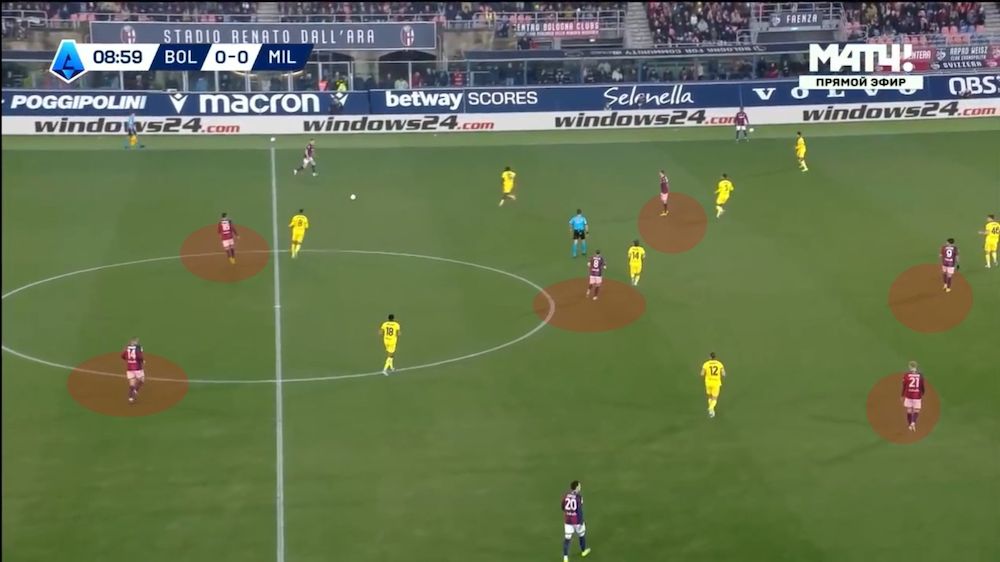
Vincenzo Italiano’s side built in a 3+2 structure from the back to dominate the centre. The set-up created central overloads, with 5–6 players occupying central zones.
It helped Bologna counter-press quickly whenever Milan regained the ball. Milan responded by blocking the centre and defending extremely narrow, effectively neutralising those overloads. It was a classic structure vs. structure battle in midfield.
Stretching and reacting
Bologna even used their goalkeeper as a deep-lying playmaker. Ravaglia was key in switching play and resetting attacks.
Bologna would overload one flank, then have a double-pivot player drop to receive and quickly switch sides, a clear attempt to catch Milan off guard and stretch their narrow block. It was a smart use of circulation to manipulate Milan’s defensive shape.
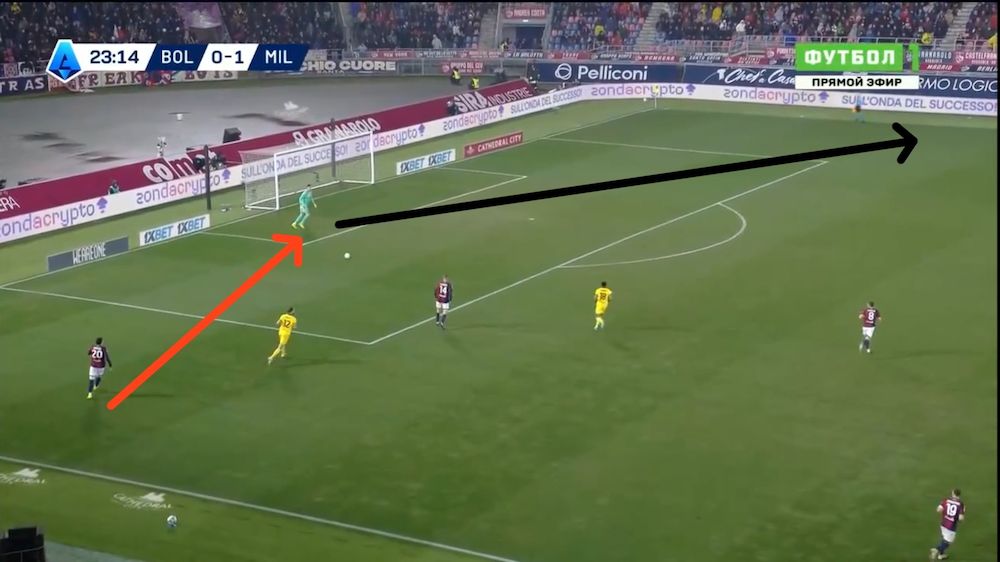
Milan’s response was just as deliberate. To counter Bologna’s man-oriented high press, Milan pushed Maignan high, effectively leaving Gabbia unmarked and creating a free man in the first line. Another fascinating press vs. build-up duel.
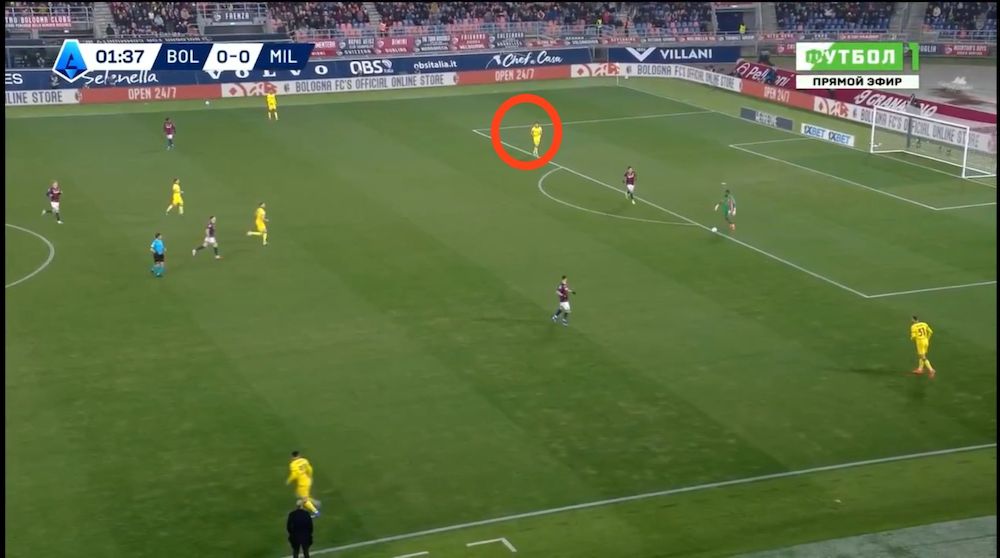
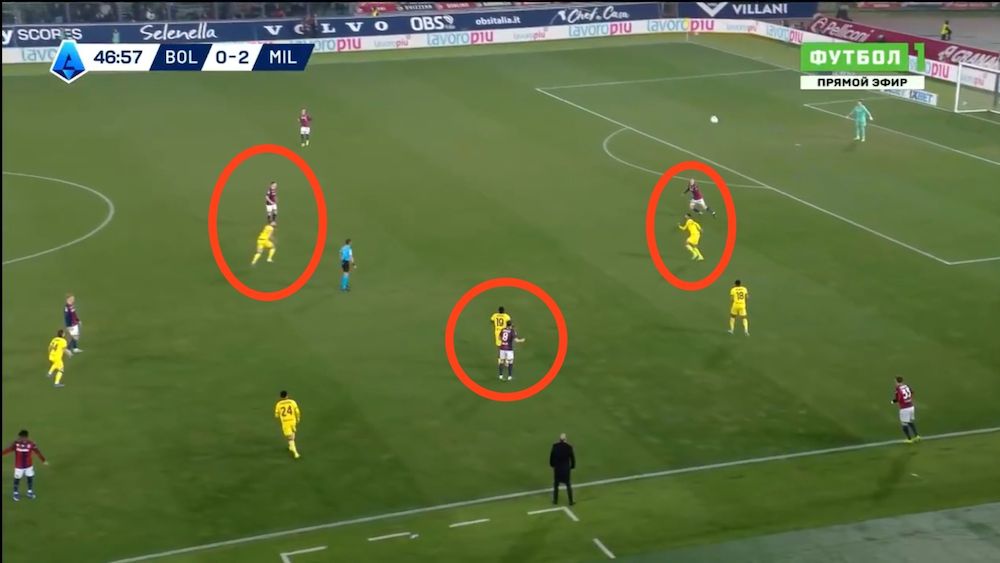
Bologna created chances through deliberate space manipulation. Rowe and Miranda vacated the wide areas, dragging Athekame and De Winter out of position.
That movement stretched Milan’s back three, opening gaps between the centre-backs for Bologna to attack. It was classic off-ball work creating central access.
— Rohit Rajeev (@RohitRajee23232) February 4, 2026
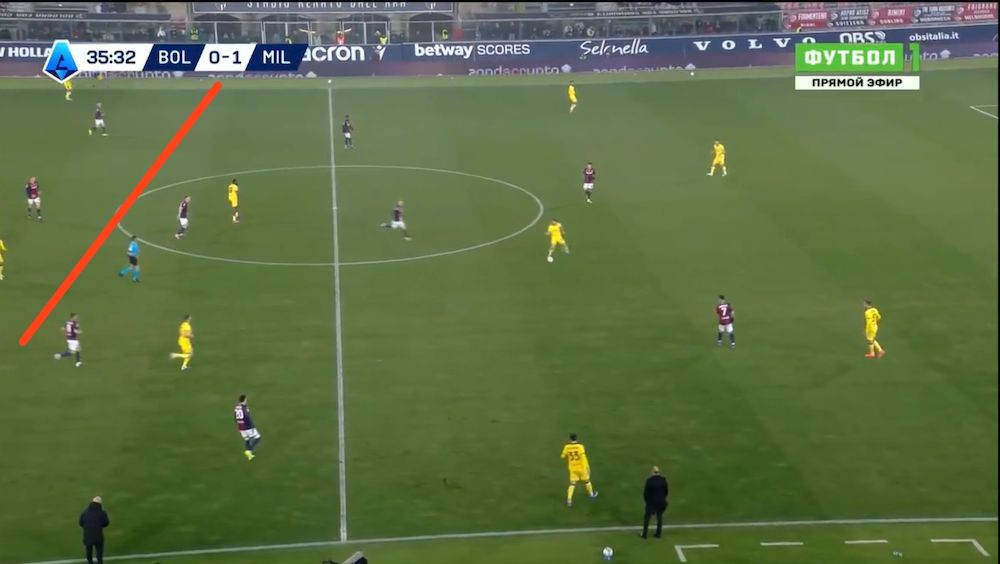
Milan countered by stretching Bologna horizontally. The wing-backs were positioned very wide to pull Bologna’s defenders out. That width opened up central space, and Fofana’s chance arrived precisely because Bologna were dragged wide by Athekame, leaving the centre exposed.
Opening the door
Milan’s first goal was all about elite movement from Nkunku. He initially ran ahead of Zortea, then checked his run while the defender ball-watched.
As the cross came in, Nkunku accelerated again, attacking the ball and leaving Zortea behind. The Frenchman showed classic striker craft: timing, deception and separation.
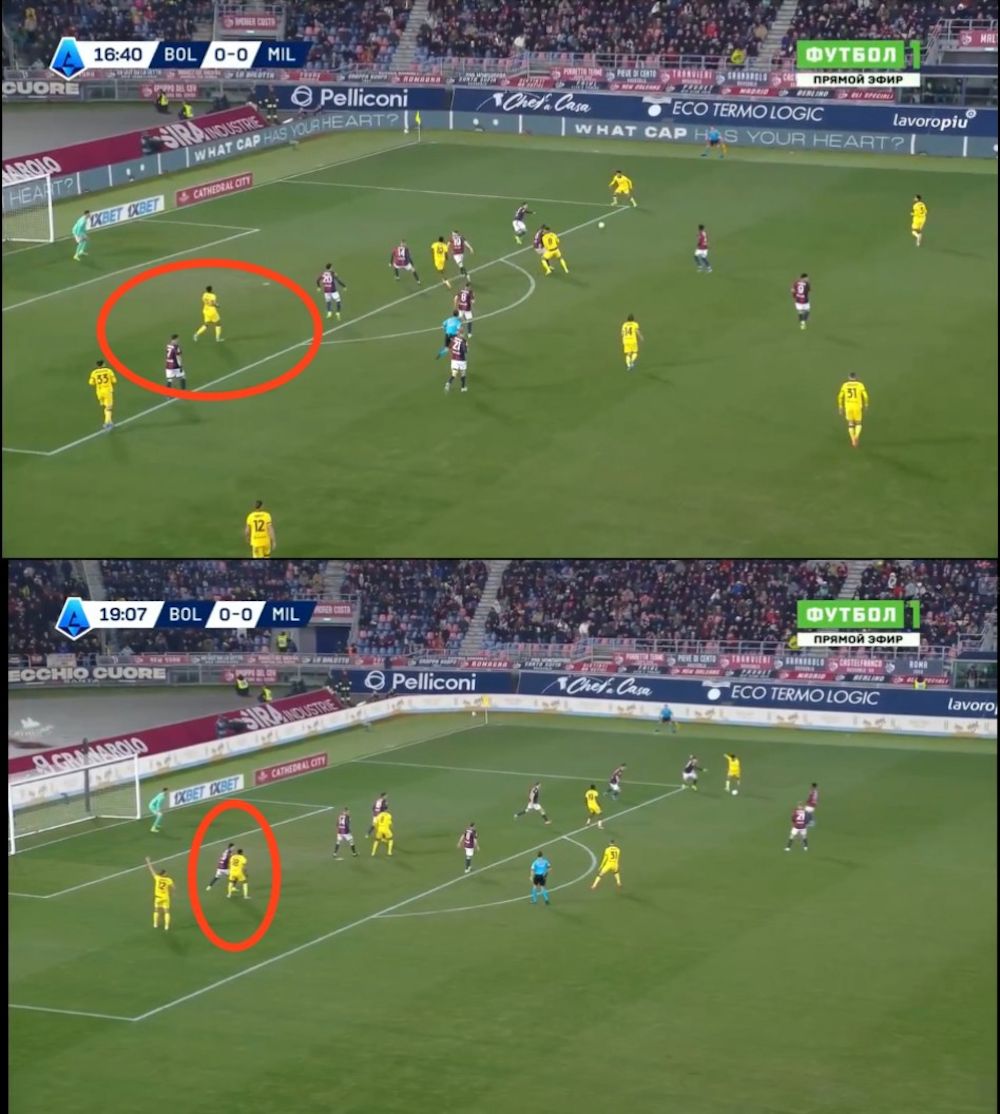
The second goal was a direct consequence of Bologna’s man-oriented pressing. Milan baited the press, opening space underneath Bologna’s double pivot. Modrić’s pass found Loftus-Cheek, who turned sharply and forced Casale to jump out of the line unsuccessfully.
Nkunku finished the move, using an instep drive, this time prioritising placement over power. Pressing punished, precision rewarded.
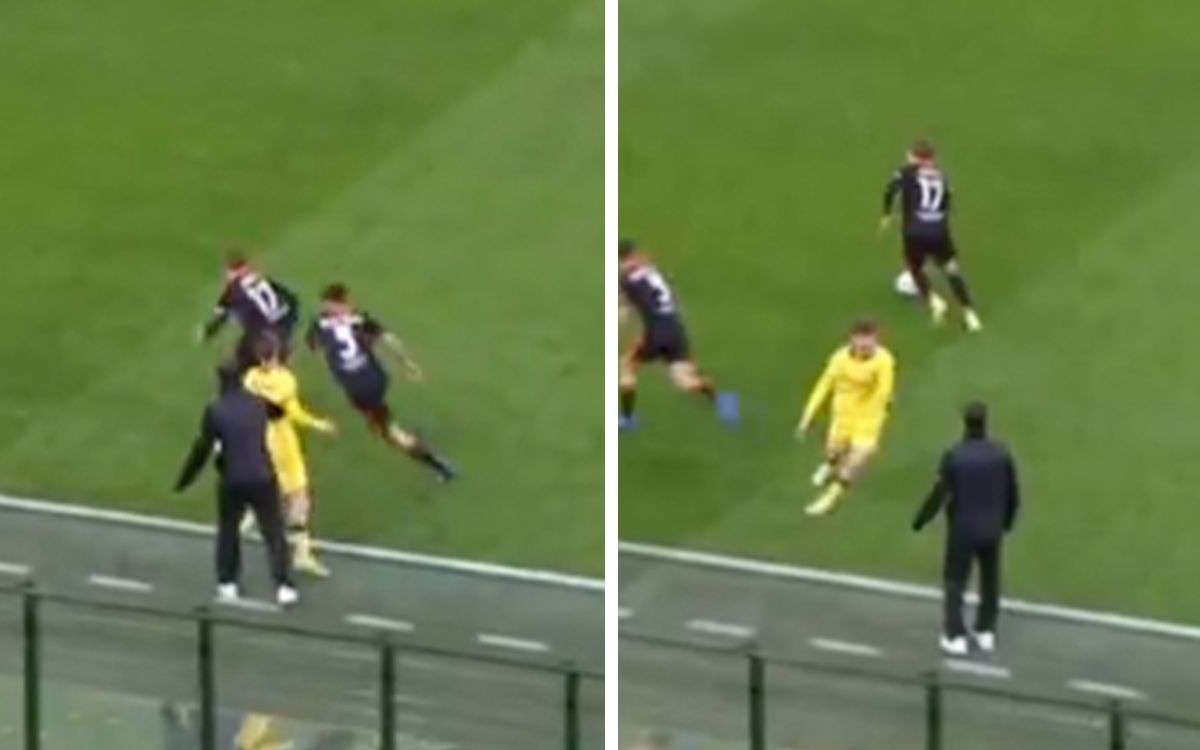
The third goal came straight from Milan’s man-to-man pressing: Miranda was left with no passing options, so was forced into a hopeful ball into the second line, relying on Casale or Heggen to recover. Milan anticipated it, won the second ball, and capitalised Pressure, predictability, punishment.
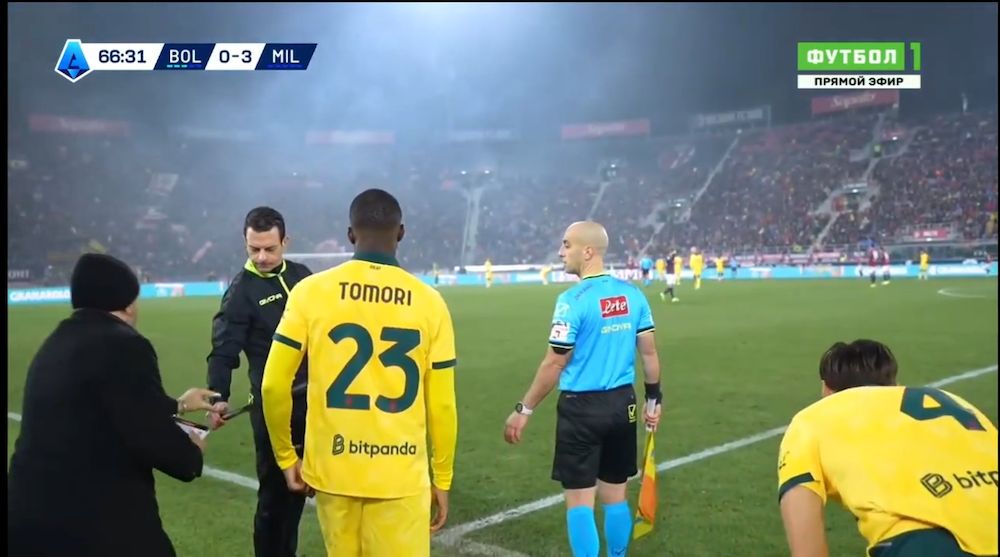
Rowe was starting to cause real problems for Athekame. Allegri spotted the danger early and reacted decisively even with the result in the bag, given the Swiss is one yellow from suspension. He brought on Tomori to stabilise that flank and shut the threat down.
The data
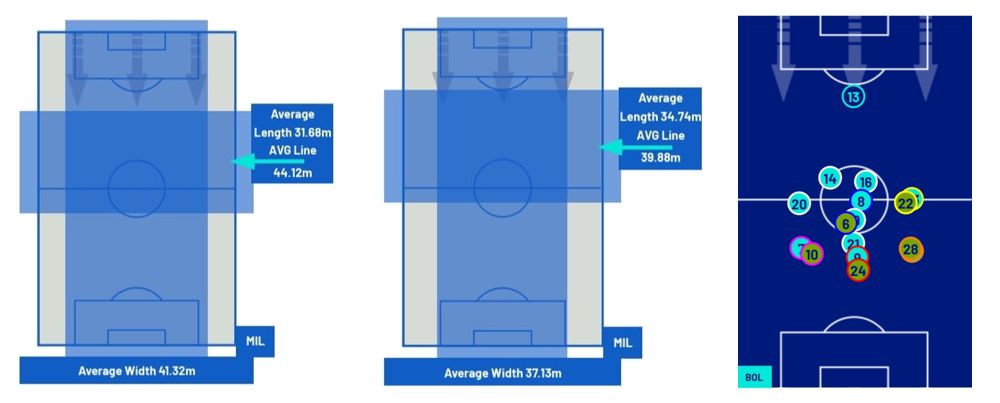
Milan, as mentioned above, remained narrow focusing to the centre of the pitch and shifting the block depending on which side Bologna tried to attack out of.
We can also confirm from Bologna’s player position average map that Bologna tried to use central overloads.
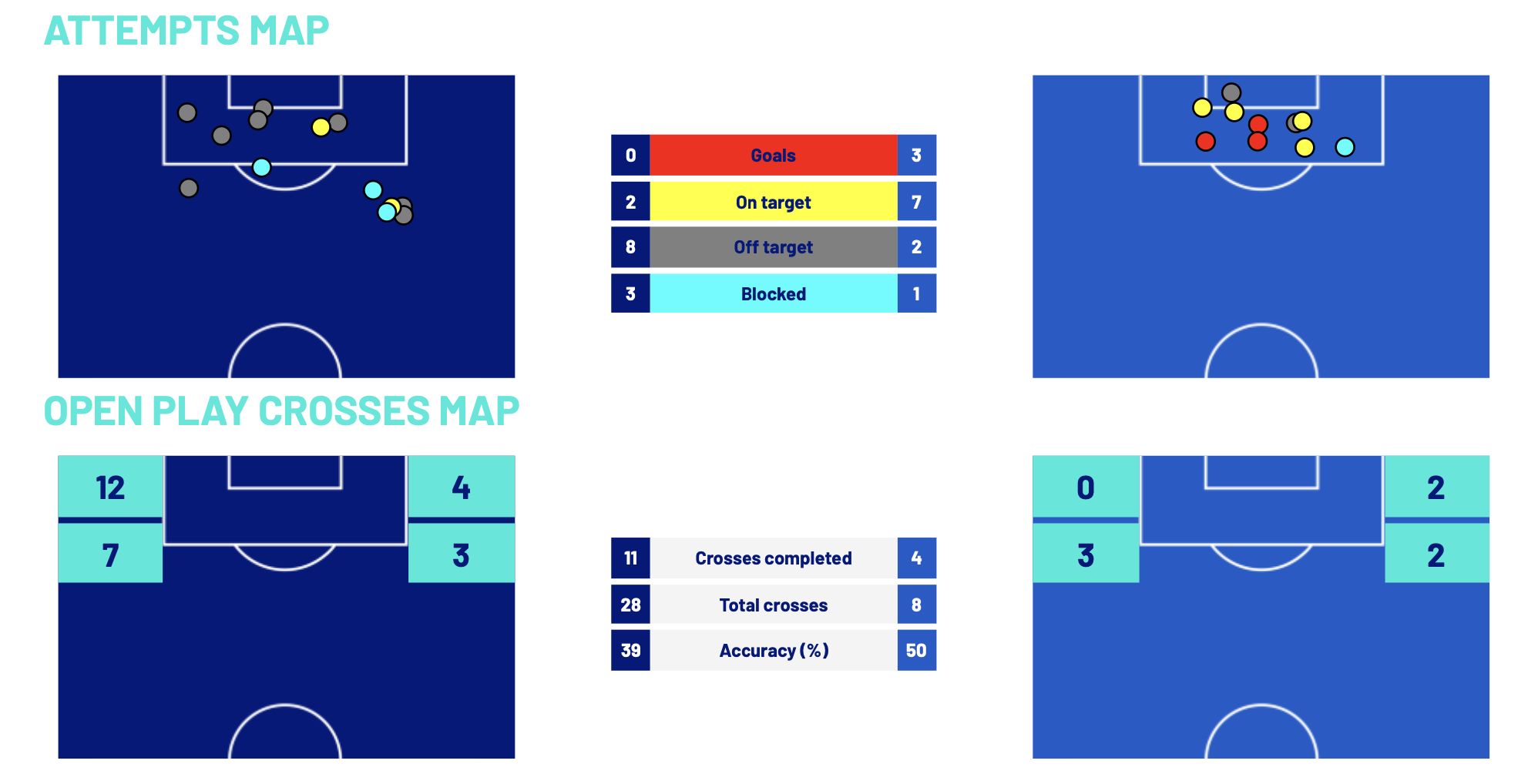
What is noticeable from the shot map is that all of Milan’s 10 attempts (including one that was blocked) came from within 16 yards of the goal.
In essence, the Rossoneri chose to try create and seize high-percentage opportunities, as opposed to other games where they have relied more on shots from distance to break low blocks.
Milan actually also only completed four crosses in the entire game, out of eight attempted. By comparison, the home side had 11 successful crosses out of 28, so they went a lot more direct.
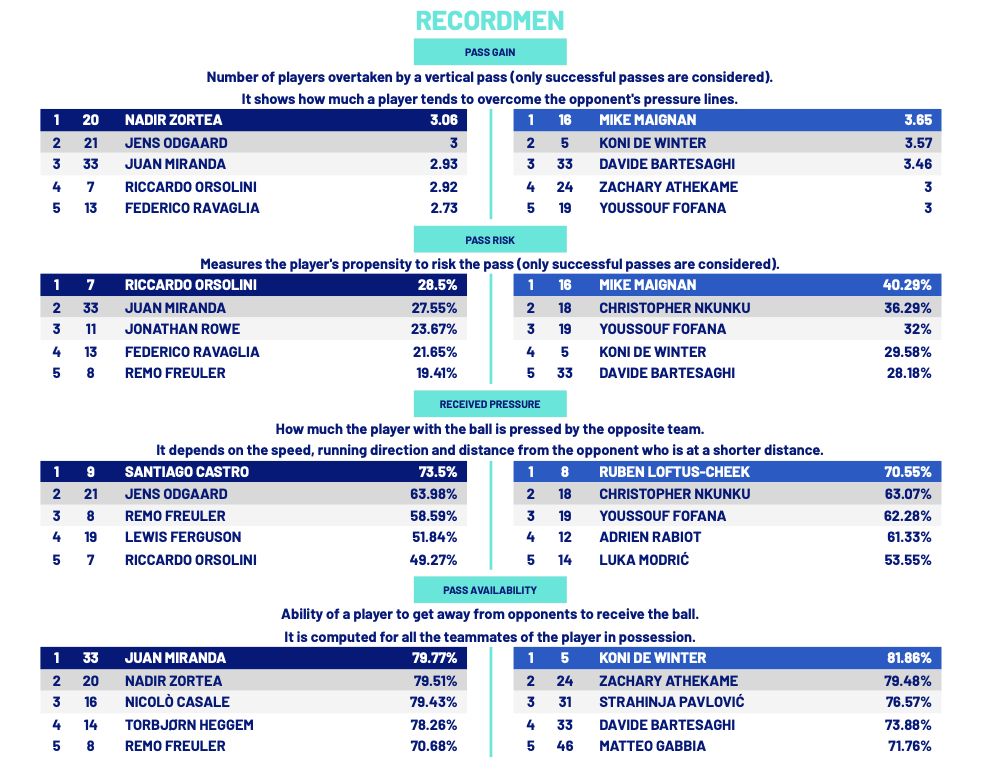
Looking at individual stats, what is noticeable is that the player with comfortable the highest pass gain index (number of players beaten with a vertical pass) was Mike Maignan with 3.65. De Winter, Bartesaghi and Athekame were also in the top four, showing the emphasis on build out from the back five.
Maignan was also top for pass risk at 40.29%, pretty much double his opposite number Ravaglia. Nkunku, Fofana, De Winter and Bartesaghi were all also over 28%, whereas only Orsolini was that high for Bologna.
Finally, De Winter’s role as the build-up pivot at the back is seen by the fact he has quite comfortably the highest pass availability percentage, even in a role where he was more on the right side.


 English (US) ·