
 2 hours ago
25
2 hours ago
25

With the season heading into its final months, games are coming thick and fast, especially for the Premier League clubs still in Europe.
With the extra games, travelling, time difference and the added disadvantage when teams return to face an away game in the Premier League, player welfare is another problem for managers of those teams. How do you maintain the quality of rest time that you know the players need to perform at the highest level and reduce the risks of injury?
Out of the teams in action this week, Newcastle have had the longest journey. Their 2,529-mile trek to Baku is the furthest distance ever travelled by an English side in the Champions League.
The journey there and back, plus the difficulty of an away game at Manchester City on Saturday evening, is a tough ask - especially when you factor in how, statistically, the results usually go against the team playing away in Europe.
This was something I had to deal with at Stoke when we were in the Europa League, and faced long flights to Israel, Ukraine, Croatia and Turkey.
We tried all kinds of methods to help our recovery, sometimes flying straight back after games, or staying overnight and allowing the medical staff to take the lads in the mornings for a light recovery session, having breakfast then flying home.
It was really difficult to find the most balanced way. Irrespective of what we tried, having to play an away game that same weekend was really tough, and we suffered a couple of heavy Premier League defeats afterwards.
The same goes for many teams, though. I don't think anyone has truly found the answer to that particular problem, even if there were ways to manage players' fitness over the course of the season that I used effectively myself.
Getting a player fit for the season - and keeping them that way
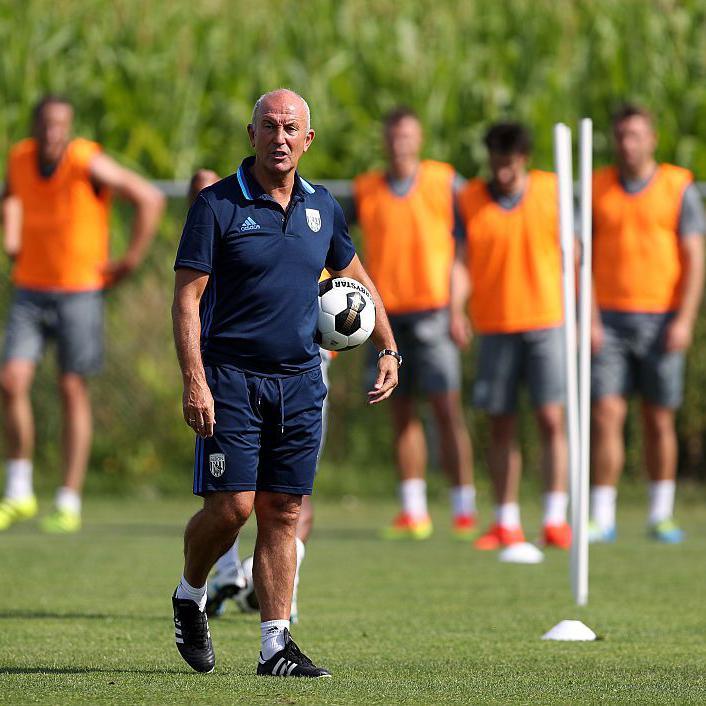 Image source, Getty Images
Pulis oversees a pre-season training session with West Brom in the Netherlands in July 2016
In the modern-day game, enormous investment is made into all different departments of Premier League clubs, and the medical and sports science departments are especially well-supported.
Today, these departments offer enormous amounts of data on fitness issues and players are without doubt treated with more care and attention than ever before.
Gone are the days where you were encouraged to take pain-killing injections or tablets just to get you on the pitch, which were never questioned. Many players in the 1970s and 80s relied on appearance money and win bonuses to pay their mortgages so going through the pain barrier was never an issue.
The amount of change in our game since then in all departments is quite astonishing, and obviously most of it has made things better for all concerned.
For all of those advances, however, there are still questions being asked about soft-tissue injuries and why so many are still occurring.
In my years in the Premier League, I worked with some fantastic medical staff, club doctors, physios and fitness coaches.
At the beginning of every pre-season, I would explain what I needed from every single person mentioned above. My main topic was these soft-tissue injuries, like hamstring, calf and groin strains. I believed if the players were prepared and looked after in the right manner then we could avoid them.
My thinking was that joint injuries occurring from competitive challenges are always going to happen and we could not control those incidents, but muscular issues, we could.
My pre-season consisted of 10-14 days of endurance work, all within a certain range that would not impede or trouble the players' main leg muscles.
After consultation with my medical staff, to ensure the players were strong enough, sessions would get progressively shorter and quicker, with and without the ball.
Once a solid strength and conditioning base had been implemented, and the season had begun, our general routine would entail pre-activation exercises like glute bridges and band walks, light weights, and lots of movement stretches.
One hour and 20 minutes each day on the grass was all I wanted and early in the week I would generally push the lads pretty hard, then taper it off closer to game day.
Why are there so many soft-tissue injuries now?
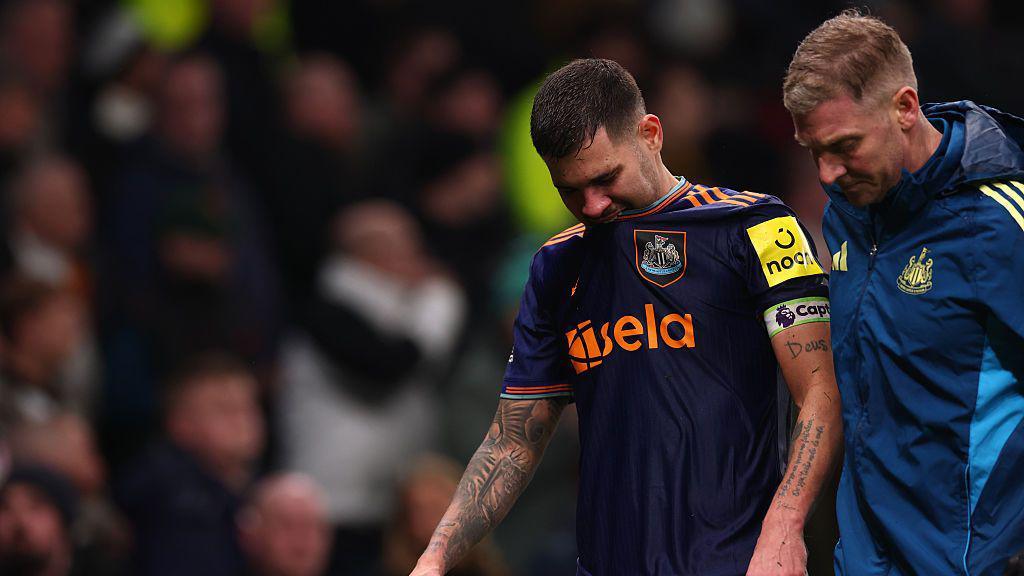 Image source, Getty Images
An example of a soft-tissue injury is the hamstring issue that Newcastle captain Bruno Guimaraes suffered against Spurs on 10 February. He is expected to be out for two months
The above approach worked well for me so, having read up about the number of soft-tissue injuries occurring now, I contacted medical people in the game who I respect to try to find out why.
Obviously I wondered if strength and conditioning programmes like the ones I used had dropped off, but I got a big rebuff on that. I was told that, as in most sports, footballers today have got bigger, stronger and quicker.
It is not down to the players playing more games, either. Manchester United had 66 competitive games in 2008-09, Liverpool had 63 in 2021-22 and this season Chelsea, Manchester City and Arsenal will all experience something similar.
So, what has happened over the past five years to affect our top players?
Today, there are more than two or three quick players in every team - the difference there is massive compared to when I started out as a manager more than 30 years ago.
That means that, while the distance covered by players has not altered much over time, the players are accelerating more, and also more often. It leads to much more stress in the top levels of their payload.
Surely this can be managed? Yes, but it is getting harder. Not because players are playing more games, but because they are playing more in a shorter period of time.
Over the past few years, players have started to question the amount of games they are now asked to play at international level, on top of the demands of club football.
Fifa and Uefa have increased everything, not just the fixture lists, but the number and size of competitions too.
Let's start with this year's World Cup, where a record 48 teams will be competing and playing a total of 104 games - double the number the last time the tournament was held in the United States in 1994. It will take 72 group games to lose just 16 of those teams before the first knockout stage.
Similarly, the new Champions League format also has a busload of teams.
It takes 144 games to get rid of 12 of the 36 clubs, before you even reach the knockout stages, and I have completely ignored all these early matches as I don't understand how teams can lose game after game but still qualify for the next round.
Add to this two Europa League competitions and a new Club World Cup format and you can understand how busy Fifa and Uefa have been in building up their own empires.
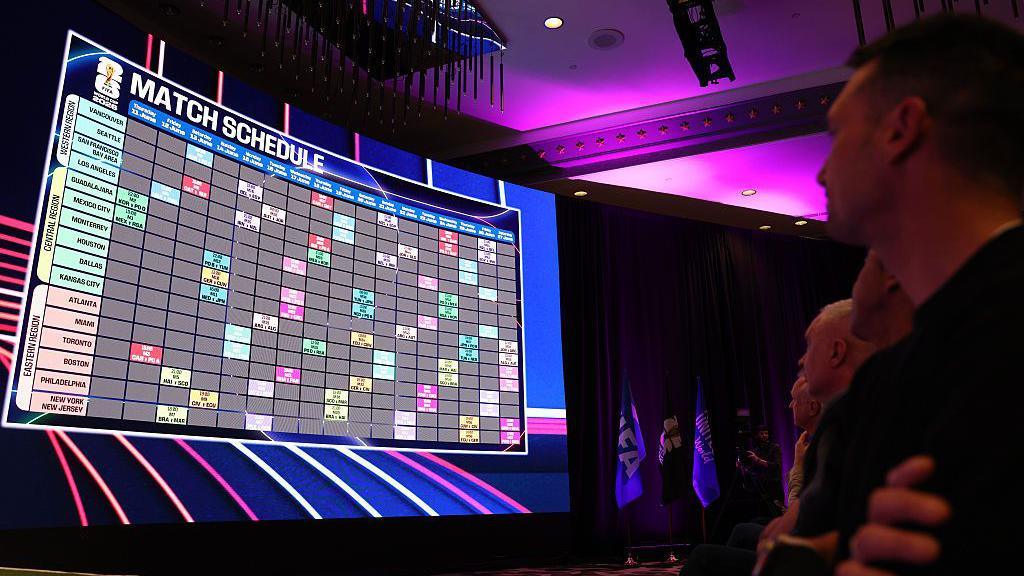 Image source, Getty Images
There are more matches than ever at this summer's World Cup
I congratulate the so-called smaller countries who will experience the World Cup for the first time this summer.
Hopefully millions of supporters will enjoy the experience too but I am sure many neutral supporters will question the adage that bigger is better, especially because the expansion of all of these tournaments will adversely affect the Premier League.
For me, the Premier League is the best league in the world and we should be protecting it.
Many people in the game are concerned about player safety and although I am old school when it comes to how you look after players, I do believe that the top teams and players should be protected more to ensure our league remains the best and also the most successful in the world.
Teams in the NFL, the only international sports league that can compare with the Premier League's success, only play one game a week.
It is an elite league, with elite players, and although they play a different sport which means that, physically, they operate on a different level, they are very conscious of having their best players in their best shape for their clubs and games.
The same should apply to the Premier League and the governing bodies in our country must be very careful with this dramatic increase in Fifa and Uefa's conquest of new concepts and new competitions.
Our top players should not be used as cash cows to play in competitions that are over-subscribed.
I believe football's top competitions should showcase our elite players at their peak level for their clubs and countries, so the Champions League and World Cup should be an almighty step up in class and a different level to anything we see on our own domestic stage.
Unfortunately, that is not the case. In my view, Fifa and Uefa have watered down both competitions, and it feels to me like the main aim now is to make a shed-load of money from games that have no substance, and little meaning.
Tony Pulis was speaking to BBC Sport's Chris Bevan.




 English (US) ·