
 1 month ago
61
1 month ago
61
AC Milan took on Roma in one of the two big Serie A matches over the weekend, and there was nothing to separate the teams on the scoreboard.
Roma dominated large parts of the game, particularly in the first half, but when Koni De Winter headed in a corner just after the hour-mark, dreams of another Massimiliano Allegri smash-and-grab were very much cultivated.
The lead wasn’t to last for too long though as Davide Bartesaghi was penalised for a handball inside the box and Lorenzo Pellegrini converted from 12 yards. Ultimately 1-1 is how it would finish at the Stadio Olimpico, a first draw for Roma all season.
The real winners this weekend are Inter, who have moved five points clear at the top of the table. Yet, the Rossoneri’s unbeaten run extends to 21 games and it is another six-pointer that the team emerged unscathed from. Below is Rohit Rajeev‘s tactical breakdown of the game in the capital.
Changes and early exchanges
Massimiliano Allegri chose to make three changes to the starting line-up from the team that beat Lecce last weekend. Luka Modric came back into the midfield, with Davide Bartesaghi returning at left wing-back and Christopher Nkunku chosen up front over Christian Pulisic.
Gian Piero Gasperini meanwhile went with Mancini, Ndicka and Ghilardi as his three-man defence, with Celik, Konè, Cristante and Wesley across the midfield line, then Dybala and Soulé operating behind the January signing Malen.
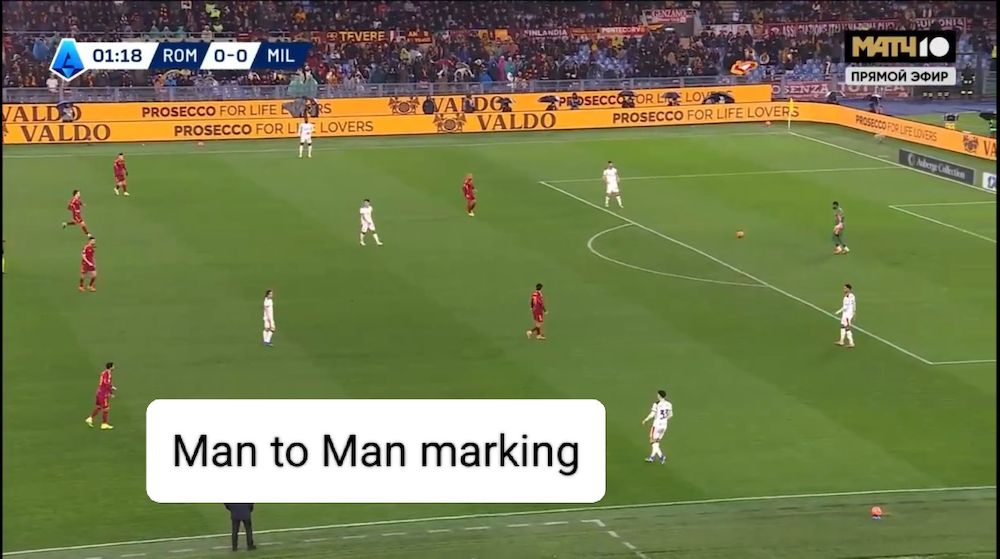
Roma went with what they know best: man-to-man all over the pitch, Gasperini-style, and an aggressive high press to suffocate the build-up. No sitting back, no passive block, just pressure from the first minute.
To break Gasperini’s midfield block, Milan changed the picture. On the ball it was a 4-2-3-1 system rather than the 3-5-2 on paper.
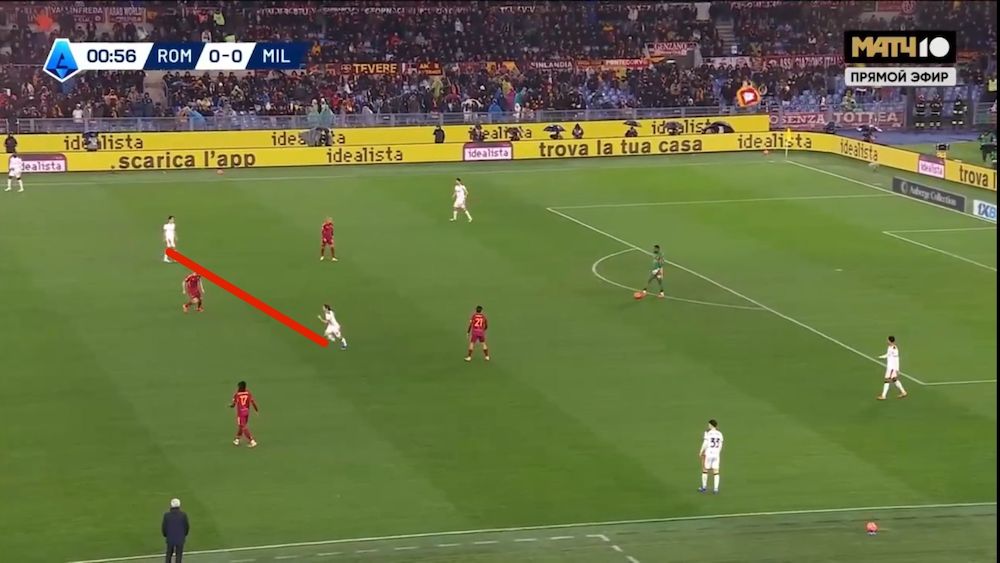
Ricci–Modrić were at the base, Rabiot between the lines, Leão and Saelemaekers wide, Nkunku up top. A clear structural tweak to unlock the middle.
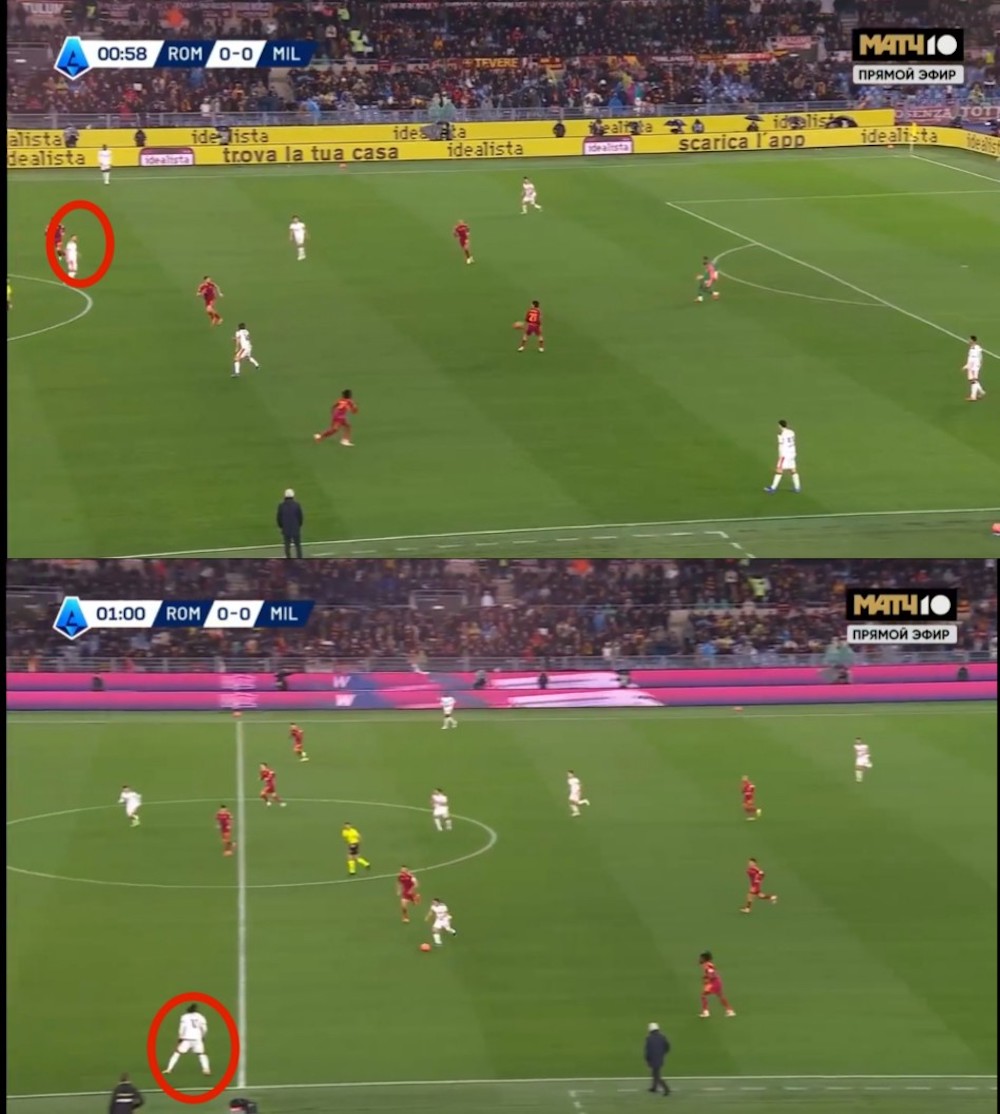
Positional play
Against man-to-man marking, Milan used a smart positional ploy: Modrić and Leão dragged their markers wide, deliberately opening space in the half-space. Bartesaghi then attacked that channel on the dribble, carrying the ball through the gap to progress play and break lines.
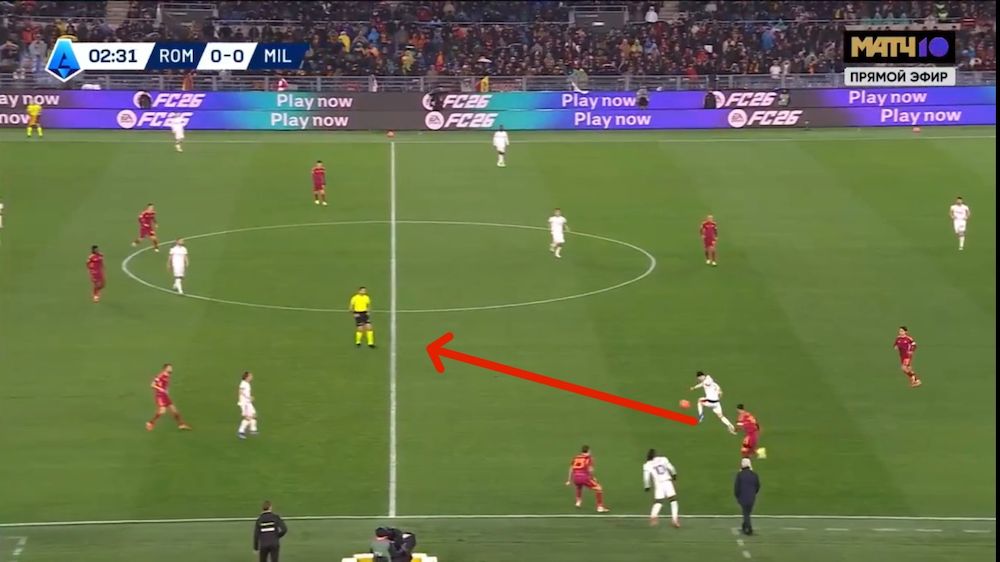
Tomori was used as a quasi right-back, stepping wide to support the build-up. Soule immediately looked to exploit the space left behind him, targeting that channel as Roma’s primary outlet in transition.
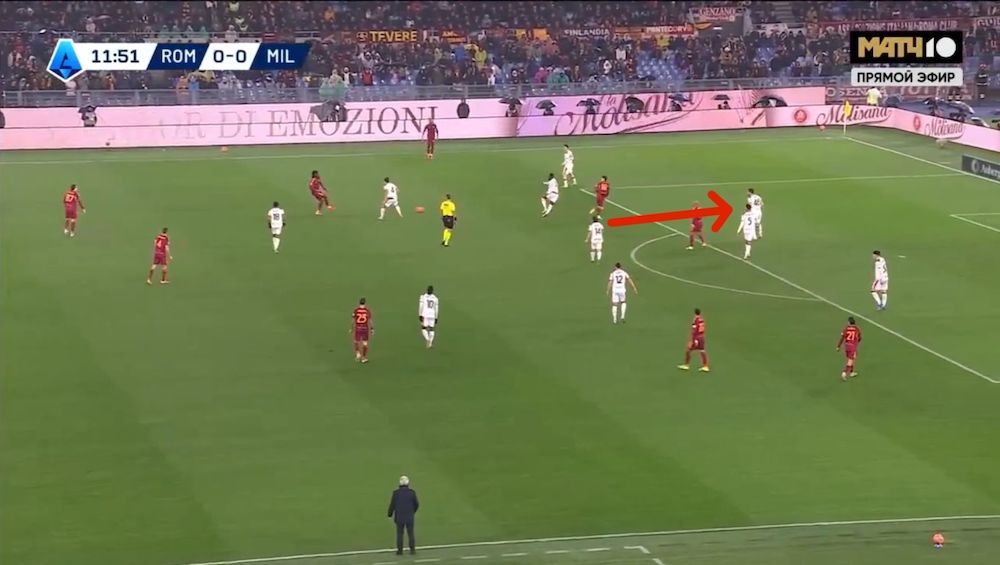
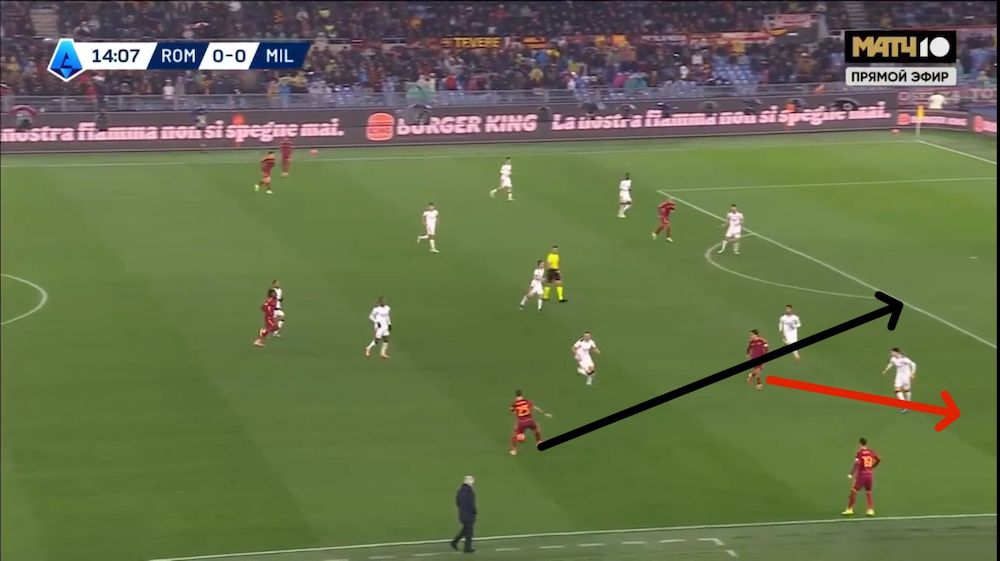
Roma relied heavily on classic wing play down their right flank. Mancini made aggressive inside runs, while Dybala drifted outside, dragging defenders with him and opening up spaces in the channel to create chances.
The goal
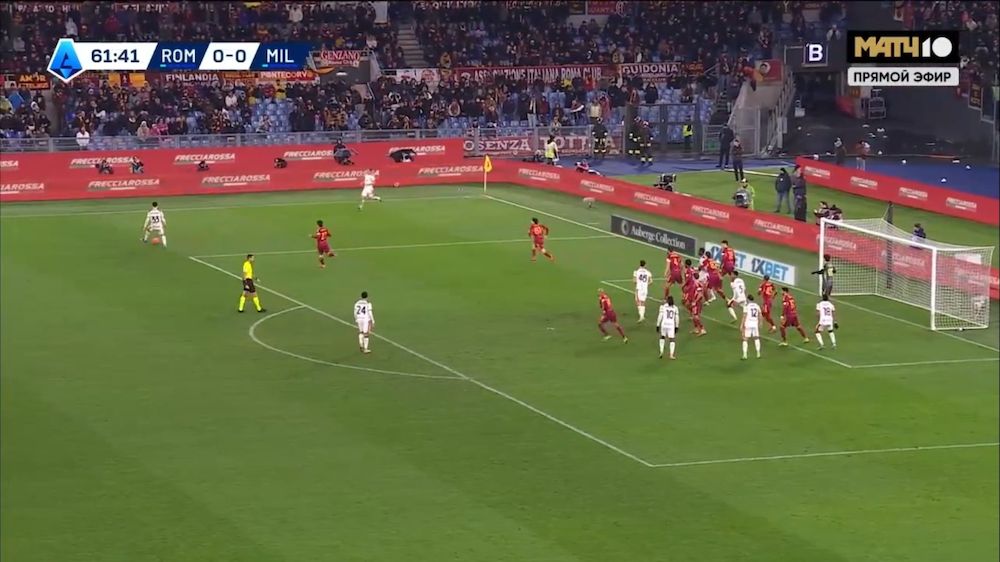
Roma defended corners with zonal marking. Milan responded smartly with a short corner, forcing Roma to step out and break their structure.
In the resulting chaos, Modrić’s in-swinger found an unmarked Koni De Winter, a perfect example of how manipulating set-piece structures creates free headers.
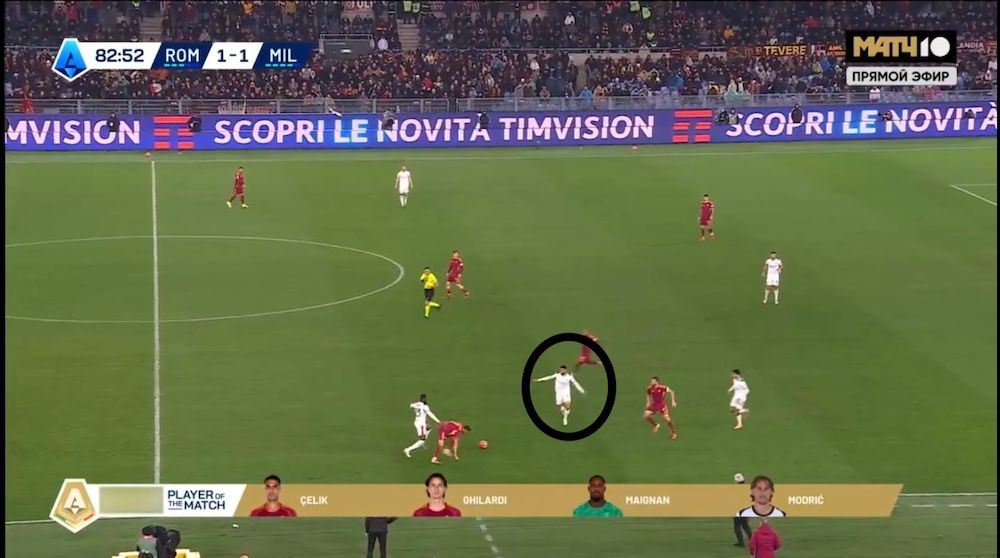
Roma tried to target Athekmane after his yellow card, looking to overload Milan’s right flank using Cristante’s physical presence. Allegri reacted quickly, withdrawing the tiring Ricci and introducing Ruben Loftus-Cheek to restore balance and add athleticism on that side.
Rossoneri retreat
Milan went very deep against Roma. With a low block, their average last defensive line sat at just 37.4 metres.
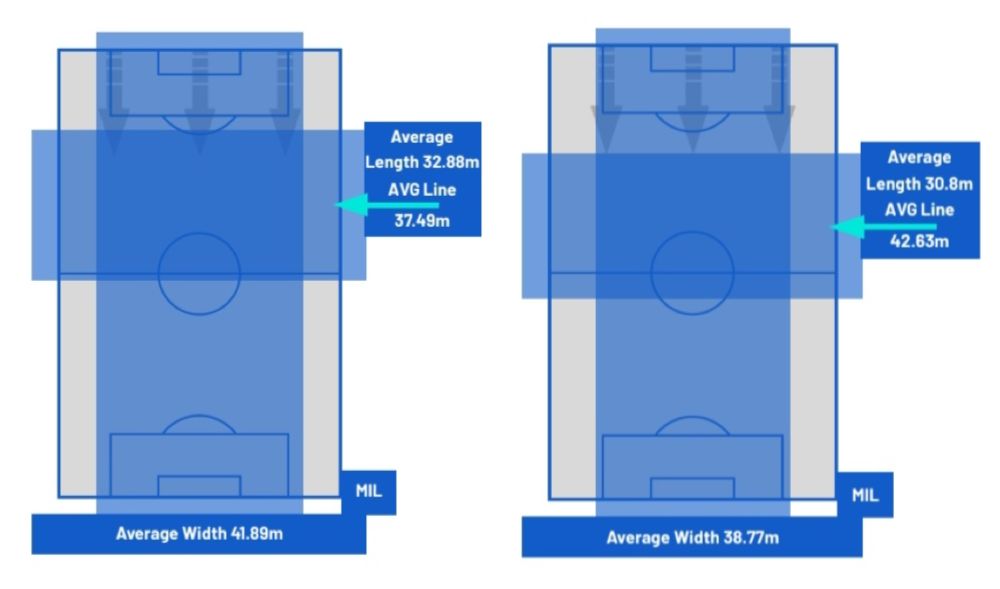
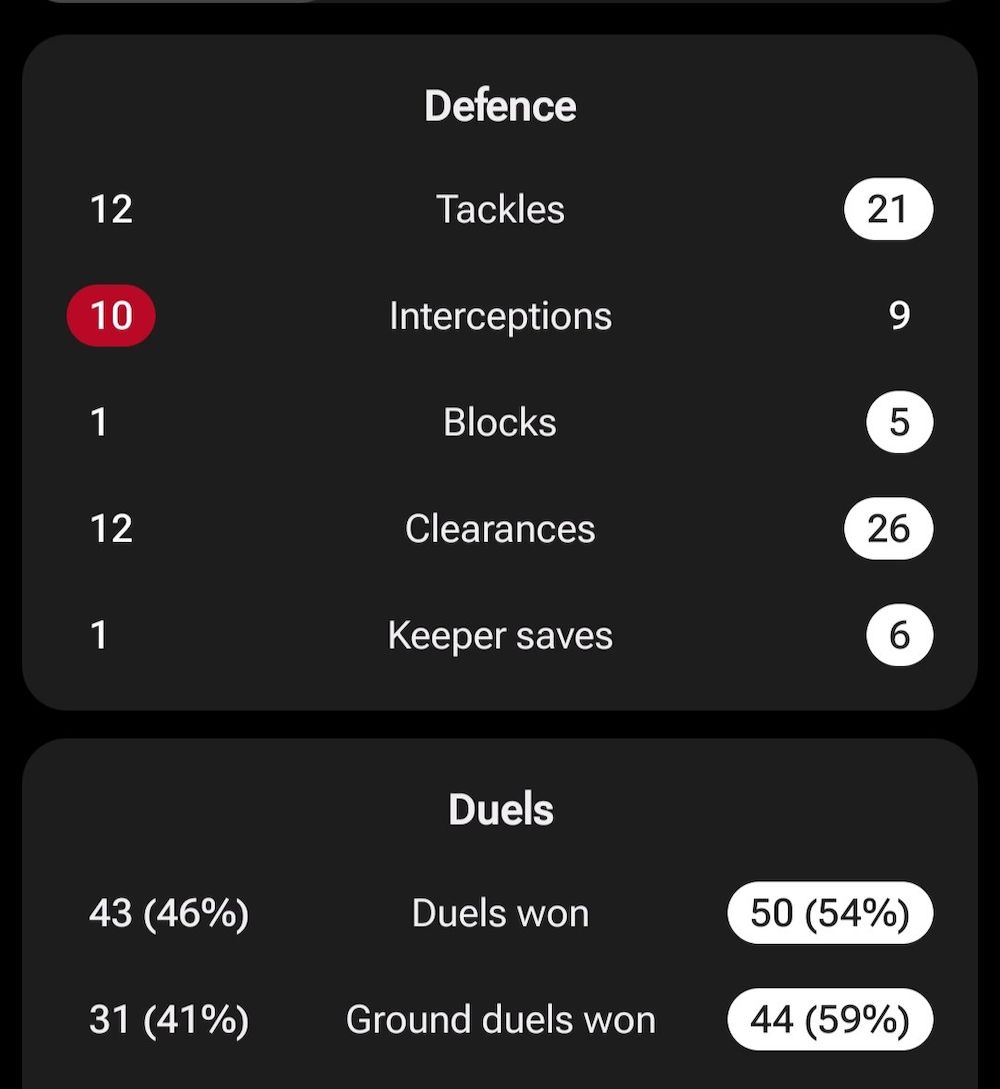
That meant one thing: defensive execution had to be flawless – duels, clearances, positioning, timing. There is no margin for error at that depth.
Contain and…?
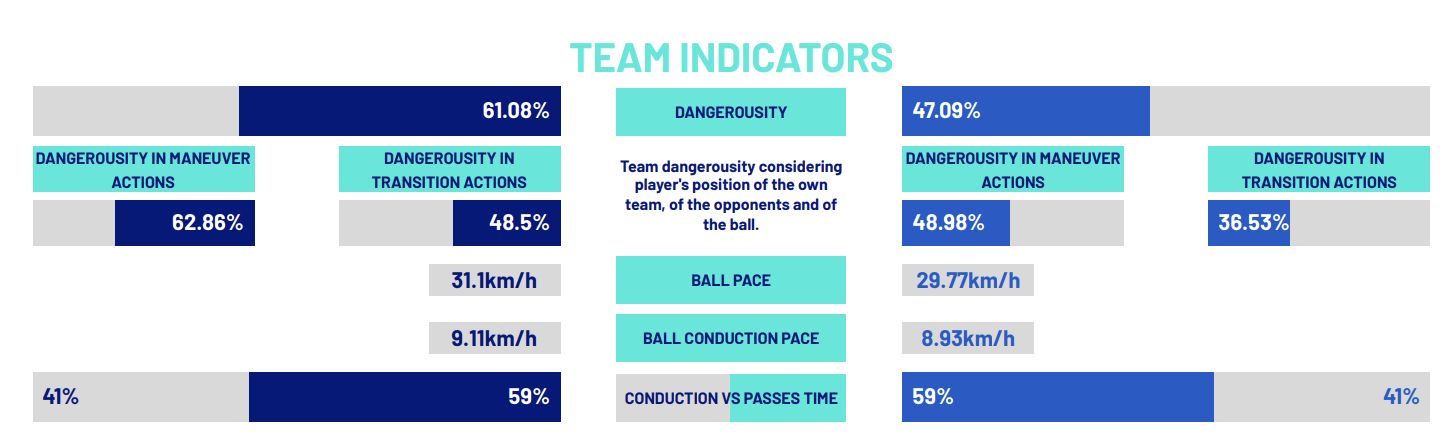
While in the big games against teams around them this season Milan have offered a real threat in transition, this was not evident against Roma.
The dangerousity number was much lower than Roma’s, and worryingly in transition it was nearly 12% below that of Roma. So even in counter-attacking situations, the Rossoneri didn’t generate nearly as much.
The average ball pace and ball conduction pace was higher for the hosts. So, for all of their domination of possession and at times patient build-up, they still moved the ball quicker than Milan.
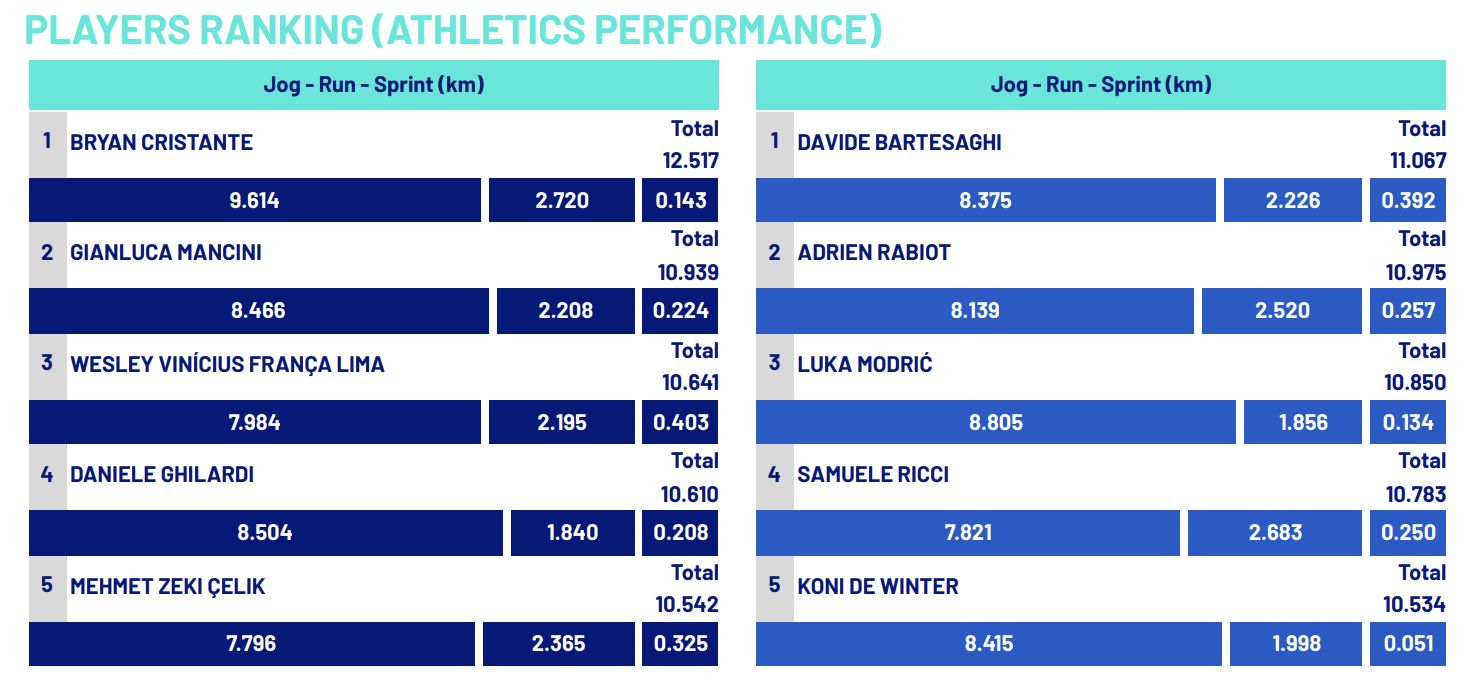
Even though Bartesaghi gave away the penalty for the handball, his performance overall was an important one. For starters he covered the most ground of any Milan player, with comfortably the highest sprint distance showing a commitment in both phases.
In addition to that, Bartesaghi was the player with by far the highest pass risk percentage showing that he was trying to progress the ball. Tomori was the main man in the little build-up there was from the back three.

It does pose a further question about the sustainability of Milan’s approach. Being able to soak up pressure for prolonged periods is fine, but to generate absolutely nothing in open play or in transition suggests a result will only go one way if conceding first.

 English (US) ·