
 1 month ago
72
1 month ago
72
The winter transfer window closed on Monday evening, and yet the storm surrounding AC Milan has continued to rage on.
As we headed into the final day of the mercato, the now infamous ‘Deadline Day™’, it seemed that Milan would be surprise protagonists, at least relative to the amount of activity in the days prior to the window’s conclusion.
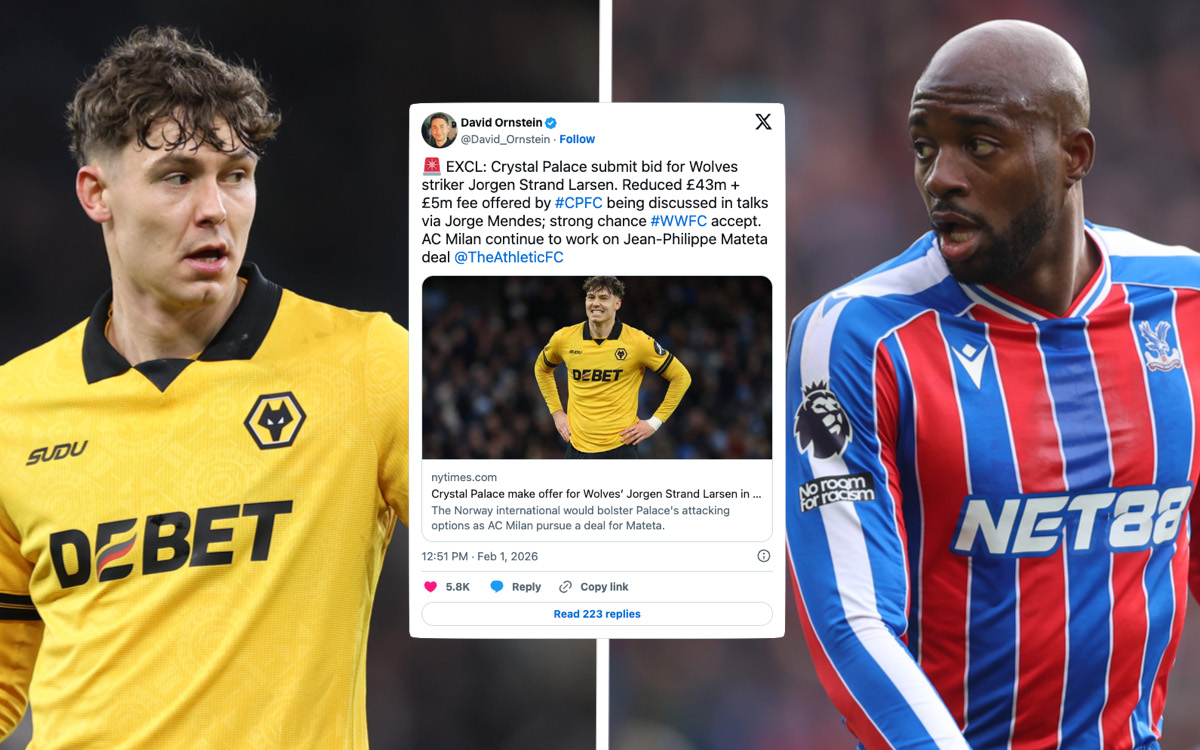
Multiple reliable sources from David Ornstein to Matteo Moretto reported that a deal had been agreed between Milan and Crystal Palace for Jean-Philippe Mateta, the 28-year-old French striker who had been extensively linked in months prior.
That came out on Sunday afternoon. Then, as we headed into the evening, it was expected that the striker would pass a medical and sign in an operation worth over €30m. By Sunday night, it had already emerged that doubts had started to emerge. These would never be overcome.
How the story went
So, what exactly led up to the announcement on Monday afternoon from the previously aforementioned sources that Mateta’s move to Milan had collapsed? Well, we can begin to piece together the sequence of events.
The Rossoneri, as we know by now, are thorough in their medicals (more on that to come). When a fee was agreed between the two sides, the testing process began. In the early checks, club doctors found something that they thought needed further investigation.
Now, many fans and journalists pointed to the fact that Mateta has played in all 23 league games of the season, missing only the 24th game against Nottingham Forest two days ago due to transfer reasons. However, stories of his physical issue had already surfaced in December, in English papers.

The Rossoneri staff wanted a further look at Mateta’s knees, in particular his right knee which has had issues before. In fact, the centre-forward ruptured his meniscus in 2019 while playing for Mainz and underwent surgery that year, keeping him sidelined for six months.
Their tests clearly revealed a cartilage problem, with two options: immediate surgery (and three to four months out), or keep playing on injections with the risk of compromising the joint’s stability. This would only delay the surgery, with the possibility of missing the World Cup or a part of 2026-27 season.
On Monday morning, a second round of in-depth medical tests took place, with the club’s chief doctor – Dr. Mazzoni – present to give his assessments. He deduced that Mateta could keep playing through pain and on injections, but with the possibility of worsening the situation.
Otherwise he needed an operation. In fact, it was also deduced that if the knee surgery were postponed until the summer, it would be even more invasive and require a much longer recovery time. That was his final verdict, relayed to Milan.
‘Just buy someone else’
The directors had been following the Châteauroux academy graduate for for some time and had identified him as the right player to strengthen their attack for next season. Massimiliano Allegri agreed too, and the planned summer swoop was brought forward because doors opened.
This is where the first point of contention with the narrative emerges, the idea that Milan acted incompetently in some way by only going for a striker towards the final couple of days of the winter window.
Each transfer – especially one of this magnitude – is effectively a sequence of dominoes that must fall. In this case, Milan needed to strike a deal with Palace for Mateta, which they did. Then, the London club needed to find a replacement, which they did in Jorgen Strand Larsen (a former Primavera player, ironically).
It didn’t end there though: Wolves agreed to the sale of Larsen given their almost certain relegation presented the need to cash in, but they then had to source someone to replace the Norwegian, who ended up being Adam Armstrong from Southampton. The Saints had to give their green light etc., and you see where this is going.
All of those conditions to make the Mateta operation go through did not exist two weeks or even a few days prior to the closing of the mercato. Once the pieces started to align, Milan pushed on the accelerator and were a dodgy knee away from pulling off a €35m coup.
Then came the argument ‘why didn’t they use that money on another striker’. At most clubs, funds made available by the ownership to the management for a signing are ring-fenced. In essence, RedBird Capital will have given their approval to spend a substantial sum, but only on Mateta.
Thus, the expectation that Igli Tare and co. were expected to come up with just as good a name for the same price and get all of the processes done (negotiations, documentation and another medical) within just a few hours is unrealistic and shows a lack of understanding for how transfers work.
One example of when the Rossoneri did pivot late in the window can be found just a few months ago. After pursuing a more typical centre-forward for the entire summer, Milan completed the signing of Christopher Nkunku from Chelsea at the 11th hour, for €38m plus bonuses too.
Not only is Nkunku a winger/second striker/attacking midfielder/anything but a natural number nine, but the fee suggested a bit of desperation, and until his recent run of goals he looked like being one of the biggest flops in years. Even with the Frenchman’s resurgence, it is still a questionable operation, to the extent there were rumours of a January exit.
Vilified, for what?
In the ensuing mass of misguided opinions and false versions of events, one tweet in particular caught the eye, from an account called The Touchline on X.
It read: “There’s ongoing discussion among some agents about AC Milan as a potential destination, largely because its medical tests are considered among the most complicated and demanding in world football.
“Several agents admit they prefer to avoid AC Milan as an option for their players, especially after multiple transfers were suspended or collapsed when players failed to pass the club’s medical examinations. They secretly admit AC Milan’s medical tests are known for detecting issues other clubs might overlook.”
It must be noted that The Touchline are not renowned for the accuracy nor profile of their exclusives, but let’s take some of the words at face value and evaluate the notion that there might now be some warning lights attached to Milan.
The notion that the Rossoneri are ‘detecting issues other clubs might overlook’ should be a badge of pride. It means that the club are being thorough with every medical test that they do, and that they are setting a higher standard than others.
Rewinding just a few months, the Victor Boniface saga sticks out in recent memory. Milan agreed a loan with option to buy for the Nigerian with Bayer Leverkusen, and it became clear why the German club were willing to sanction such a formula for a prolific striker.
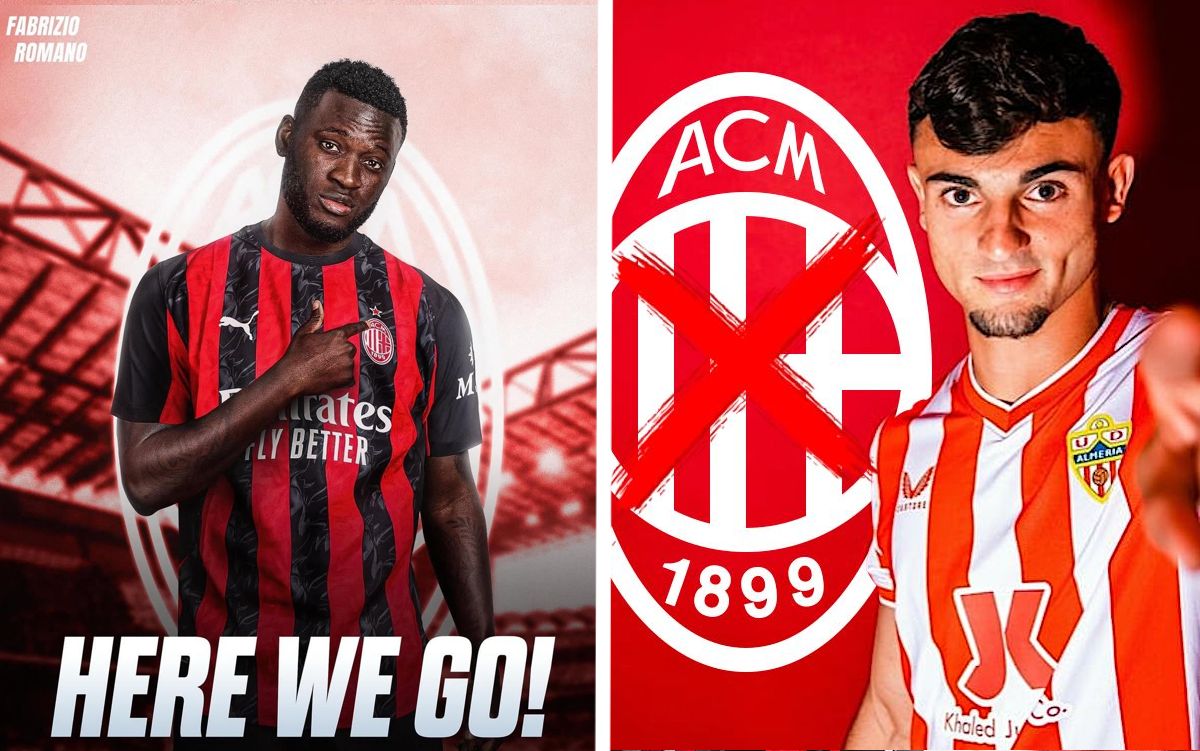
Ultimately, Boniface failed his medical in August having even landed in Italy to do it, primarily due to chronic abnormalities found in his right knee. He would end up joining Werder Bremen, suffering a serious knee issue that has him out for the season at least, but he is apparently considering retiring such is his ordeal.
In the same window, Milan also sent club doctors to do tests on the then-Almeria defender Marc Pubill. The Spaniard had failed a medical with Atalanta in August 2024 due to knee concerns after surgery on it in 2023.
So, medical staff went to Barcelona in July to perform preliminary checks before a formal bid was made. This was quite an unusual process, because normally in-depth medical checks can only be done once a deal has been fully agreed, which is what happened with Mateta.
Moving back the clock to January 2020, Milan were getting ready to welcome Antonee Robinson. The left-back arrived in the city, but his sporting fitness test revealed a heart rhythm irregularity that caused a lot of concern. The doctors warned that if untreated, it could lead to something as serious as heart failure.
Specifically, doctors detected an abnormally high frequency of ectopic heartbeats (inefficient beats that occurred at a rate of roughly 15%, well above the 3-5% considered normal for elite athletes).
Robinson was initially scheduled for a cardiac ablation procedure, but was able to manage the issue by cutting out caffeine. Since then, the USA international has expressed appreciation that the problem was found, given the potentially life-changing consequences had it not been.
That wasn’t the first time that a heart issue was detected, either. In August 2018, shortly before arriving on a free transfer, Ivan Strinić was diagnosed with initial hypertrophy of the cardiac muscle (a thickening of the heart muscle).
It was so serious that doctors told him to stop all competitive sporting activity for several months. He did return to training in late 2018 but didn’t play, and his contract was terminated by mutual consent in August 2019. He never took to the field in a competitive game again.
There are other examples of Milan’s medicals detecting previously known issues, and rather than being some kind of inconvenience, this should be treated as a mark of quality. Any party – club, player or agent – upset that a player did not pass the tests clearly doesn’t have the player’s health at heart.
Of course transfers are primarily a business transaction, where lots of money changes hands, and strict legal frameworks are deployed. It is also an emotional transaction, because clubs and fans look forward to welcoming new signings which will transform their sporting fortunes.
Above all, though, they concern human beings. If Milan are the industry leaders in anything, medical evaluations that could change (and even save) lives isn’t something to be ashamed about. If other clubs ‘might overlook’ that on the other hand, then the Rossoneri are on the right side.

 English (US) ·