
 2 months ago
22
2 months ago
22
AC Milan took a while to break Lecce’s resistance on Sunday night at San Siro, but eventually did in order to secure another important win.
After a number of chances and half-chances went begging, the only goal of the game came 15 minutes before the end. Matteo Gabbia found Alexis Saelemaekers with a ball over the top, and he crossed for substitute Niclas Füllkrug to head in his first goal for the club.
The result was needed given that Napoli and Inter both won on Saturday, while the Rossoneri also managed to capitalise on Juventus losing against Cagliari, meaning there is now a seven-point gap to fifth place.
This gives a bit of breathing room in the pursuit of a Champions League spot, but by now everyone is dreaming of something more. Below is Rohit Rajeev‘s tactical breakdown of the game.
Selections and shape
Allegri chose to make four changes to the starting line-up from the team that beat Como on Thursday night. The defence remained the same, with Ardon Jashari, Samuele Ricci and Pervis Estupinan coming into the midfield line, and Christian Pulisic starting up front with Rafael Leao.
Out of possession, Milan shifted between a 3-5-2 and a 4-4-2, and the trigger was Saelemaekers.
His positioning alone dictated whether Milan stayed compact or stretched wide.
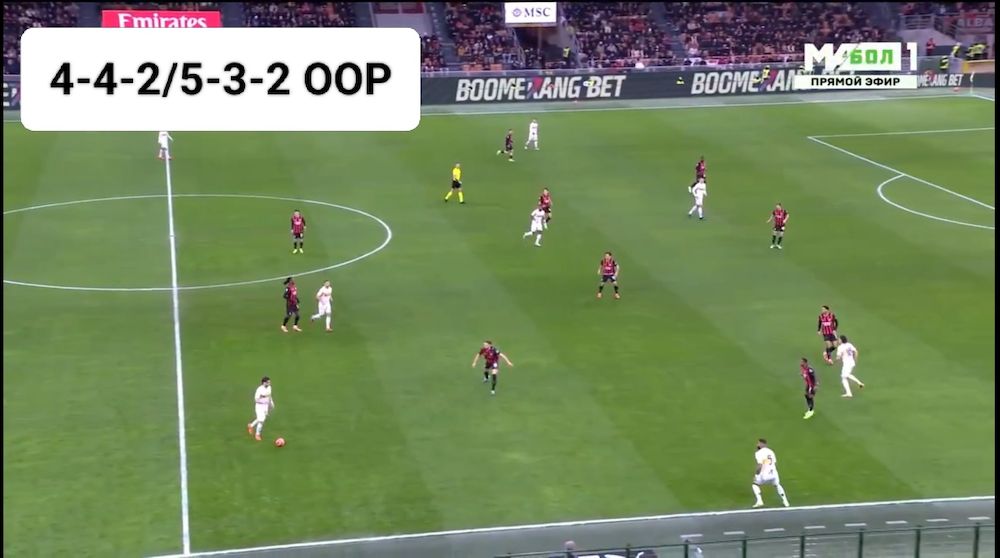
A key detail in Milan’s defensive behaviour was seen early. Rather than holding the block, defenders were instructed to jump out of the shape to engage their direct markers. Here, Koni De Winter steps aggressively out of the line to win the duel – proactive defending by design.

Lecce’s main threat neutralised
Ricardo Sottil was positioned as Lecce’s highest player, but Milan reacted smartly. Tomori, Saelemaekers and Ricci consistently shifted across to outnumber him on the right flank, cutting off his space and isolating Lecce’s main threat.
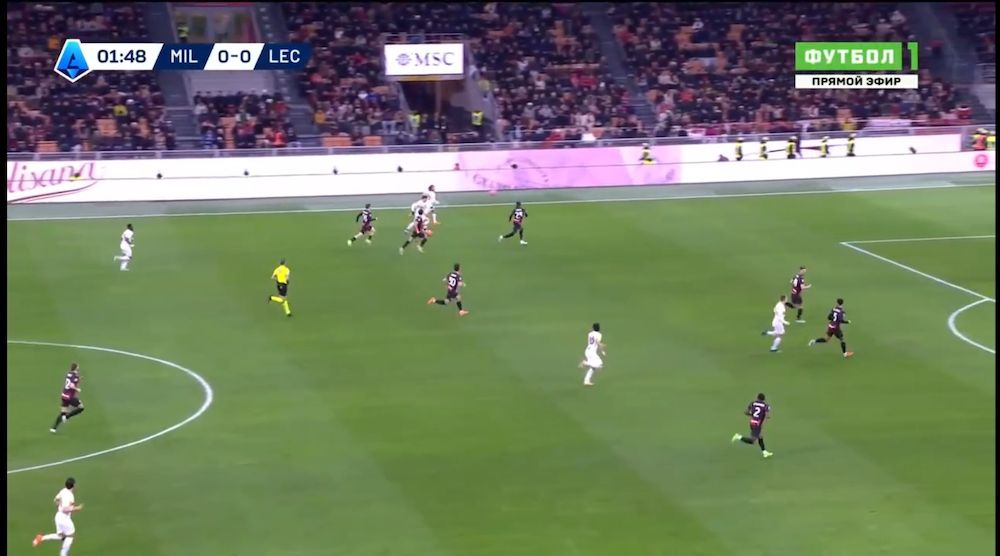
Lecce pressed high, and Milan found the solution. The away side pushed up aggressively and pressed very narrow. Milan responded by bringing Maignan higher to split the centre-backs. This created width in the first line, allowing Tomori and Estupiñán to position wider and play around the press.
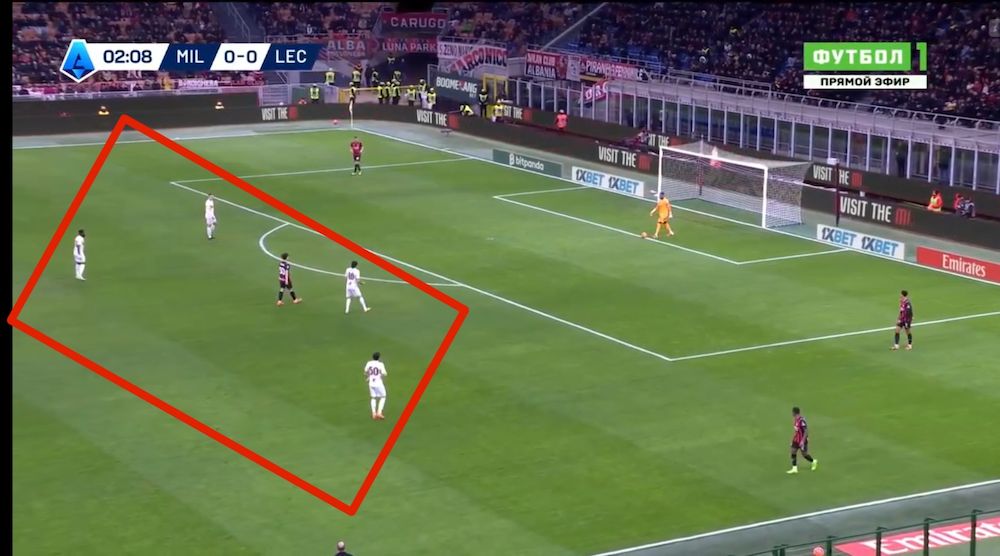
The Giallorossi’s mid-block left space too, which Allegri adapted to. Lecce sat in a mid-block, leaving room behind the defensive line. Milan tried to exploit it with slipped through balls in behind. That’s exactly why Allegri preferred Pulisic & Leão over Füllkrug: pace mattered more than presence
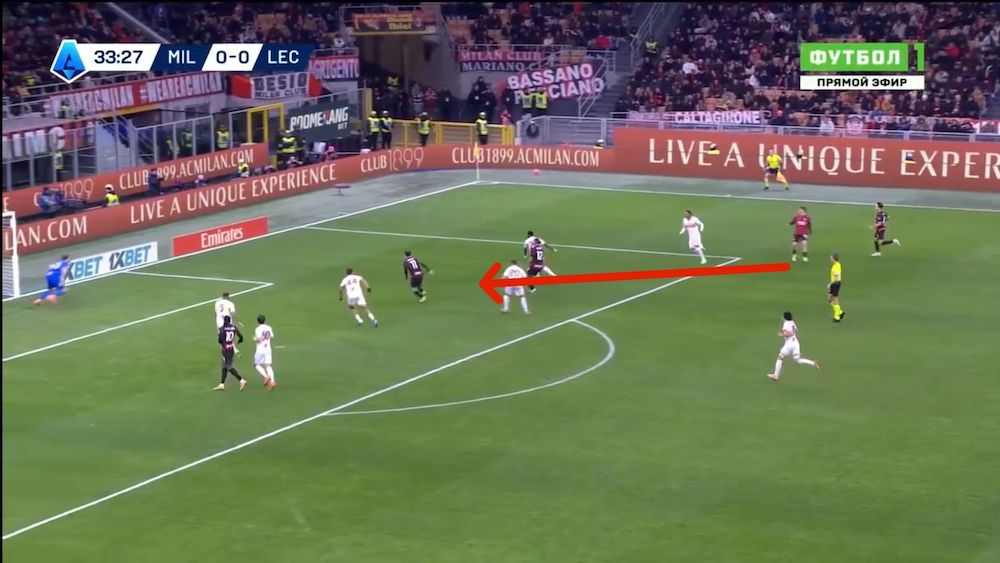
Chemistry building
With every game, the understanding between players improves, and it showed vs Lecce. Jashari plays a simple 1-2 with Pulisic (toco y voy) to bypass midfield and attack space.
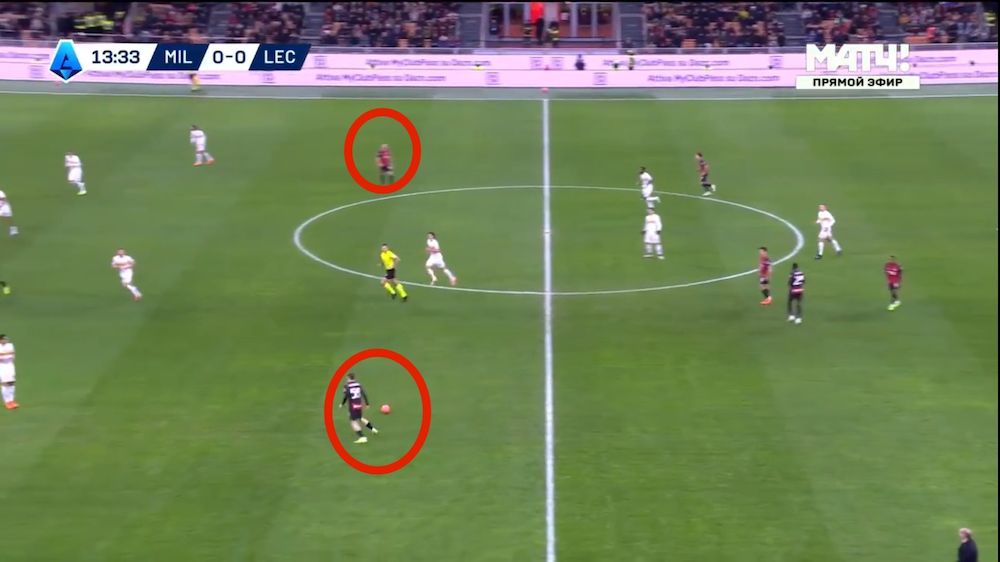
In the next phase, Rabiot and Saelemaekers are out of their nominal positions, because in relationism there are no fixed positions, only roles This is football driven by connections, not co-ordinates.
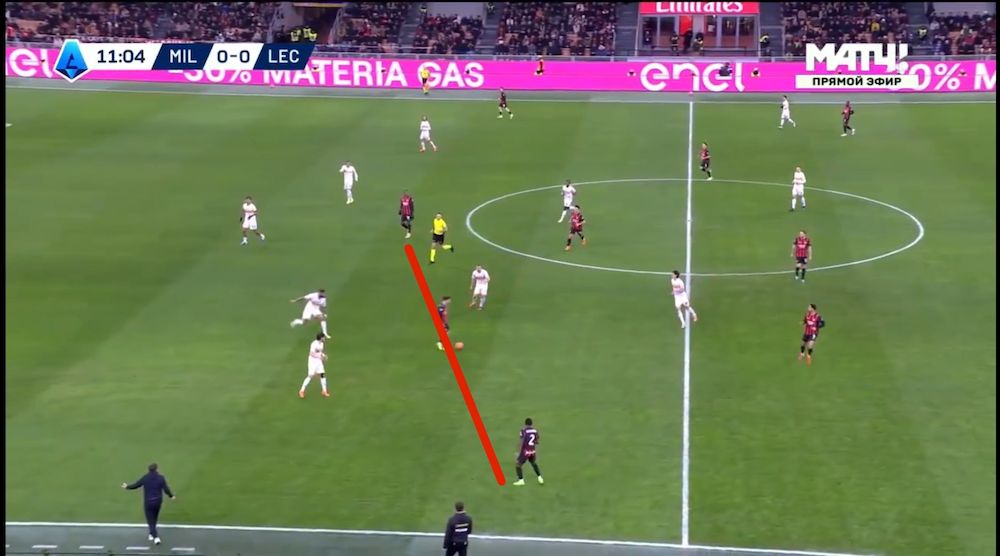
Searching for the breakthrough, Allegri made a clear adjustment: Rabiot was pushed higher up the pitch. The idea: create overloads in Lecce’s defensive half.
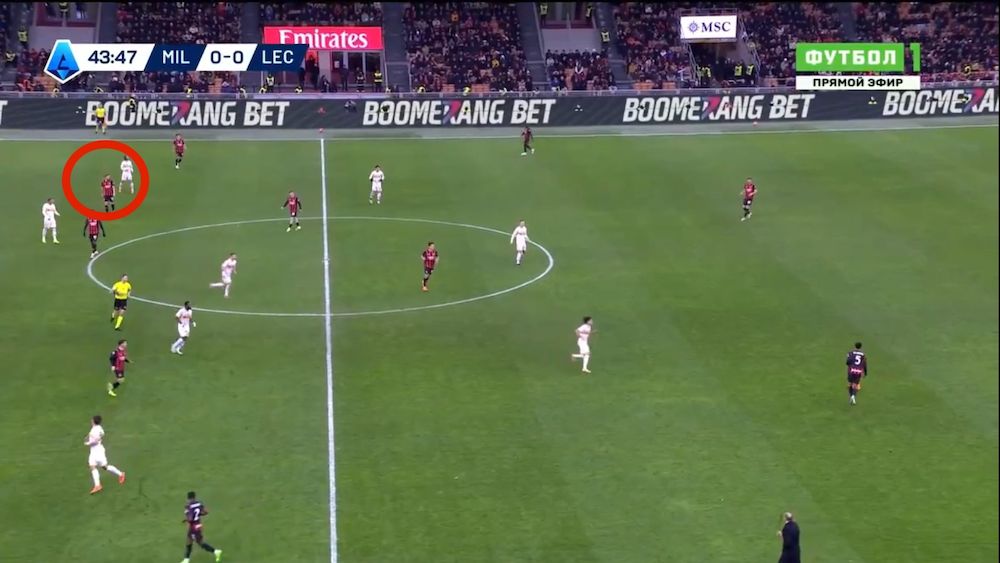
More bodies between the lines meant more pressure, more second balls, and more chaos for Lecce to deal with. A classic Allegri tweak: subtle, but decisive.
What was missing
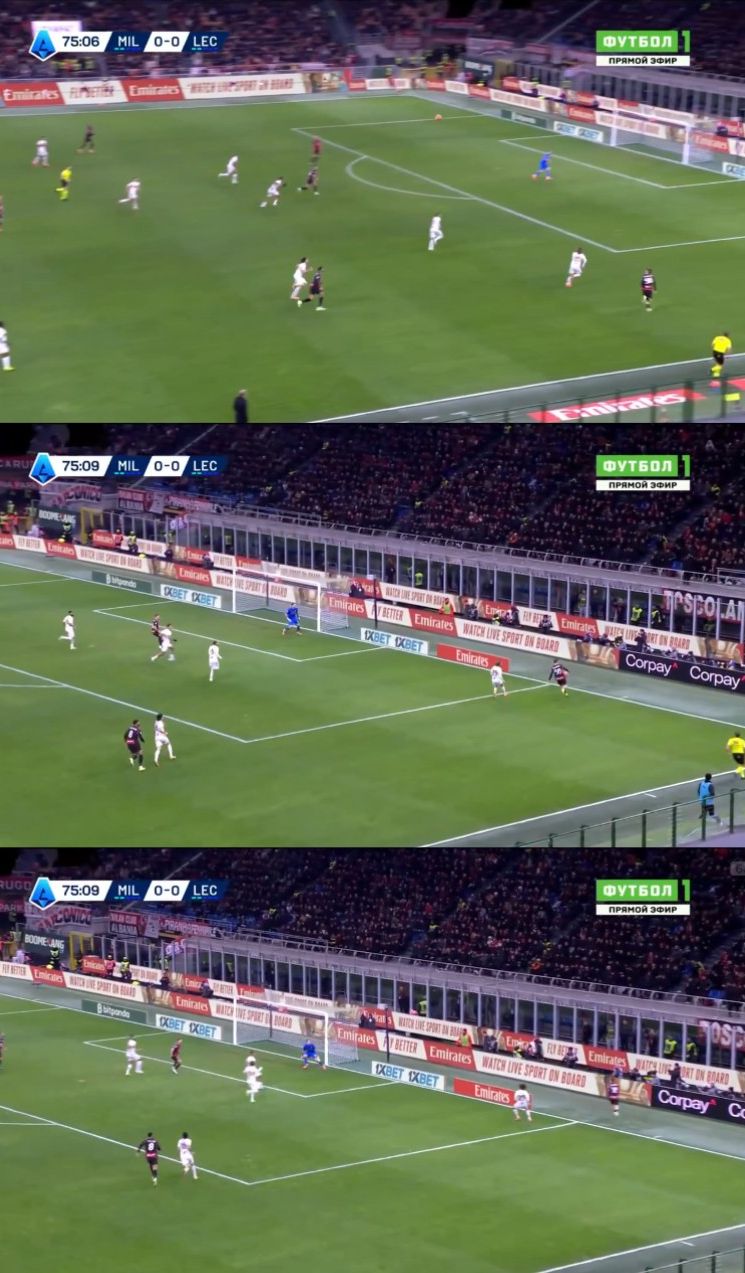
This is pure centre-forward craft from Füllkrug. He bursts past Tiago Gabriel, forcing the defender to panic and recover. Just as the cross is coming in, Füllkrug checks his run.
Gabriel ball-watches and overruns, Siebert reacts too late. Result? Füllkrug unmarked. Header. Goal. Textbook centre-forward play: movement, timing, punishment.
The data
The numbers tell a clear story against Lecce. Milan generated 3.4 xG but converted it into just 3.22 xGOT. Plenty of chances, good shot volume, but not enough elite finishing when it mattered.
Creating chances wasn’t the problem, the quality of the finish was.
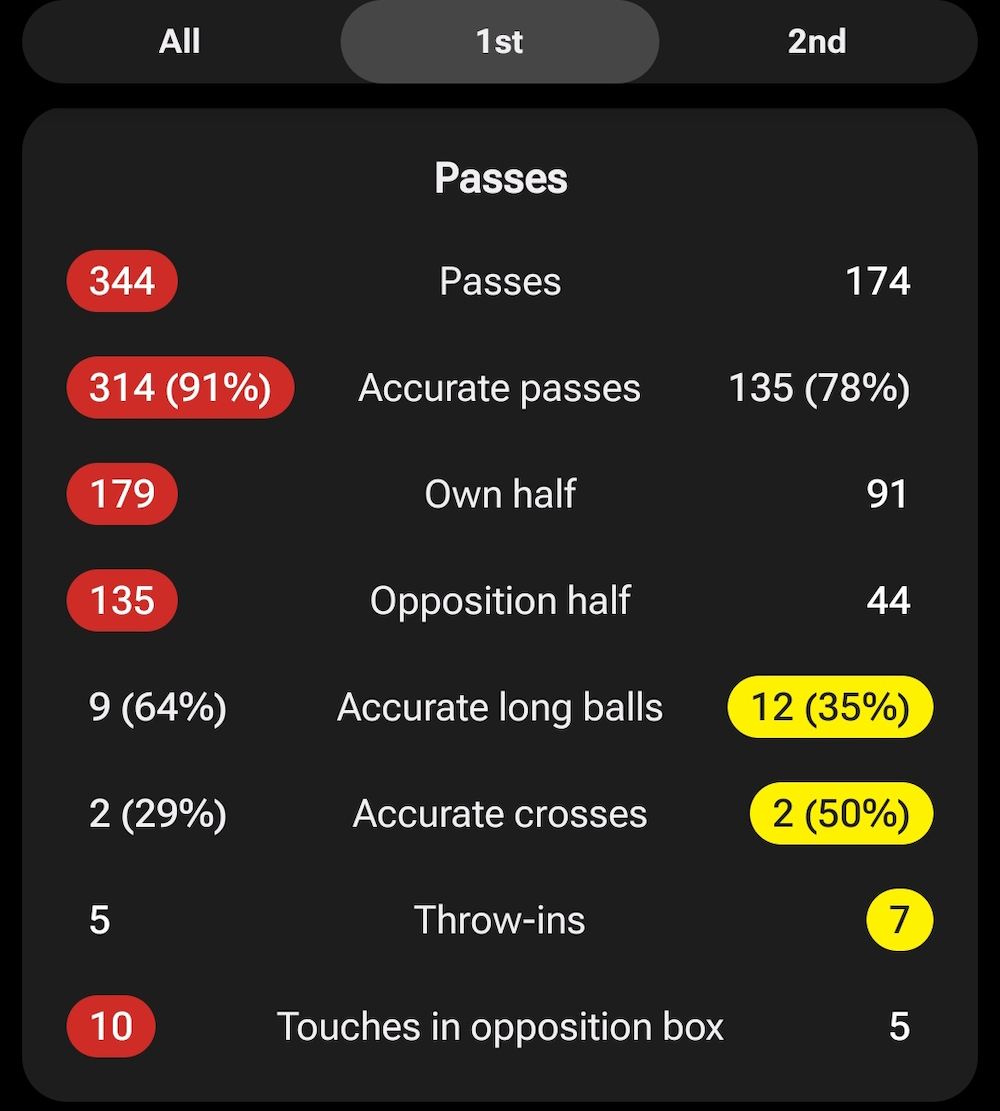
A clear tactical shift was seen once Füllkrug entered the game. In the first half, Lecce attempted more crosses and long balls than Milan.
Once Füllkrug came on, the trend flipped: Milan started attempting more crosses and long balls, tailoring their play to a true reference No.9.
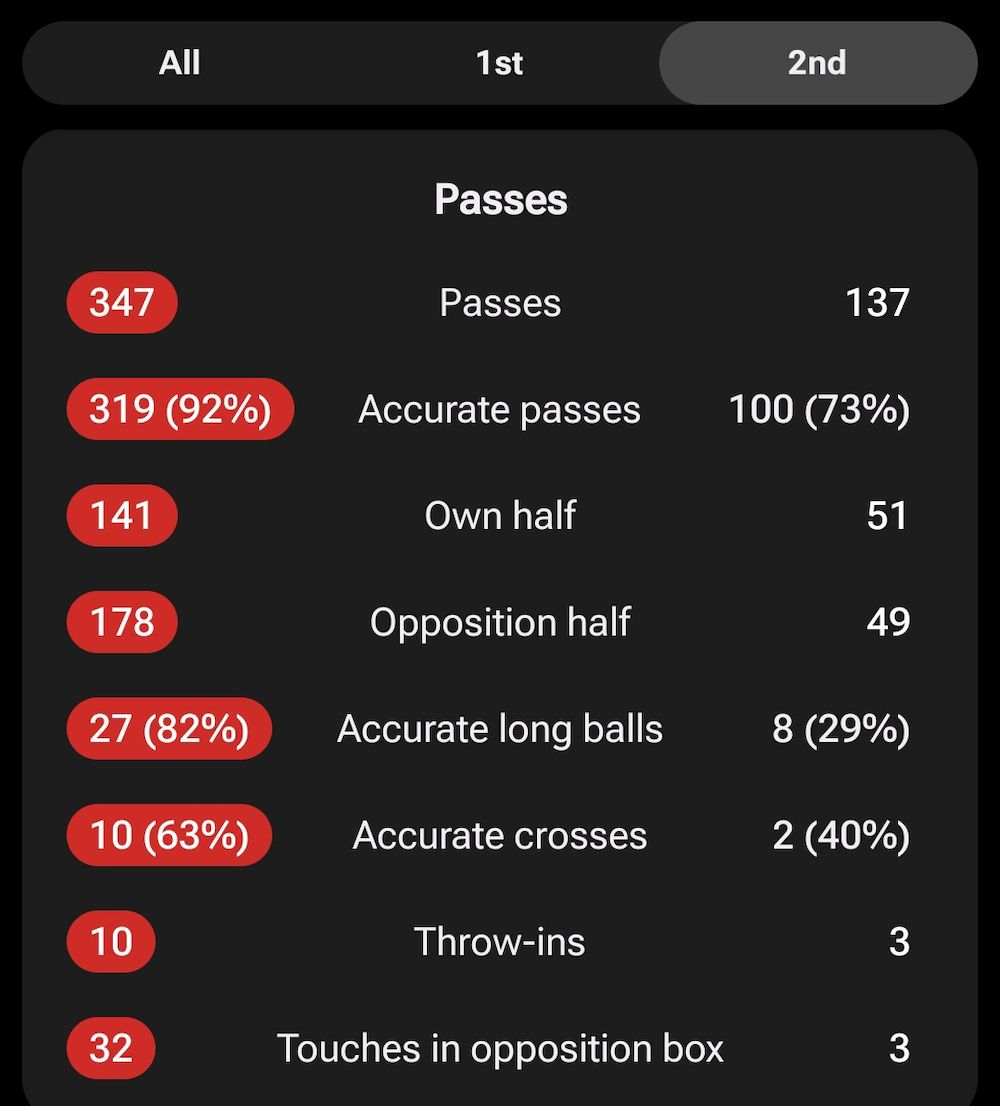
Profile dictates patterns. Change the striker, change the game model.




 English (US) ·