
 3 months ago
64
3 months ago
64
With AC Milan top of the Serie A table after 14 games, the very strong temptation is to say don’t fix what isn’t broken.
The numbers speak volumes. With Massimiliano Allegri back at the helm, Milan have amassed 31 points in 14 league games thanks to nine wins, four draws and one defeat, with 22 goals scored and only 11 conceded.
There are five games left to play (against Sassuolo, Como, Verona, Cagliari and Genoa) to conclude the first half of the season, and Milan are already +1 point compared to what they were at the midway point one year ago. After 19 league games in 2024-25, Milan had recorded just 30 points.
Milan have gone from uncertainty to certainty, and a big part of that is because of the 3-5-2 system that Allegri established early in the preseason preparations and has fine tuned in the weeks that have followed.
However, there is still a discussion to be had. In recent weeks, there’s been plenty of debate about Milan missing a true No.9, and whether this means Allegri should revert to a 4-3-3 if one arrives for the simple reason that Christian Pulisic and Rafael Leao are immovable starters.
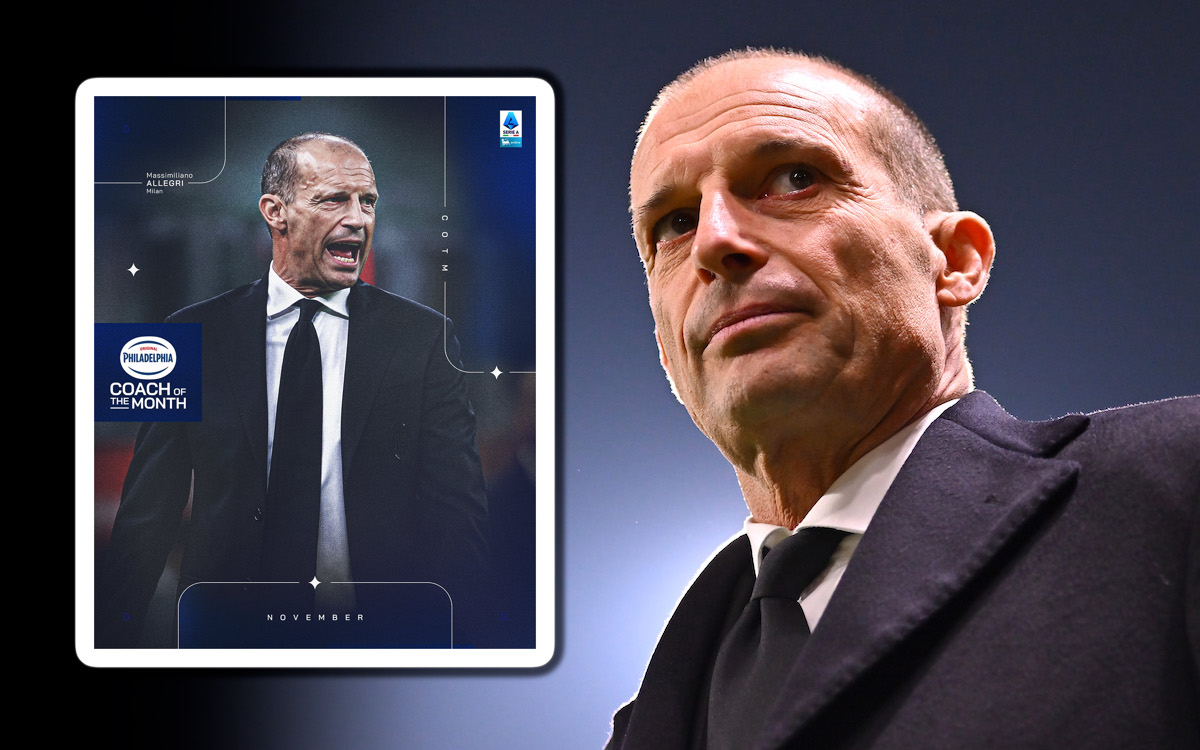
Stick with a winning formula
Should Allegri persist with playing three centre-backs, three central midfielders, two wing-backs and two strikers? There are certainly a number of tactical reasons in favour of the system, in addition to the results which are speaking volumes.
➤ The central corridor: A core principle of Allegri’s game is not to cede the middle of the pitch. Milan got overrun time and time again in transition last season and it would be a large part of the reason for having such a bad defensive record.
By bossing the middle of the park, a team is able to better put a lid on pressure generated, forcing play wide and keeping the ball out of more dangerous zones. As in most strategy games, taking the middle means controlling proceedings.
➤ Less overloads: Playing with a bank of three centre-backs and then three midfielders ahead naturally forms a compact block. As alluded to in the aforementioned point, having density – especially when defending in your own half – makes a team much harder to play through.
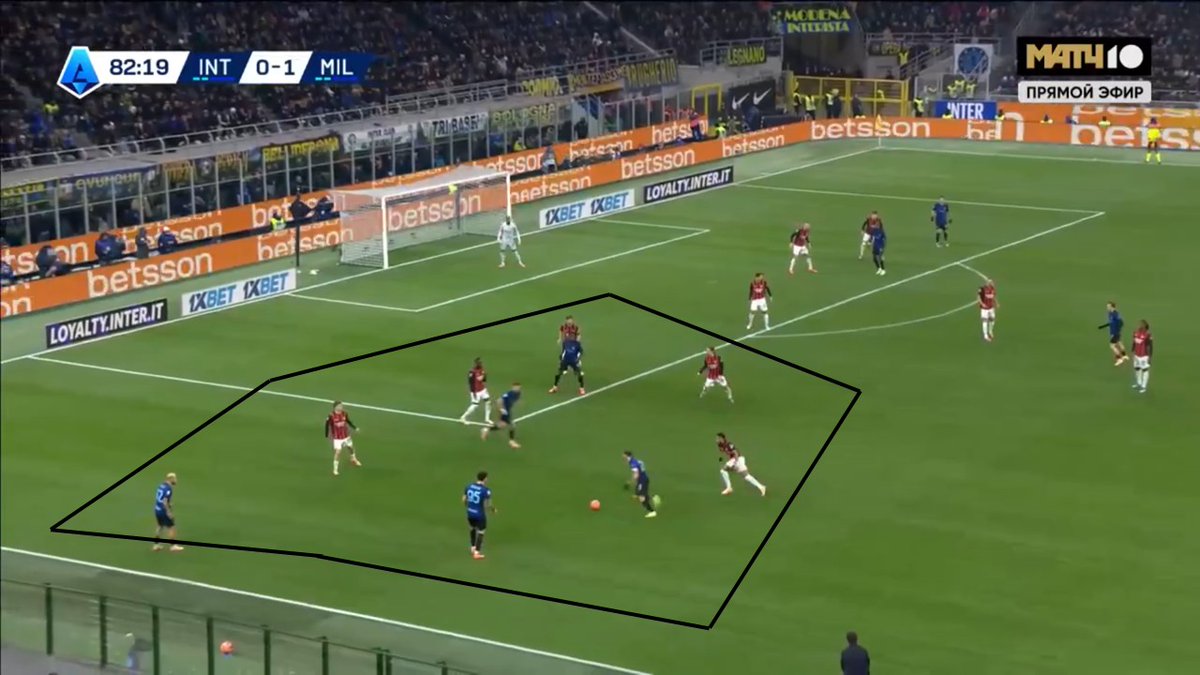
It also means that there is cover in transition, because of the greater number of bodies committed to defending first and foremost, rather than having a dual duty of sorts (like the Reijnders-Fofana double pivot last season).
➤ Natural width: One of the success stories this season has been Milan’s wing-backs, namely Alexis Saelemaekers on the right and Davide Bartesaghi on the left. The 3-5-2 allows them to shine because both are naturals for the role, covering the entire flank and contributing in both phases.
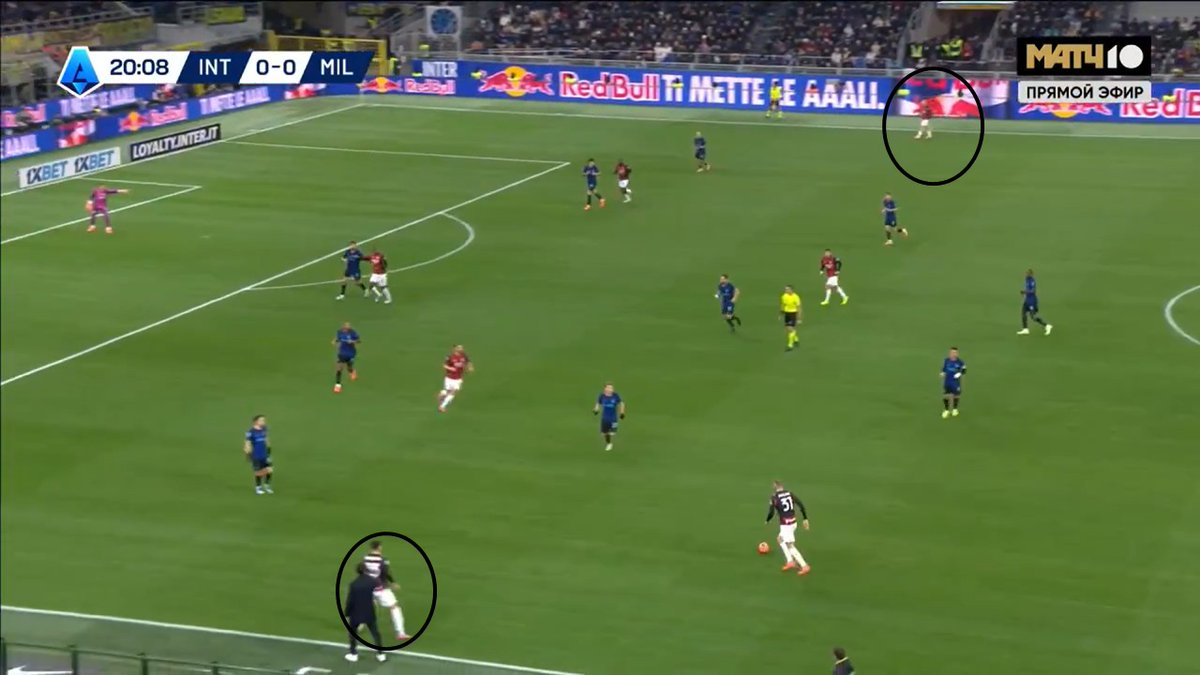
➤ Dynamic front two: Having two strikers on the field has a number of different benefits, even if Milan’s front two are very different in the way they operate to, for example, Lautaro Martinez and Marcus Thuram.
It is not just a case of the two forwards being able to (in theory) combine well and occupy multiple defenders simultaneously. It also helps with the press, as they are able to engage high and defend from the front, while they are then double trouble in transition after winning the ball back.
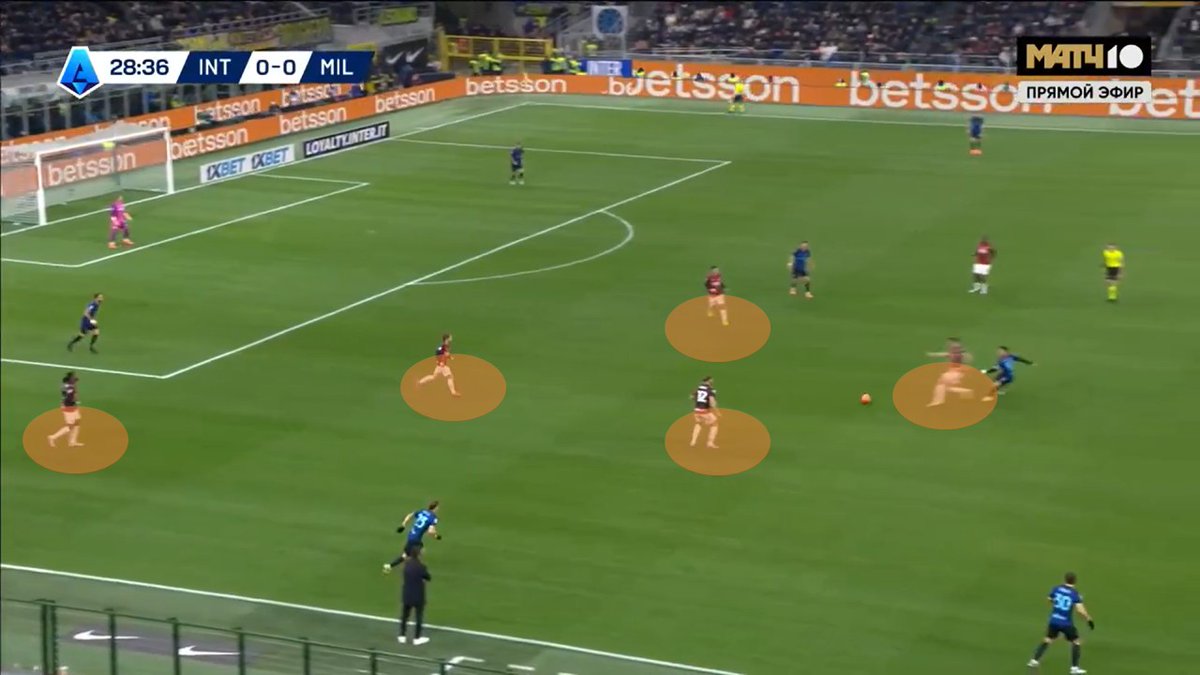
➤ Flexible build-up: Depending on the opponent and on the press they choose, Allegri can instruct Milan to build out with a single pivot (usually Luka Modric) or a double pivot (adding Adrien Rabiot). This assists with passing angles, service out wide and getting the ball quickly into the forwards.
This is also an added plus point for one of Allegri’s great tactical principles: relationism. He likes players to be able to read games with their intelligence and move to where they are needed, but within certain confines.
➤ Individuals: Simply put, the 3-5-2 seems to be getting the most out of several individual players too. For example, Pavlović thrives in this system because he can step out, defend aggressively and even progress the ball without leaving the back line exposed.
Fikayo Tomori is a better outside centre-back while Matteo Gabbia has shown himself to be a natural in the anchoring role. Saelemaekers as mentioned benefits as well, as he covers the entire flank, utilising his engine and technical quality.
Davide Bartesaghi/Pervis Estupiñán face less risk: with three defenders behind them, their mistakes don’t immediately become fatal, allowing them to play with confidence.
The temptation to twist
One thing that we have seen this season is that the formation is far from perfect, and largely because the players still need time to learn the mechanisms, and to get used to working with one another.
➤ Isolation: While the front two in theory should offer double the threat as mentioned previously, the fact that Milan are without a natural number nine has some drawbacks too. They often lack an outlet when under pressure, and given Allegri is happy to cede possession, it can contribute to the seige.
When one forward drops to receive the ball while building out or hoping to counter, the other becomes isolated, breaking the connection between the front two. Not only that, but not having that target man means Milan lack anyone really able to hold the ball up effectively and consistently.
➤ Wide areas: While we mentioned that having wing-backs provides some width, the flanks still feel under-utilised compared to structures like the 4-3-3 or 4-2-3-1. When Leao and Pulisic were playing wider, they were naturals at creating danger by cutting inwards or driving into the box.
On the flip side, that is not necessarily Barteasghi’s strength, as an example. The wing-backs instead have a higher propensity to cross rather than penetrate, and without that natural focal point in the former of a big No.9, it can become quite aimless.
Moreover, when the wing-backs push up to support the attack, it forms a front five which can leave the team a bit more susceptible in transition, given the sheer number of bodies committed forward. The counter that led to Duvan Zapata’s goal against Torino showed how the central areas can become weaker.
➤ Shape paradox: While the Rossoneri often look very organised when camped in their own half defending, the team often lack a stable rest-defence shape behind the high press, making transitions harder to control. That feels like the final major step to being a rock solid unit at all times.

Conclusion
There are a lot of positives that have been established in the first few months of Allegri’s tenure with the 3-5-2. Individuals seem to be improving inside a team structure that appears more safe, and it also marries up well with Allegri’s preference for low-event games.
Any tactical discussion though must be prefaced with a rather obvious premise from the first part of the season: fleshing out the squad with signings (plus returns from injury) is needed to bring about formational flexibility and the ability for effective rotation.
Until then, Max will continue to work to get the best out of what he has, which at times already this season has been very little. Systems aside, the numbers that matter are the points and wins on the board, which are certainly too positives.






 English (US) ·