
 4 months ago
77
4 months ago
77
AC Milan continue to show themselves to be a lethal team in transition, and there are a few keys to being able to exploit counter-attacks.
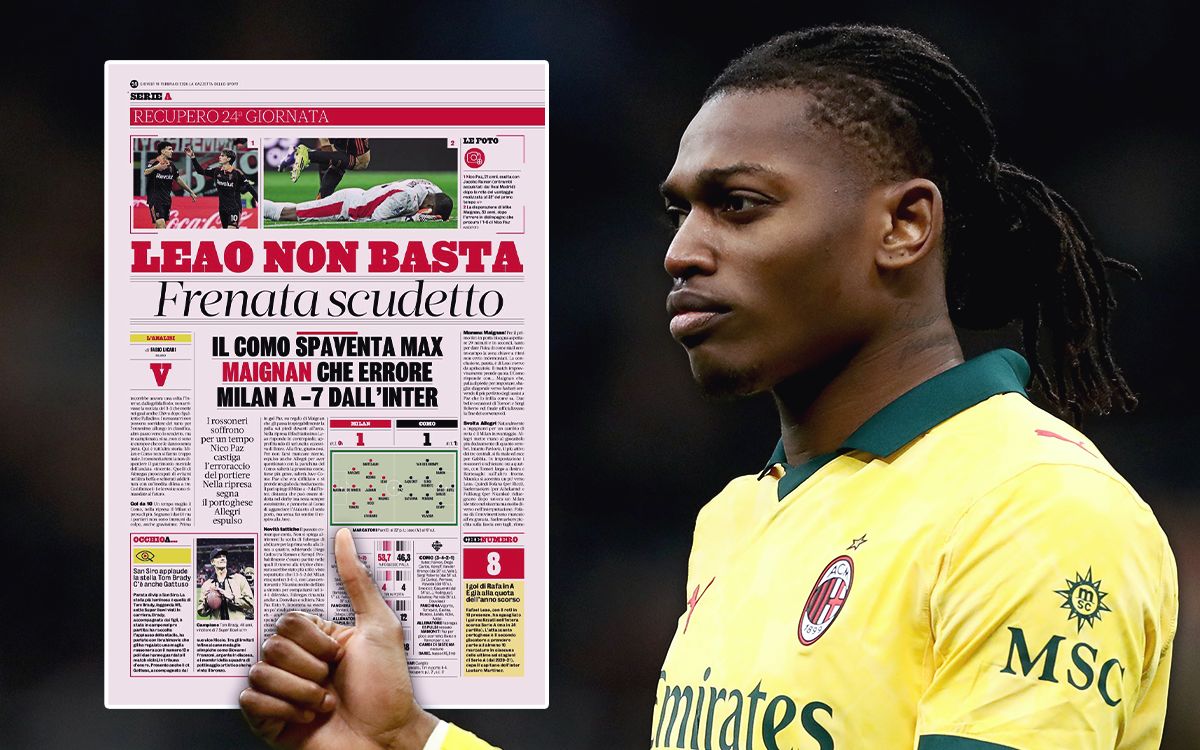
As La Gazzetta dello Sport recall, Marcus Thuram spoke after the Derby della Madonnina on Sunday and he made a rather bold statement: “I think Milan, along with Real Madrid, are the strongest counterattacking team in Europe.”
Before you raise an eyebrow, think about why Milan won the two most important matches of the season (1-0 against Roma and 1-0 against Inter): it was thanks to the counter-attack. San Siro, which has hosted matches since 1926, has appreciated this ancient art.
The contain-and-counter method went out of fashion in football for a while, with tiki-take and possession-based domination taking over. Yet for Massimiliano Allegri and Milan, it is central to the match plan.
A matter of men
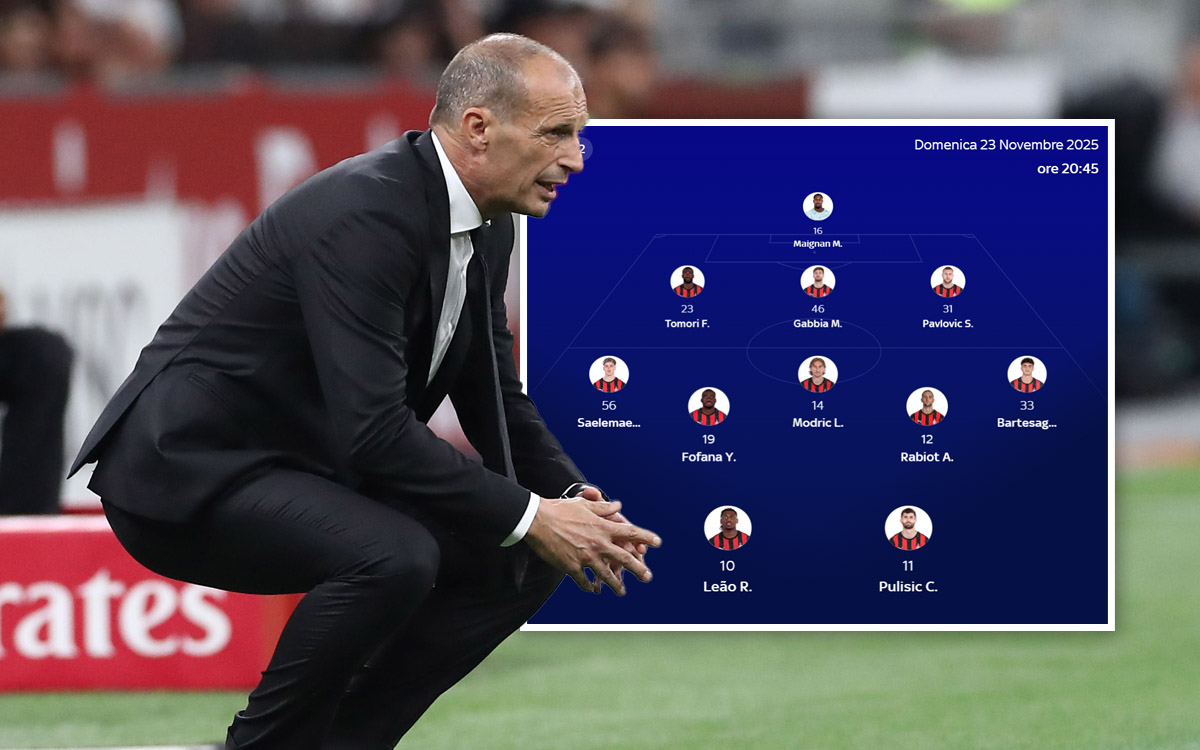
Since the summer, Allegri has doted on the skills of his best men. Rafael Leao, his go-to striker, is much better at attacking the open field than at playing against a compact defence. Saelemaekers, Rabiot, Fofana, and Loftus-Cheek can turn and run forward into space with the ball.
Matteo Gabbia, the central defender who leads the defence, lacks pace. Putting it all together, it’s clear: Milan, according to Allegri, is more effective when defending deep and counter-attacking after winning the ball.
Paradoxically, they do so better in the big games, against teams more accustomed to attacking, because counter-attacks depend heavily on their opponents’ approach. Against smaller teams, who don’t press and prefer to defend deep, it’s almost impossible.
The Serie A counter-attack ranking is clear: Milan are fourth behind Verona, Fiorentina and Como. If we count shots on target, they’re third. Side note: ‘Counter-attack shot’ here refers to a shot that comes just seconds after a ball recovery in your own half. Like the goal against Inter.
The key
Leao is the cover star of this story, but there are different levels of interpretation. The world sees Rafa accelerating with the ball at his feet and understands that the No.10 is phenomenal when he has space.
This season, however, he’s doing things never seen before. His position is decidedly more central, allowing him to attack in transition in multiple areas. On the left, which remains his favourite. In the center, and even on the right.
Rewatch his goal against Inter. When Fofana wins the ball back, Leao is good at laying it off and sending his team-mates forward in transition. Above all Saelemaekers, who immediately understands the situation and begins sprinting while the others interpret things.
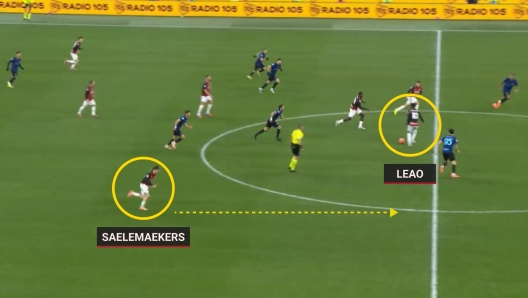 Image: Gazzetta.it
Rafa often plays off the shoulder of the last defender, the opposing centre-back. Also because – and this applies to Acerbi and almost all his colleagues – that opponent is slower than him 99% of the time.
The ‘great puzzle’
Milan’s most dangerous player on the counter, paradoxically, isn’t Leao. Rafa is more identifiable, both without the ball (he moves less) and with it (you know he’ll run at you if he can).
Christian Pulisic, on the other hand, appears out of nowhere because he’s incredibly good at finding himself free between the lines, reading a situation and taking advantage. He’s been doing it his whole career.
The image below shows the start of Leao’s goal move in Milan vs. Liverpool, on tour in Hong Kong, a match that stands out because Milan played so well, playing purely to contain the Premier League side and spring forward at speed.
Pulisic finds himself unmarked here, and a second later he shifts the ball to his left foot and plays it to Leao in the half-empty half of the pitch. The goal against Inter confirms this: Pulisic follows the play and realises before Akanji that Saelemaekers’ blocked shot will be turned into an assist for him.

Surprise effect
It can’t just be down to Leao and Pulisic, though. The entire team focuses on interceptions and – as soon as they win the ball back – looks ahead and looks for the two strikers for immediate vertical movement of the ball.
This is where the individual qualities come into play. Modric is a phenomenal quarterback. Saelemaekers never holds off making a sprint, down the wing or cutting into the middle. Loftus-Cheek, Fofana and Rabiot can drive forward 50 metres with the ball.
It’s not easy for an opponent to organise preventative marking to protect themselves from a counter with sometimes five men to stop. The wild card in this deck is Strahinja Pavlovic, a defender who instinctively surges out of the defensive line, like against Roma.
When Bartesaghi wins the ball back, Pavlovic is still marking Mancini in Mike Maignan’s area. Seven seconds later, he’s already in the other half. Fourteen seconds later, he scores. And Mancini? Left in the dust.
Fantastic video from San Siro of Rafael Leão assisting the Strahinja Pavlovic winner for Milan against Roma.pic.twitter.com/5VyPY68jP4
— Sean Gillen (@SeanGillen9) November 3, 2025
Putting the ingredients together, the approach makes sense. The team mentality, an attacking partnership like Pulisic and Leao, the midfielders capable of running forward, and the all-rounder Pavlovic make Milan a perfect counter-attacking team.
It would be interesting to know what Theo Hernandez thinks when/if he watches his old club, because a player like him, in Allegri’s system, would be an added bit of spice.


 English (US) ·