
 4 months ago
104
4 months ago
104
In the sixth edition of Meeting the Milan Media, we spoke to the brilliant Pietro Mazzara, who is well known for his work with MilanNews and Tuttosport.
Note: This interview was initially published on our Substack, SempreMilan Insider, back in September 2024 as part of our Meeting the Milan Media series.
As one of two leading halves of MilanNews.it, which is undoubtedly the biggest AC Milan news website in Italian, Mazzara has become a staple as far as delivering news to Rossoneri fans goes. However, while some might just know him from the breaking news and columns, there is a lot more work that goes on behind the scenes.
In the interview below, we get to the bottom of why Pietro became a journalist, how long he has been in the field and what the biggest challenges are for him on a day-to-day basis. Furthermore, he discusses the differences between working for MilanNews and Tuttosport, why calcio should take a page from futsal’s book and what the RedBird ownership must do to win over the fans in Italy.
First of all, thank you for doing this interview with us. We want to start with a simple question: Are you an AC Milan fan? If so, how did you become one?
“I’ve been a Milan fan since the beginning of my life, my mom was pregnant with me when Milan won the Scudetto in 1988 with Arrigo Sacchi, so I was born under a great star (laughs). She was and still is a huge Milan fan and wanted to go to Duomo to celebrate the win, but my dad said ‘No what are you crazy?!’ (laughs). So it’s always been about AC Milan since the start for me and then it became my work.”
What got you into football journalism and how long have you been working in the field?
“I have been working in this industry since 2008. I first became a writer on MilanNews.it, a writer-reporter, I started my career here and I think I will end my career here. It’s all of my life. Together with Antonio [Vitiello] in 2010 we became the chiefs of this website and we rebuilt it, we created what it has become in the last 14 years and I think that is one of the most relevant sites about Milan in Italian.
“A lot of people ask us ‘why do you not write in English?’. The answer is it’s not easy, we want to bring the best-quality product to our owners and readers. We know that we are famous all over the world, so there are friends like you who translate our breaking news and thanks to this it really doesn’t matter which language we write in.”
Please tell us a little bit about what you do on a day-to-day basis…
“MilanNews.it is what takes up the most time for me on a daily basis. Along with Antonio, I start late in the morning by sending texts, making phone calls and organising the day to find news, to break news, that we then can give to our staff writers. We are the mind, but they are the heart of the site. We are a great team of Milanisti and this is one of the main requirements to work with us.
“We have writers who are hungry and want to improve themselves every day. They are doing better for each day that passes, you can call us a news machine (laughs). Between short news, articles and columns, we have around 140 articles every day and that is not easy. But we have to do it and this is where our main strength goes.
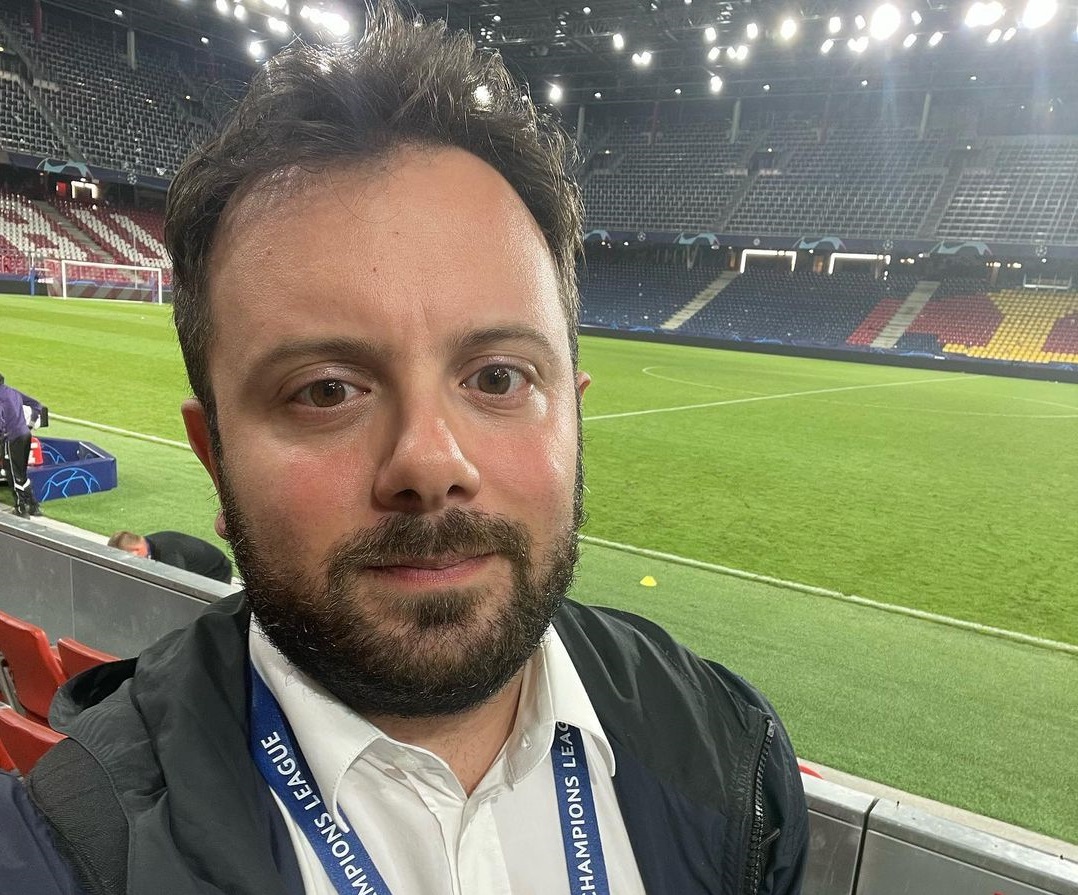
“As for Tuttosport, I’m a contributor so it’s easier. When you are keeping tabs on everything that happens in the Milan world every day, it’s easier to write for a newspaper but you also have to make sure that your article isn’t dead by the time the readers get it in the morning.”
What are the most challenging parts of your job, that you think people should know about?
“I think that fans see journalists as privileged, like ‘you are going to be paid to talk about Milan?’, ‘you have a free season ticket’ and so on. But it’s nothing like what they suggest. If they send you to a big match like Milan vs. Real Madrid, which in reality includes pre-match, the actual game and post-match coverage, people think it’s a golden world but it’s not a golden world.
“We have so much stress in this work, you have to motivate yourself to find new ideas and compete with big outlets like Gazzetta dello Sport, Sky Italia and other colleagues as well who also do a good job. This is the most difficult part, not to be a copy. We want every day to strengthen our identity, this is what it means to be a journalist and it’s a difficult part of our life.
“It’s not easy, the brain isn’t at its best every day. But as a team, and this is something I really want to underline, we are very strong at MilanNews. We have a lot of talent, like Antonello Gioia, Manuel Del Vecchio and Francesco Finulli. They have a lot of talent and give me and Anto tranquillity to search for news and look for something else that no other source has.”
What is your best memory of Milan since you started covering the team?
“My best memory, or actually I don’t want to say my best memory, rather our best memory as it was was our first-ever big scoop. It was in the summer of 2010, after August 18, when I broke the news that Zlatan Ibrahimovic was the main target for Milan. It was the summer of Luis Fabiano, Edin Dzeko, Emmanuel Adebayor and so on, a lot of names were linked with the Rossoneri.
“Thanks to a Spanish source that I got to know, he told me that there were talks between Milan and Ibrahimovic because Zlatan wanted to leave Barcelona. I remember the days when we were pushing the news because other media sources didn’t consider it. When the deal was done, a lot of them came back and said ‘sorry you were right’ (laughs). Funnily enough, we are close friends with these people now and that’s fantastic.
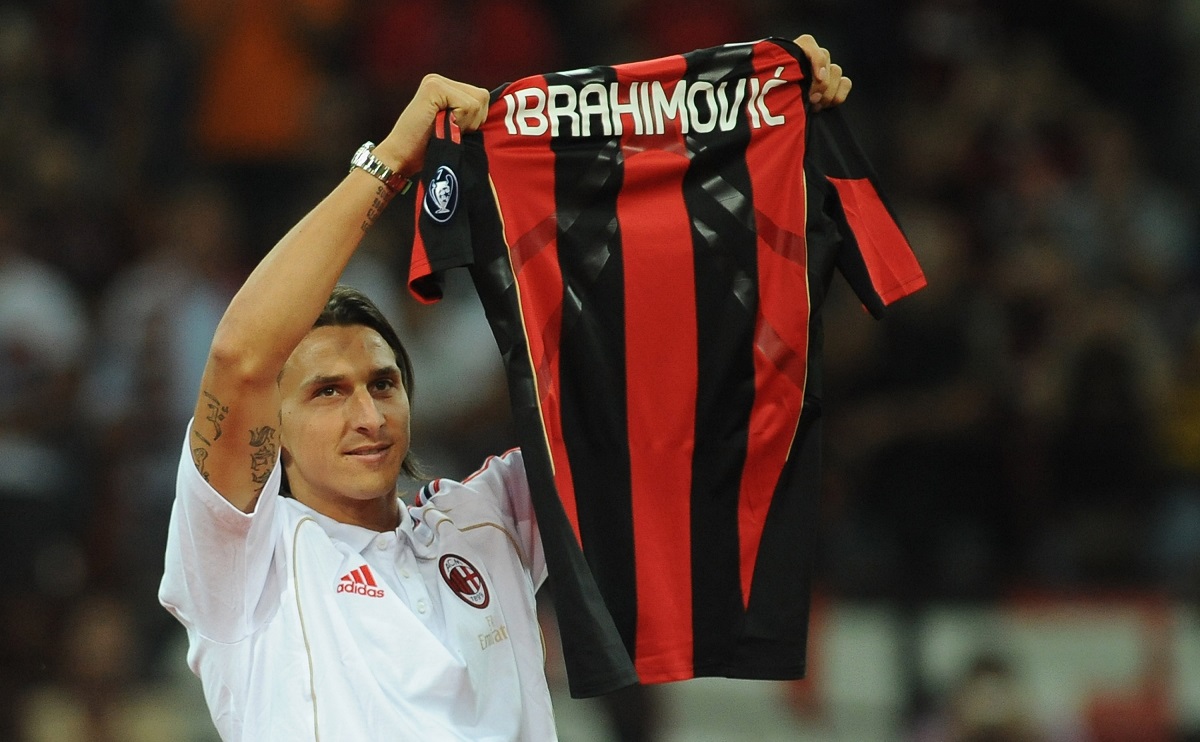
“We were young as a website and we were at the beginning of the new organisation, but we broke the internet, the AC Milan internet and the Spanish internet (laughs). I remember that Radio Cataluna and Mundo Deportivo started quoting us, and in Italy no one quoted us because we didn’t have the status or the power. After this summer, we exploded.”
Most will know you from your work at MilanNews, at least the fans from abroad who don’t read the Italian newspapers every day. However, I wanted to ask how the work differs from MilanNews and Tuttosport. Would you say that even a ‘traditional’ outlet like Tuttosport has become more modern like MilanNews?
“The main difference is that on MilanNews, you can break news immediately. If you discover something and want to put it out, you can open your writing system, write it and publish it. With the newspapers, it’s kind of different as you have to find the right way to write about news that people already know. It’s difficult to do exclusive news in this format as in 2024, soon 2025, the information is already everywhere on the internet.
“I think that the future of newspapers is to give different stories and angles, to go behind the scenes of certain news, find some details that can make your story more alive not just for one day, but two to three days. Just like when you take a screenshot of something on X, a story in a newspaper can live forever so you have to find the right details and information to make it alive.”
In addition to football, I can see that you have worked a lot with futsal in the last few years as a commentator. What got you interested in that sport and even though it is similar to football, is there something that makes it stand out?
“It’s a fantastic world and sport, believe me. I think that football in general must adopt some of the rules in futsal, like effective time, it’s another world and it’s a more human world in my opinion. Here in Italy, there are several of the best futsal players of the last 15 years.
“Last Saturday, I was at a tournament as a host and I was near players like Cuzzolino, Maxi Rescia, Argentinian players who won the World Cup. And they were right next to me! Eating their sandwiches and talking to me. In football, it’s impossible to have these kinds of feelings and emotions. I think that futsal should be more involved in the youth systems of the big football clubs.
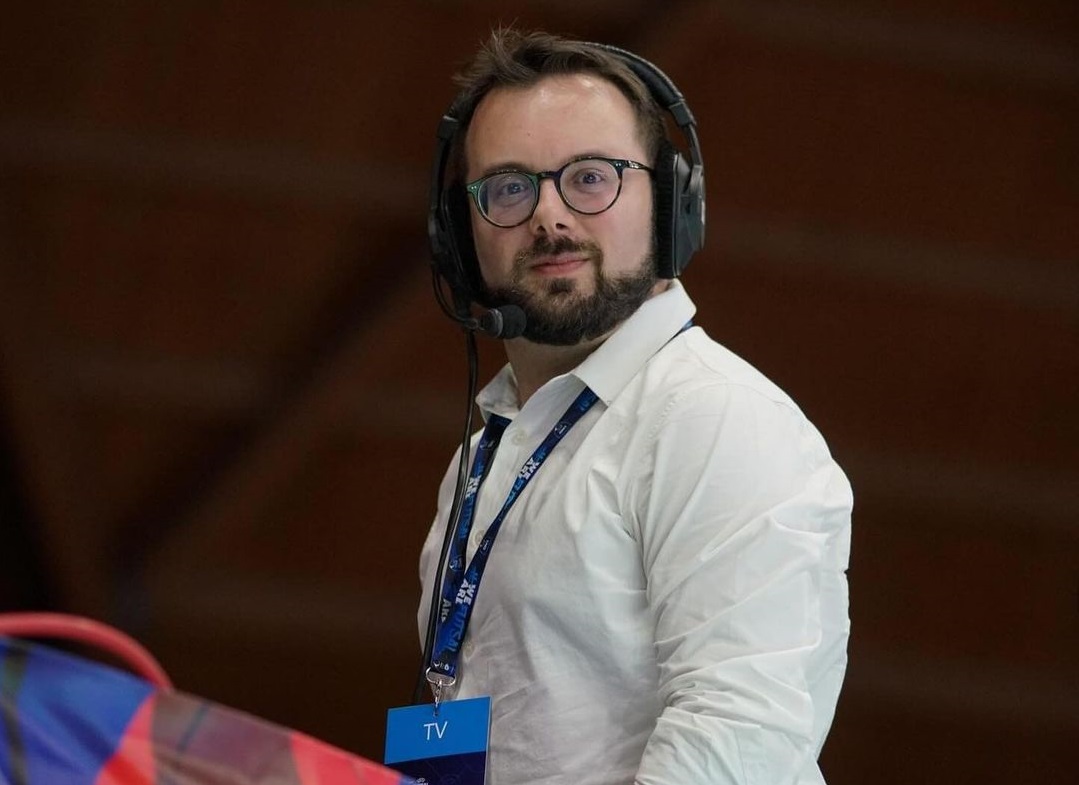
“Equally, having first teams in futsal can be something new just like Sporting Lisbon, Benfica and Barcelona have futsal teams in the first tier. It could be great because the sport is fantastic, good for television, and the final goal is the same: to put the ball in the back of the net. It’s another world, another sport, but wow what entertainment.”
From an Italian point of view, which perhaps is hard for the fans abroad and myself included to picture, what are your thoughts on the ownership of RedBird and Gerry Cardinale? Can the project go far?
“I think that the RedBird ownership is in a discovering process. Here in Italy, the sport cannot be compared with American sports, and the same goes for the mentality in American sports. Outside the pitch, RedBird are doing an amazing job because the AC Milan brand is growing and the revenue is still increasing, and next month the result will be positive for the second year in a row. And this is a great achievement.
“However, you know, the results on the pitch are the main source of income. I don’t know what is going to happen with Paulo Fonseca (Interview was carried out in September 2024), because he won the derby and we were so happy, but I think they have to understand that positive emotions must be created among the fans.
“We lived a summer without emotions, we all expected a huge reaction to Inter clinching their second star. Clearly, this didn’t happen just like choosing Fonseca when there were a lot of big names on the market, like Conte, Sarri and Tuchel. They chose Fonseca and we don’t know what’s going to happen.
“I think that they [RedBird] have to split their mentality. Outside the pitch, they need to think like Americans but for everything that concerns the pitch, they need to think as Europeans, as Italians, as Milanisti. The fans, and also us journalists as sources of news and the press, need to believe in what we are talking about.
“RedBird are slowly understanding this, I believe, as a big club they need to think globally but inside this global vision, they must not forget the sporting factors. If you don’t win over the fans, those who love Milan will start saying ‘with this money, I can go out with my girlfriend or wife for dinner, and it will still be less than going to San Siro, buying merchandise’ and so on. Stuff that helps Milan increase its revenue.
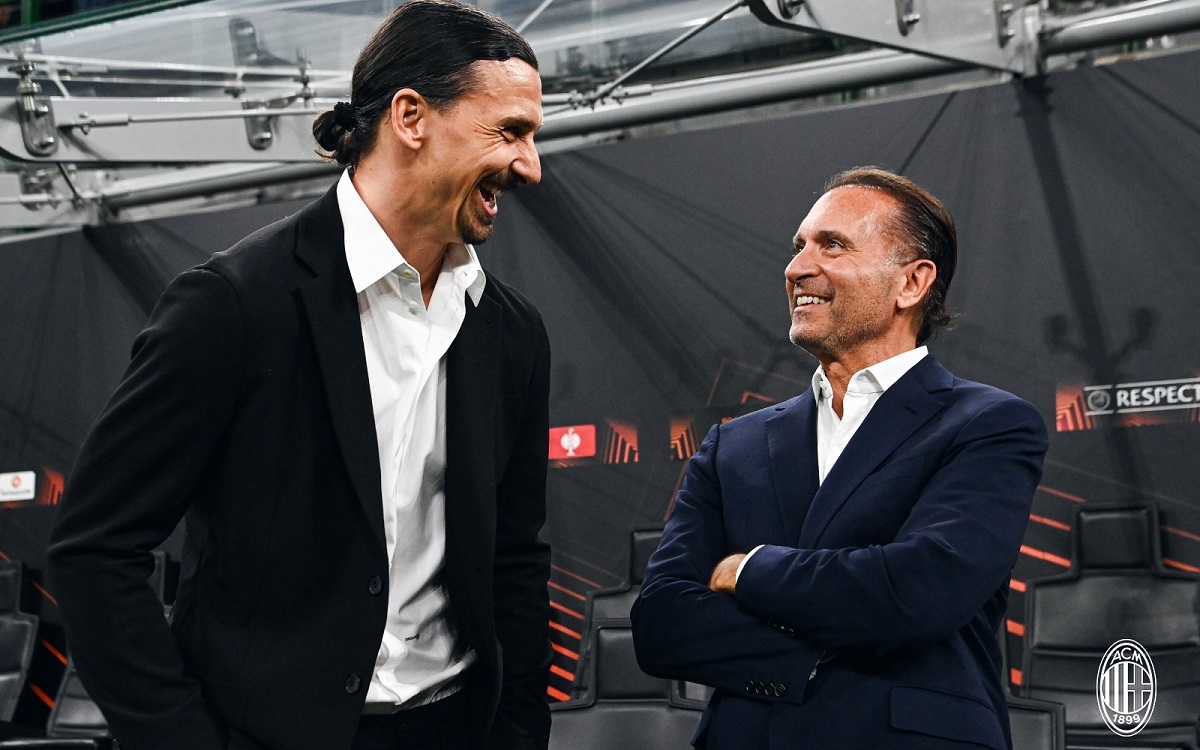
“The important thing is to reinvest the revenue on the mercato. I think Giorgio Furlani did a good job with the negotiations, we will see with Emerson Royal… but the first request from Salzburg for Pavlovic was €30m and Milan ended up paying just €18m. They need to create belief in their philosophy among the fans, and for that they need something special…”
I guess the best example is the ticket prices against Liverpool, which have been a hot topic of discussion in the last few days. To me, they were absolutely crazy because if you were a family of three persons you had to spend over €350 euros for one game, and that just doesn’t work in Italy…
“You said it right, you can spend €350 just for the tickets and then you must add the sandwich, the transportation. So in the end, it can cost a family of three €500-600 euros for one match… Wow.”

 English (US) ·