
 1 month ago
100
1 month ago
100
AC Milan travelled to Pisa on Friday night in the first game of the latest Serie A round, and they were given a scare by relegation battlers Pisa.
Ruben Loftus-Cheek’s header in the first half was a welcome opening of the scoring after a dull spectacle to that point. Then, the turning point seemed to have come when Niclas Füllkrug missed a penalty to make it 2-0.
The man that gave away the penalty – Felipe Loyola – scored the equalising goal for the home side after that to put them back on level turns. However, a 40-year-old hero was on hand in the final few minutes as Luka Modric played a one-two with Samuele Ricci and netted the winner.
It may have been harder than hoped, however it is a very valuable three points for the Rossoneri ahead of a weekend in which Inter beat Juventus 3-2 in a controversial game, and Napoli take on Roma tonight. Below is the tactical breakdown of the game, from Rohit Rajeev.
Set-ups and shape
It had been 10 days since Milan had last played, a 3-0 win in Bologna. Massimiliano Allegri made just one change from that starting line-up, with Fikayo Tomori coming in for Koni De Winter. Once again, three of the four forwards available were not at 100%, so Loftus-Cheek started up front.
Oscar Hiljemark meanwhile was coaching his first home game as the new Pisa boss, and he opted for a 3-4-3 system. The veteran Nicolas was in goal; Canestrelli, Caracciolo and Bozhinov were the back three; Touré, Aebischer, Loyola and Angori the midfield line; Moreo, Stojilkovic and Tramoni the forwards.
One key variation was that Gabbia inverted into midfield during possession. The objective? To create central overloads, form numerical superiority in the first and second phase, and to disrupt opposition marking references.
It’s a subtle structural tweak, but one that gave Milan better control and progression through the middle.
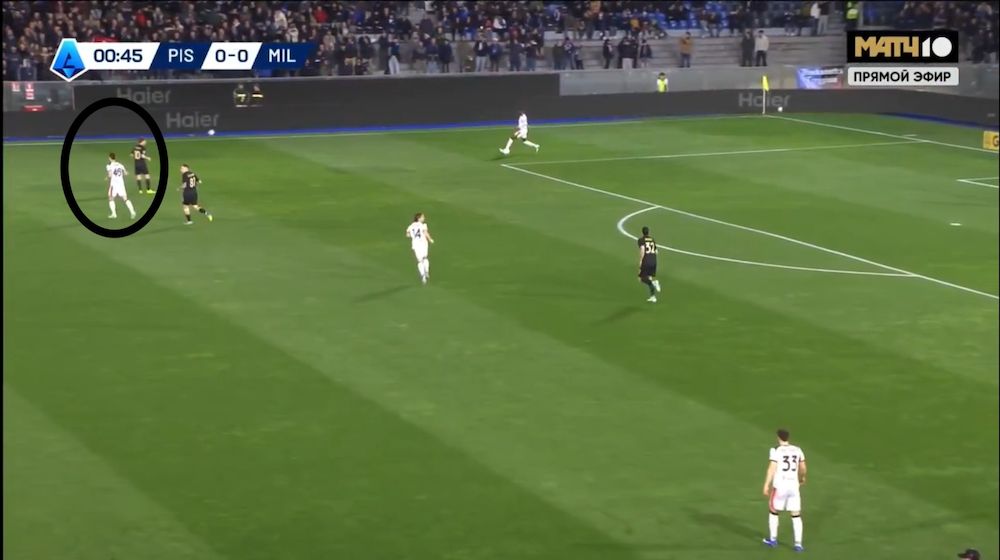
Pisa used a 5-3-2 central block to stop any progress of Milan through the centre.
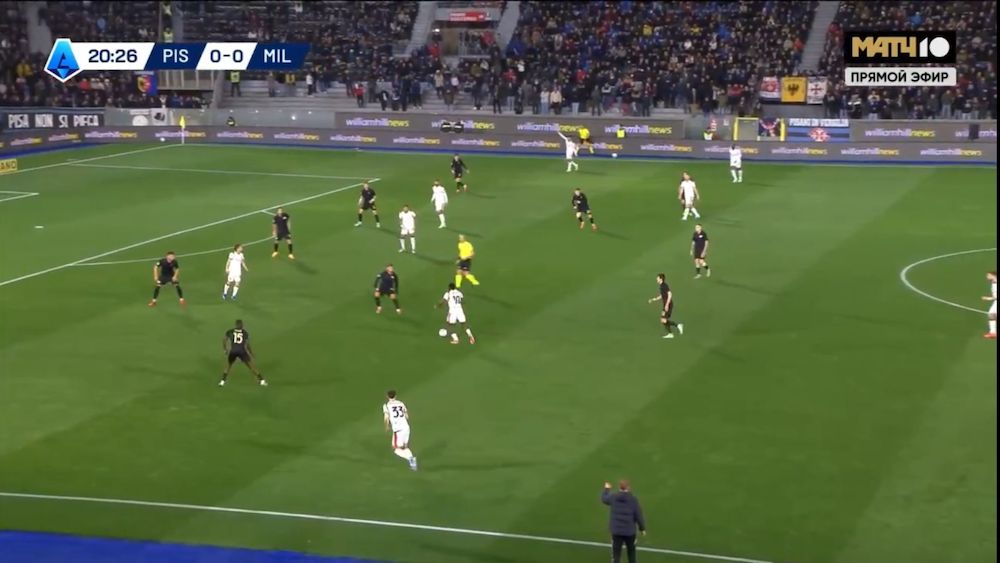
As a counter-measure Milan would pump numbers forwards having four players forward to hold the last line of Pisa defenders back.
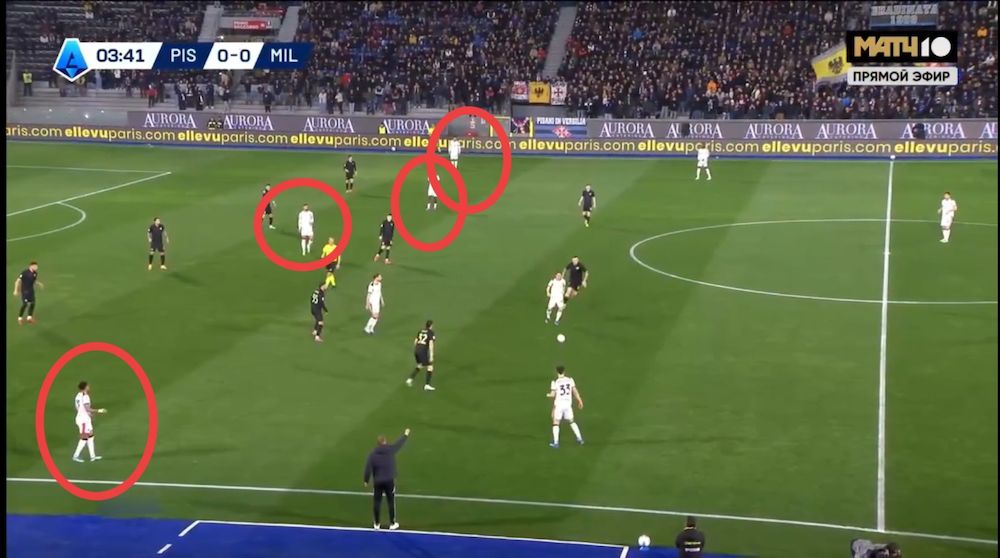
Midfield freedom
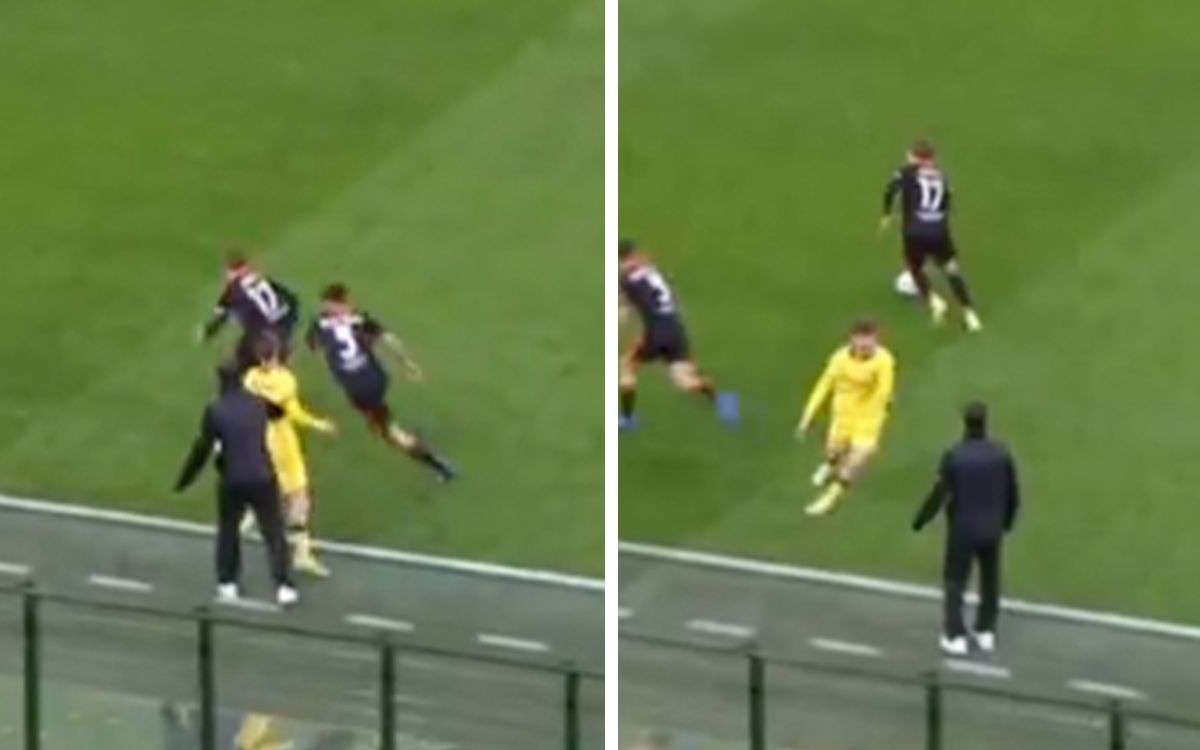
Allegri gives freedom to midfielders and are not kept to occupying any particular zone. This as we can see allowed positional shifts like how Modric and Rabiot are doing.
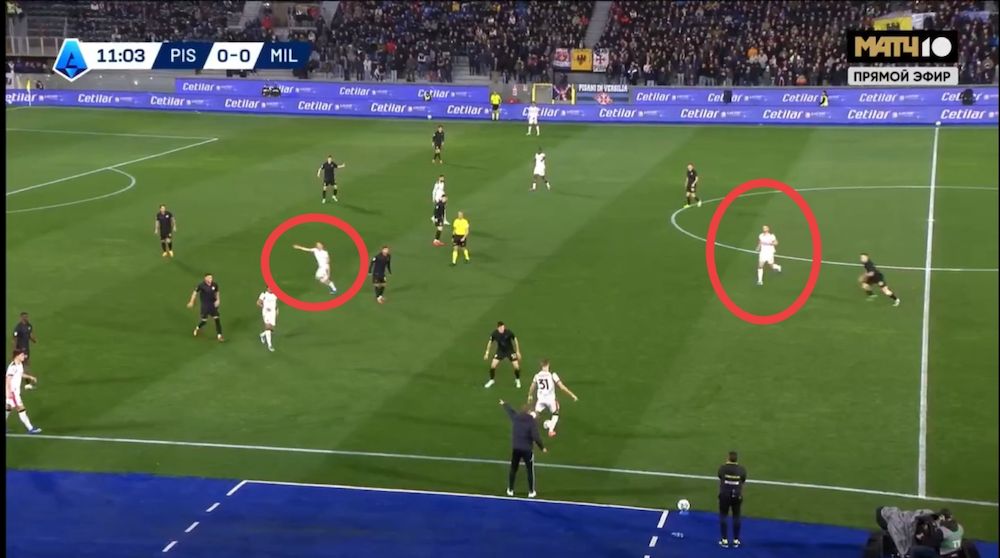
As we can see Modric would make forward runs and then make run backwards pulling his marker away and creating pocket of space.
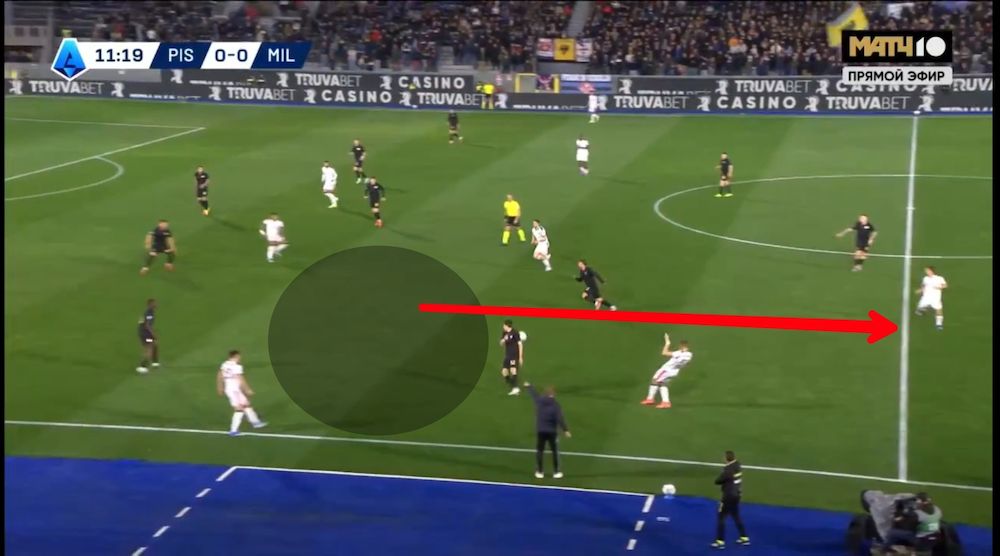
Milan would also overload the wings and pull the Pisa block towards the corresponding wing and then use Luka Modric to shift over to the other wing to make crosses.
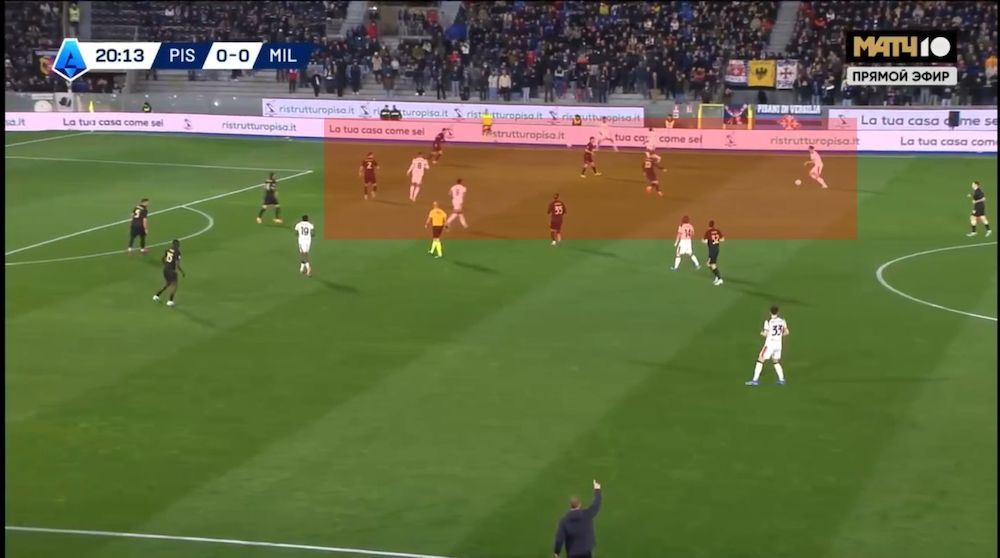
Pisa’s chance creation technique entailed their front two making runs on the shoulder of our last line of defenders thereby dragging our line back and creating space between the lines during counter-attack.
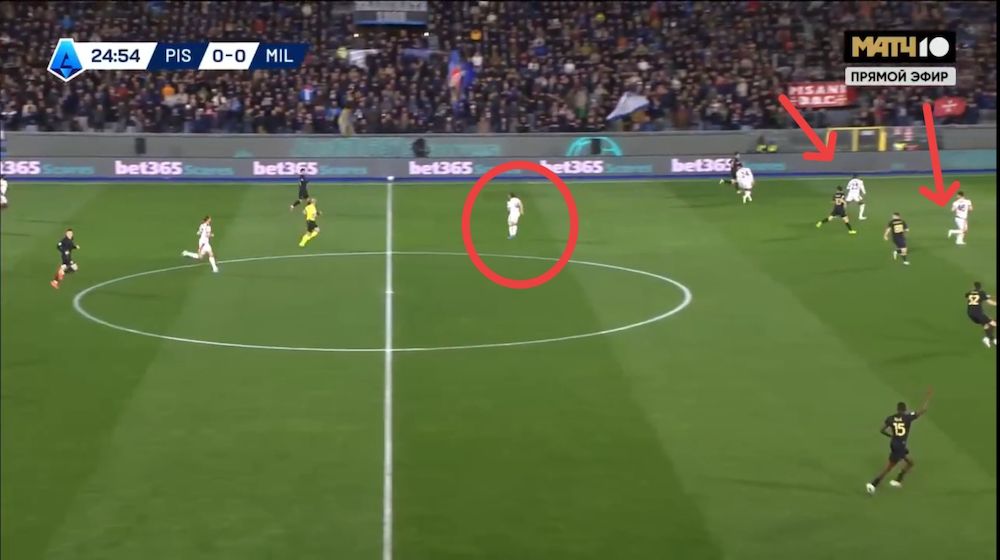
The goals come
Athekame meanwhile whipped a ball with top spin and an out-swinging delivery which did not allow the keeper to come and gather and therefore Loftus-Cheek was able to head the ball in past the Pisa keeper.
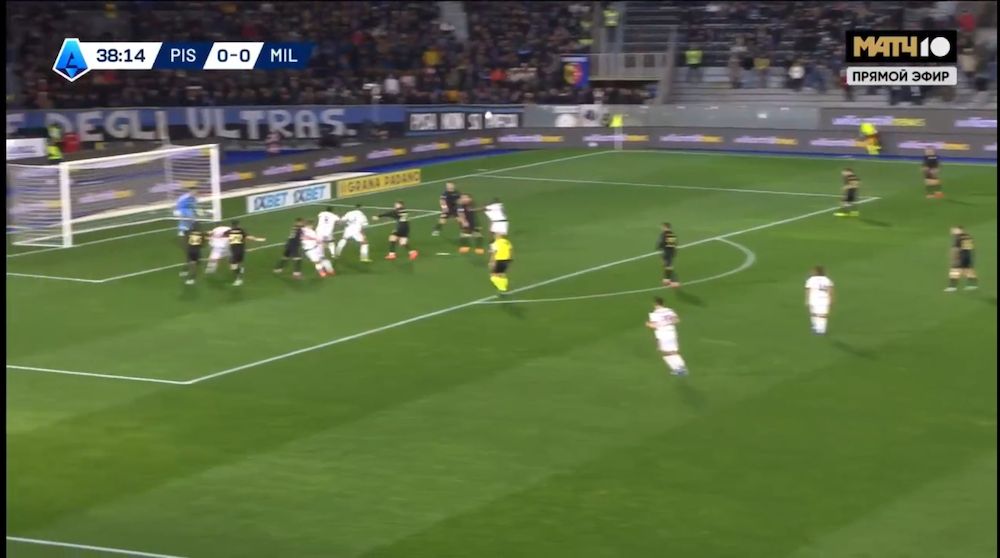
In the second half, a simple chipped pass from Pisa and poor defending from Tomori and Gabbia meant meant the Pisa player was able to cross the ball in. Meanwhile Athekame didn’t follow Loyola into the box and then Milan conceded.
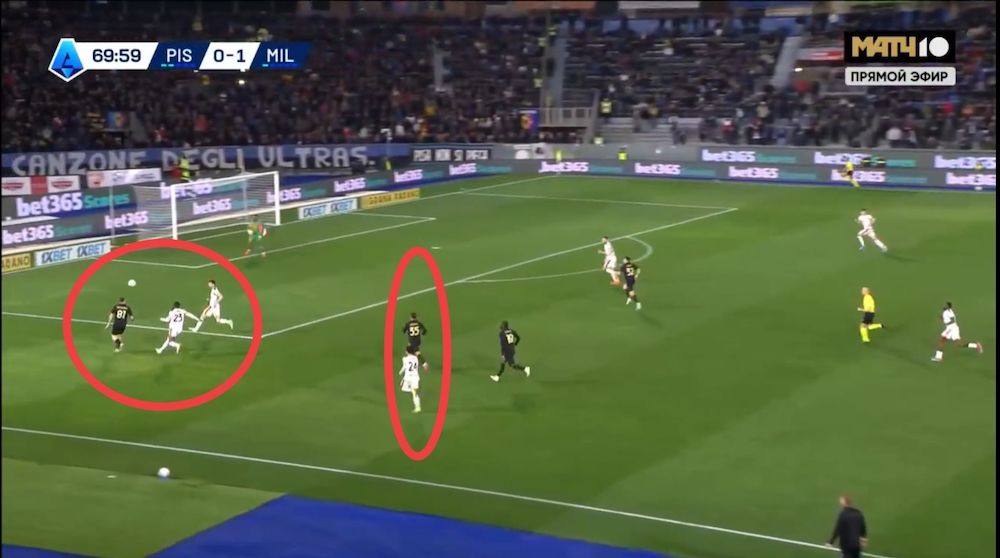
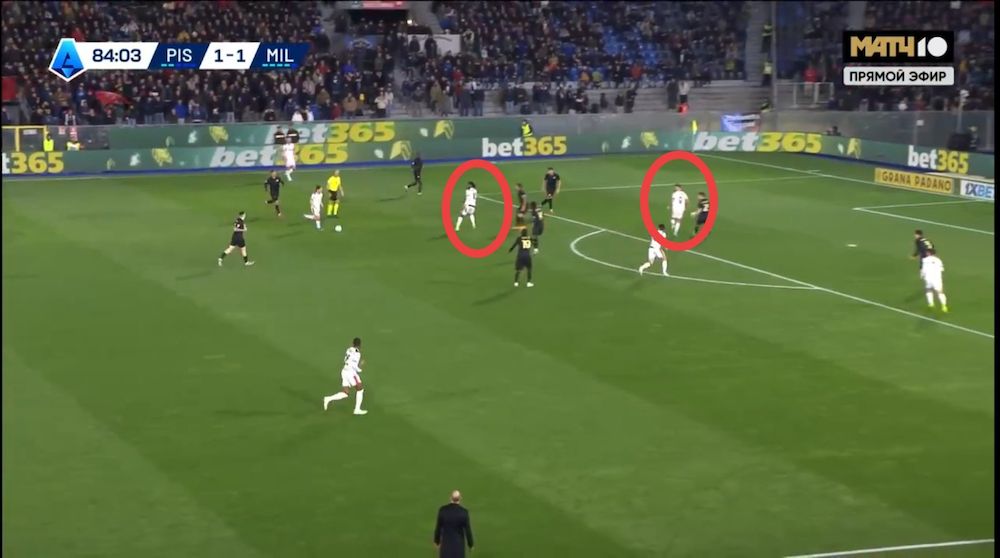
Milan shifted to a 4-2-3-1 with Ricci and Modric playing a double pivot. With 2 wingers and 2 wing backs now Milan had more players in the wings and there Pisa were committed to putting more numbers wide and therefore space opened up in the centre.
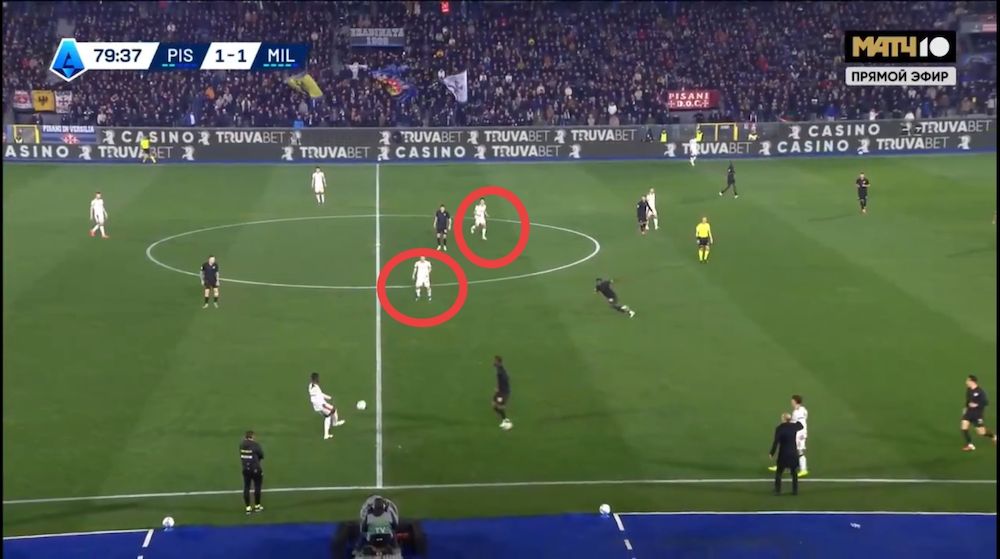
Before his goal Modric’s passing path to Ricci was cleared by Fullkrug and Leao making off the ball runs allowing the pass and Modric did a toe poke to finish the ball past the Pisa keeper.
Spreading out
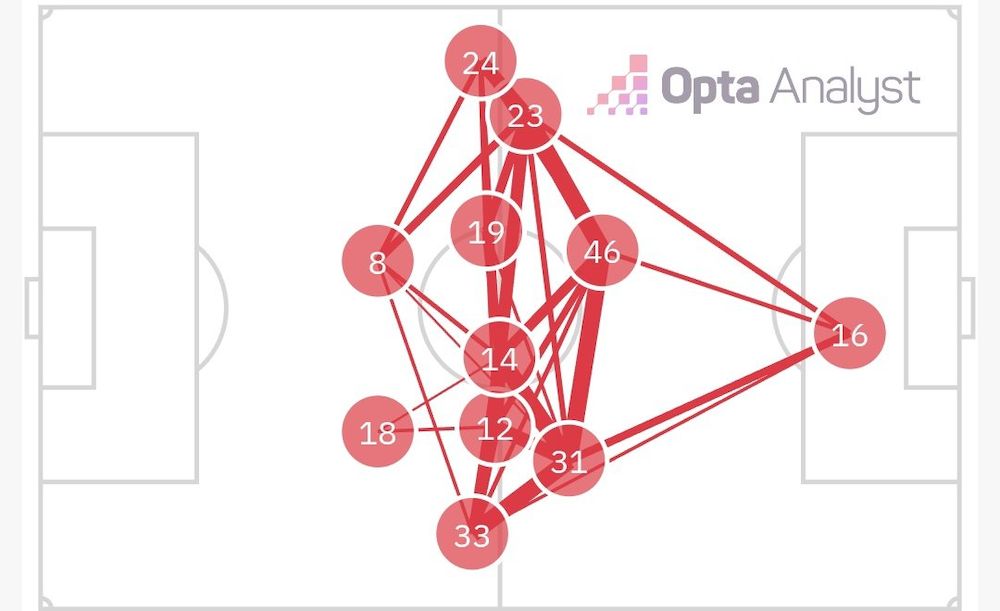
The pass map and position map indicate that Milan spread their players across the pitch. This was partly because of the fact that Pisa set up with such a deep central block, forcing the Rossoneri around the sides.
However, it was also a ploy from Allegri: by getting players into the box there were targets to aim at, and the service came for the opening goal.


 English (US) ·