
 2 months ago
76
2 months ago
76
AC Milan began 2026 the same way that they ended the last calendar year: with an important three points and another clean sheet.
This time the margin of victory was narrower, as they edged Cagliari 1-0 at the Unipol Domus. Milan started the game poorly and in truth they could have been at least a goal behind with Matteo Prati in particular missing the target, but they managed to get to half-time on level terms.
Once again, whatever Massimiliano Allegri said at the interval worked as the Rossoneri came out looking much sharper and much more in control. The only goal of the match ended up coming early in the second half, with Rafael Leao finishing from Adrien Rabiot’s cut-back.
It is a win that puts Milan top for the time being, though Napoli have beaten Lazio away to respond well, and Inter host Bologna with the chance to climb back above their city rivals with three points later on Sunday. Below is Rohit Rajeev’s tactical analysos.
Chaos and confusion
The build-up to the game was probably the most uncertain that Allegri has experienced since his second spell at Milan began. Even a couple of hours before kick-off there were doubts about who would play in various departments.
The coach confirmed during his pre-match press conference that Christopher Nkunku would miss out with an ankle issue, just days after his first league goals for the club. Christian Pulisic and Matteo Gabbia both recovered but were only fit enough for the bench.
The big news was that Strahinja Pavlovic was not deemed fit enough to start due to a fever, and that forced a late shift in the plans. Right up until kick-off it was an unknown whether he would be involved at all, or if he could in fact start.
So, in the end, Allegri made three changes to the starting line-up from the team that beat Hellas Verona on December 28. Pervis Estupinan came in at left wing-back with Davide Bartesaghi shifting to centre-back to replace Pavlovic. Youssouf Fofana went back into midfield, with Rafael Leao reinstated up top.
On the other hand, Cagliari coach Fabio Pisacane was expected to play a 4-2-3-1 system right up until the teams came out, at least according to the major newspapers. In the end though he went with a back three, presumably to try and match Milan up.
Set-up and build-up
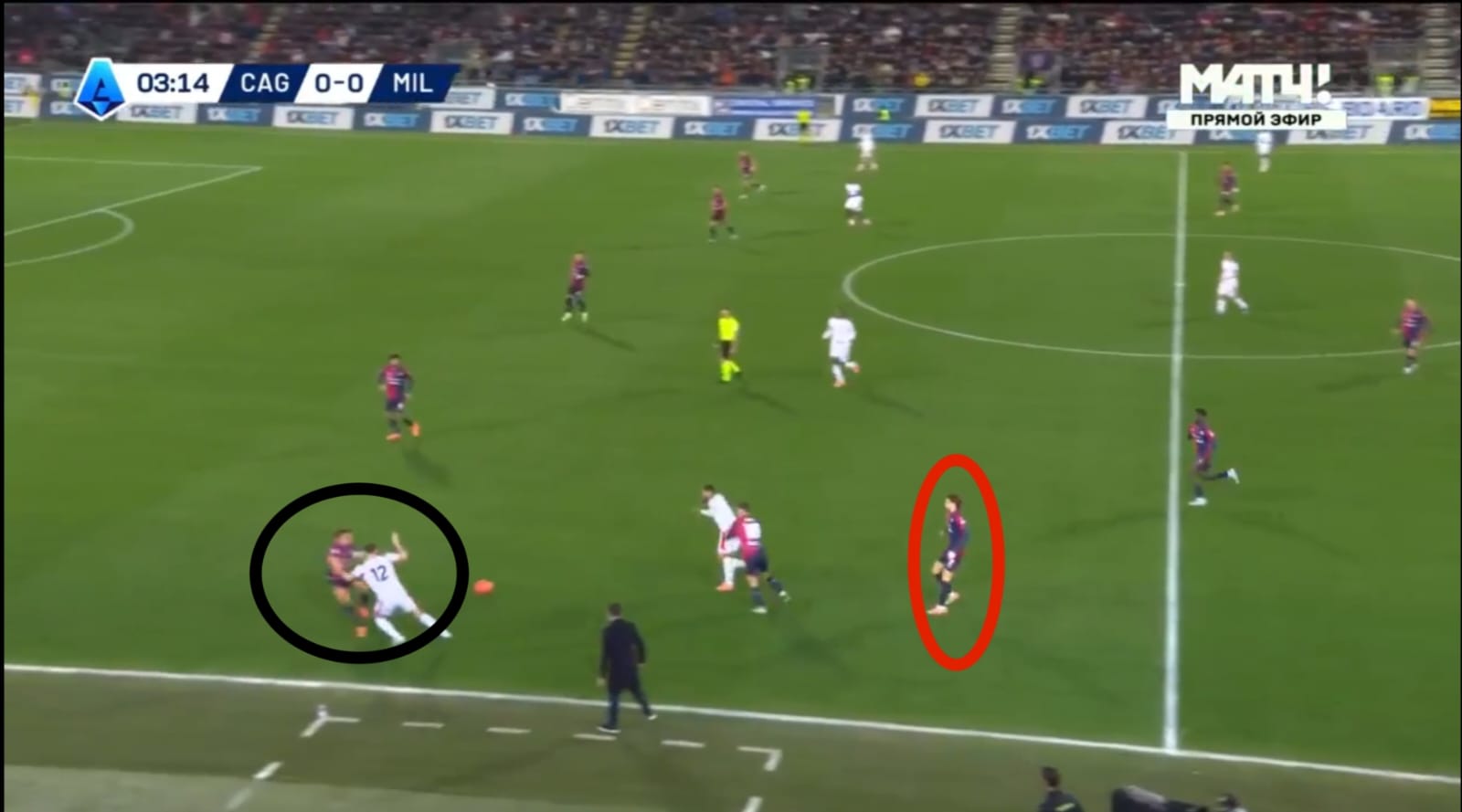
Pisicane placed Palestra high and wide and had his strikers collapse into midfield. This was to draw Bartesaghi up the field from the centre-back line.
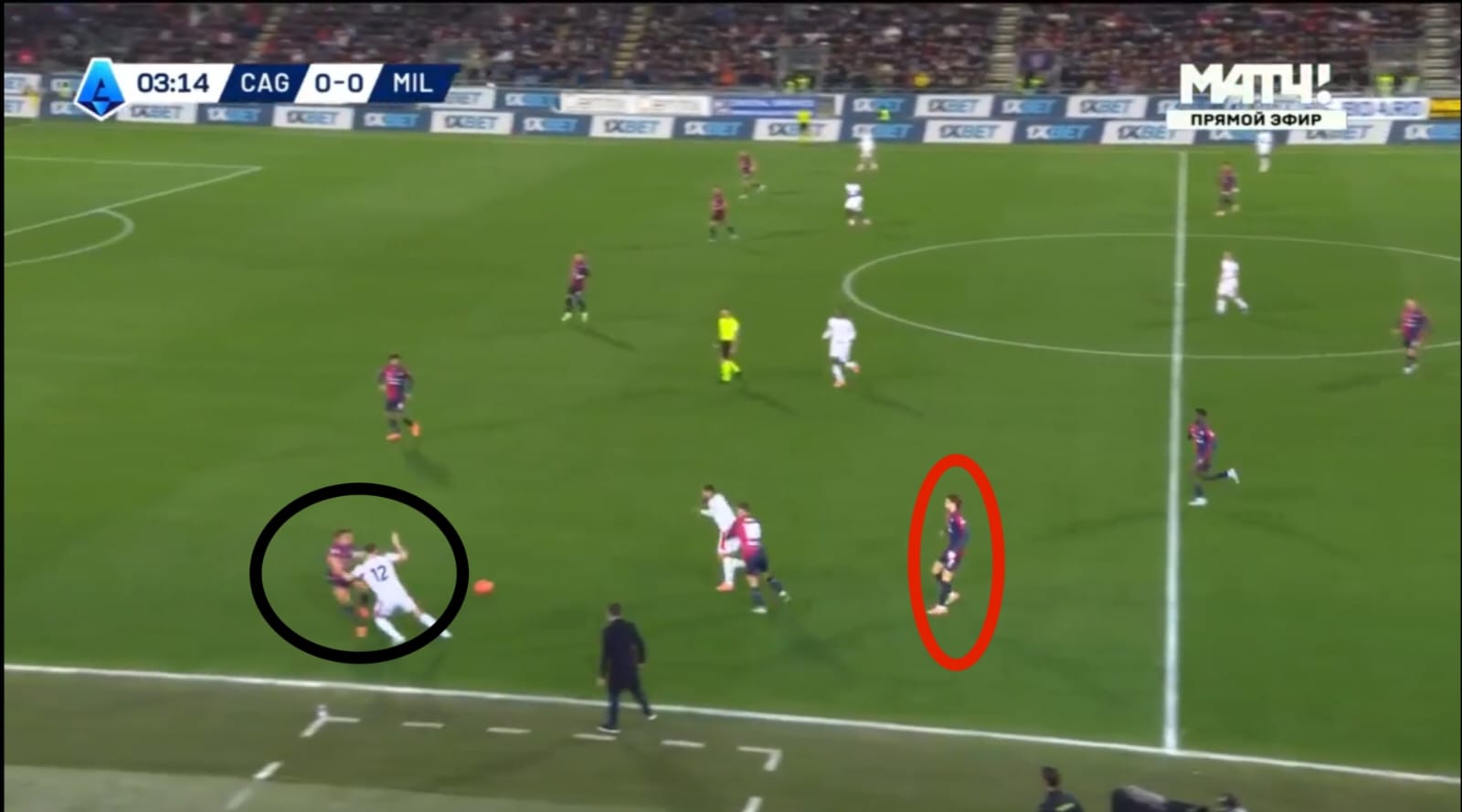
Thus, space was created behind Estupinan, which was exploited on a couple of occasions in the early exchanges, including one where Palestra dragged a shot wide.
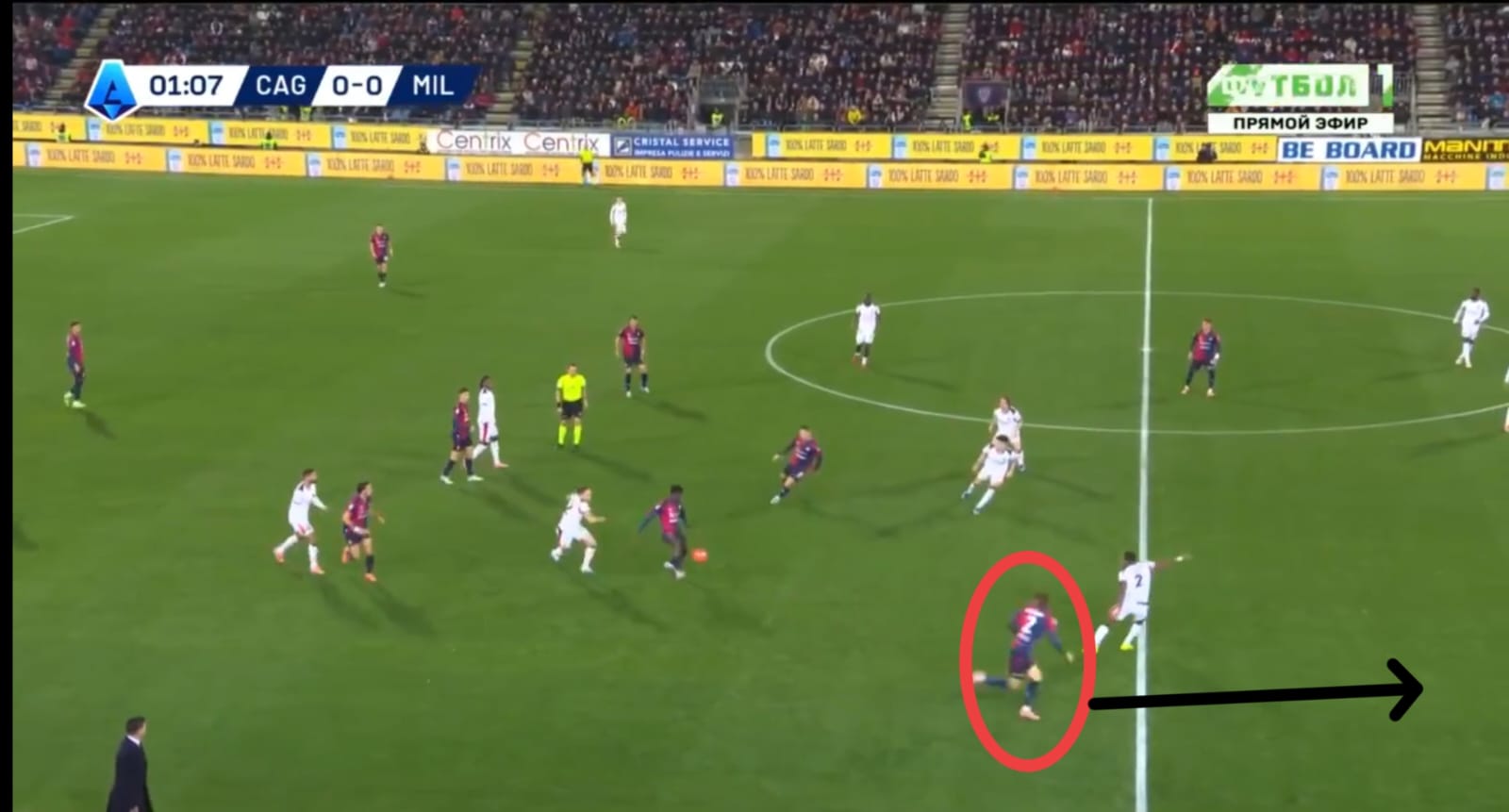
Those same tactics ended up coming at a bit of a cost, and again Adrien Rabiot was the tactical key for Allegri. The Frenchman moved out towards the left side which stretched Cagliari’s back three, especially Zappa who was often caught between sticking and following.
In what was a rather interesting ploy, Allegri asked for five players to stay back and be involved in building out. With Cagliari going man-to-man in their marking, Milan with Modric outnumbered Cagliari making a 5v4.
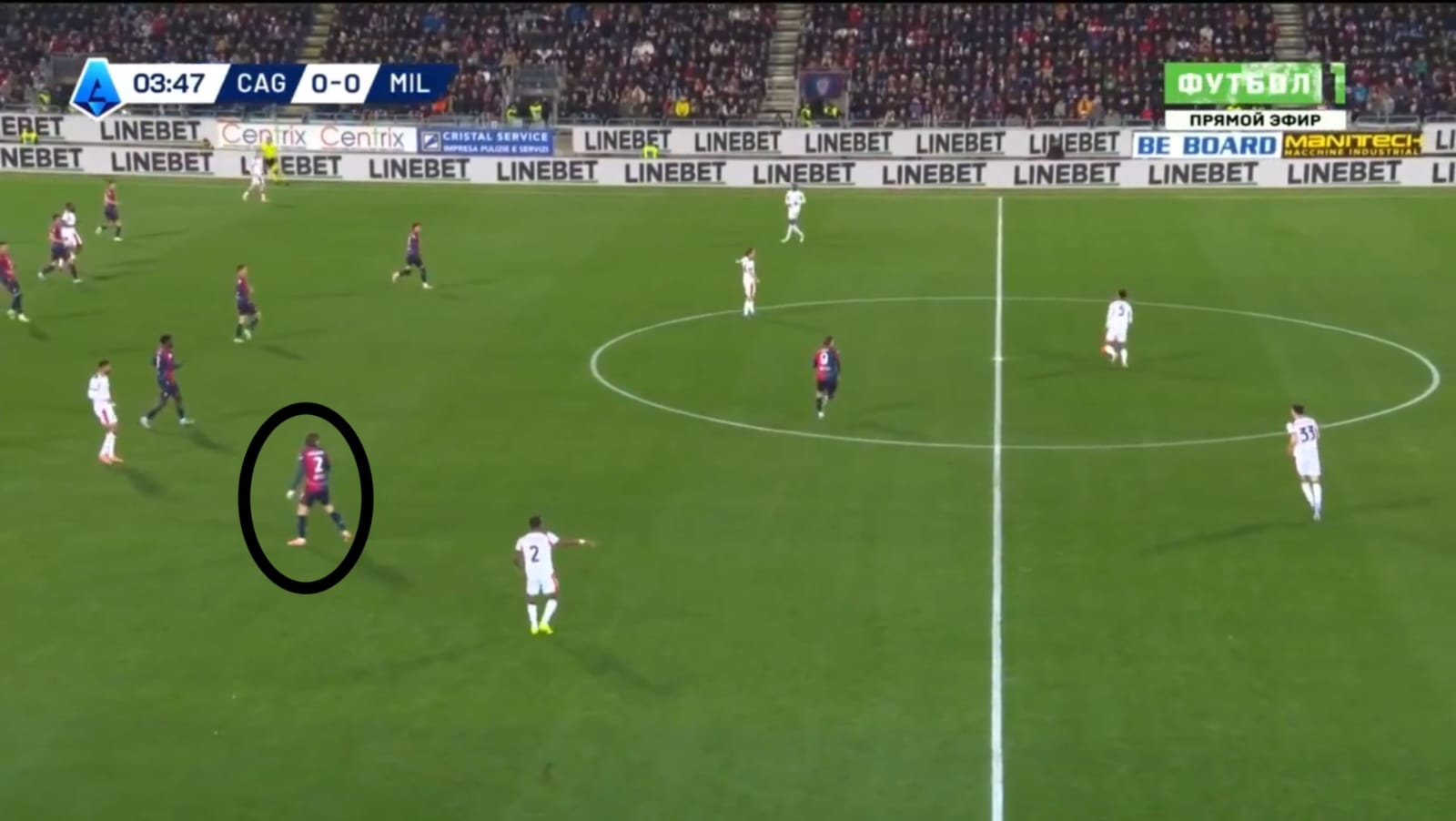
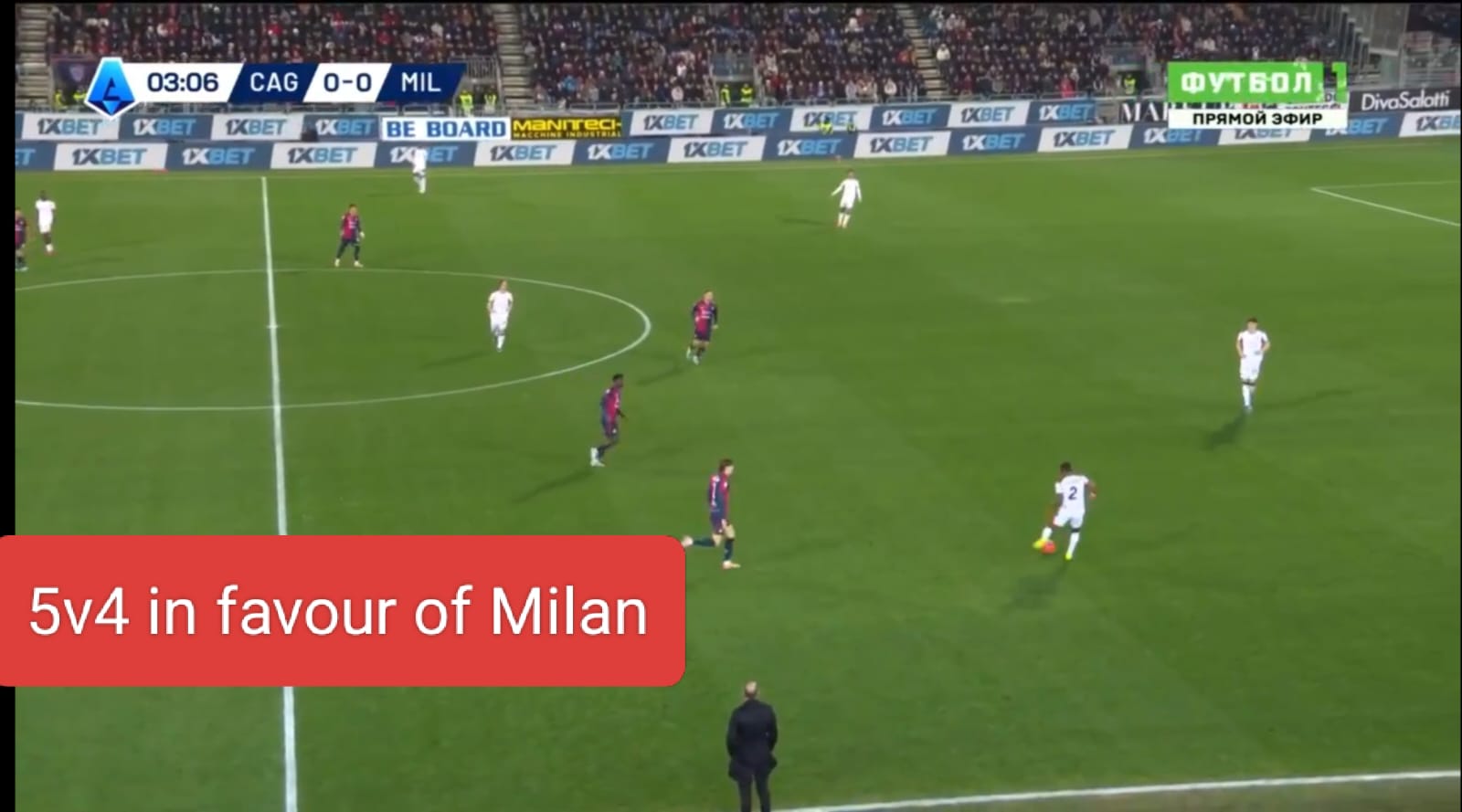
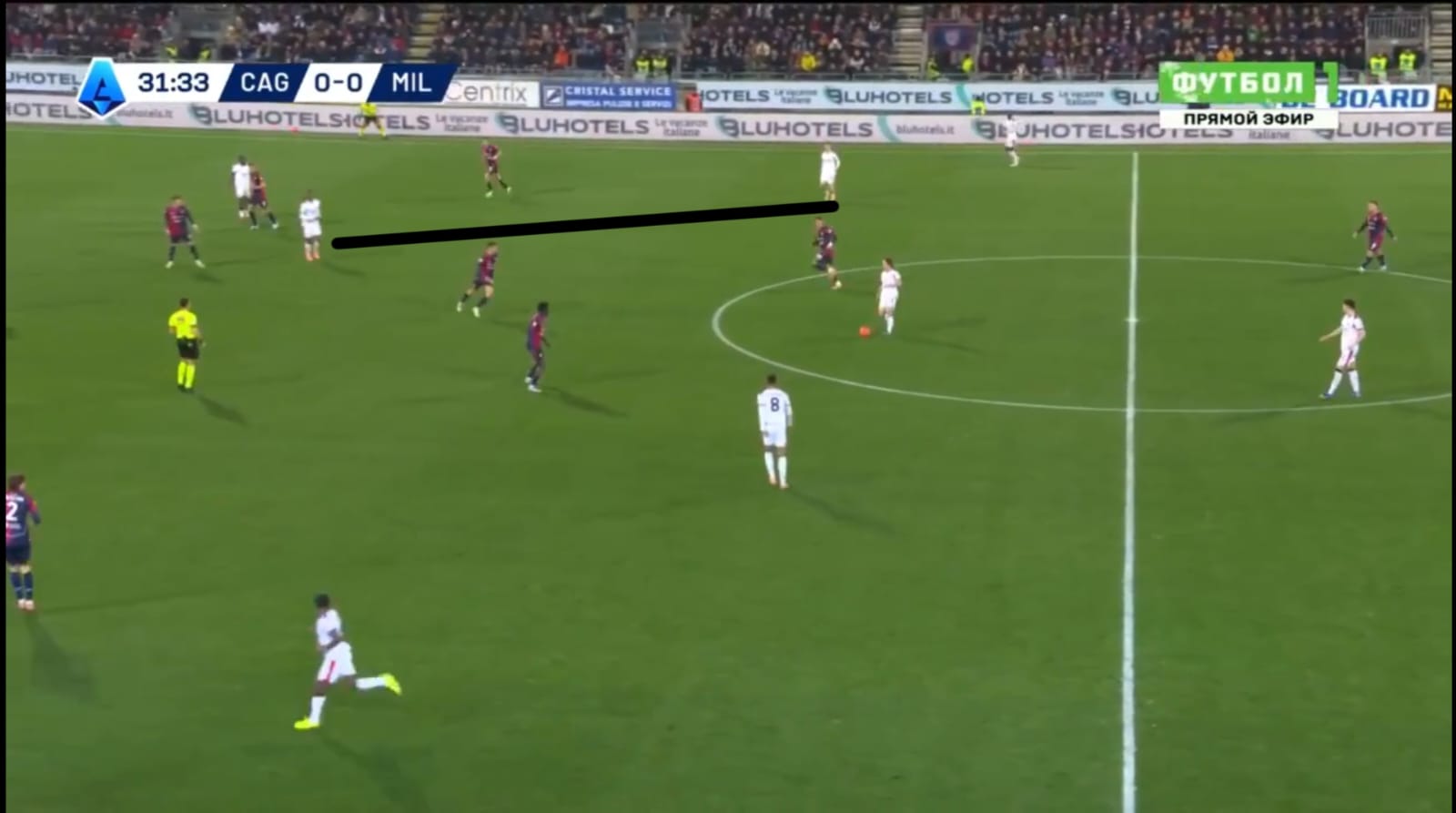
With more men committed for the press and the defenders not stepping up from their last line it, created a gap between Cagliari’s various departments which stretched things.
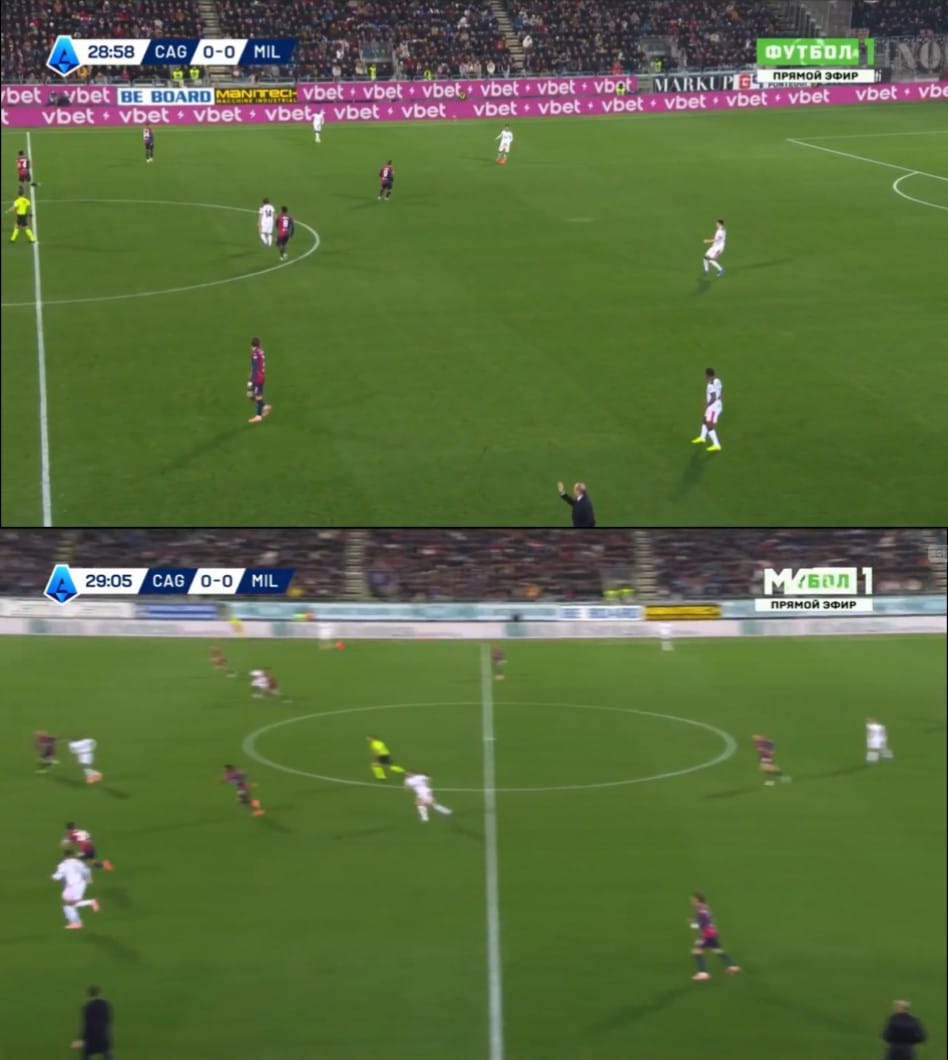
Key midfield tweak
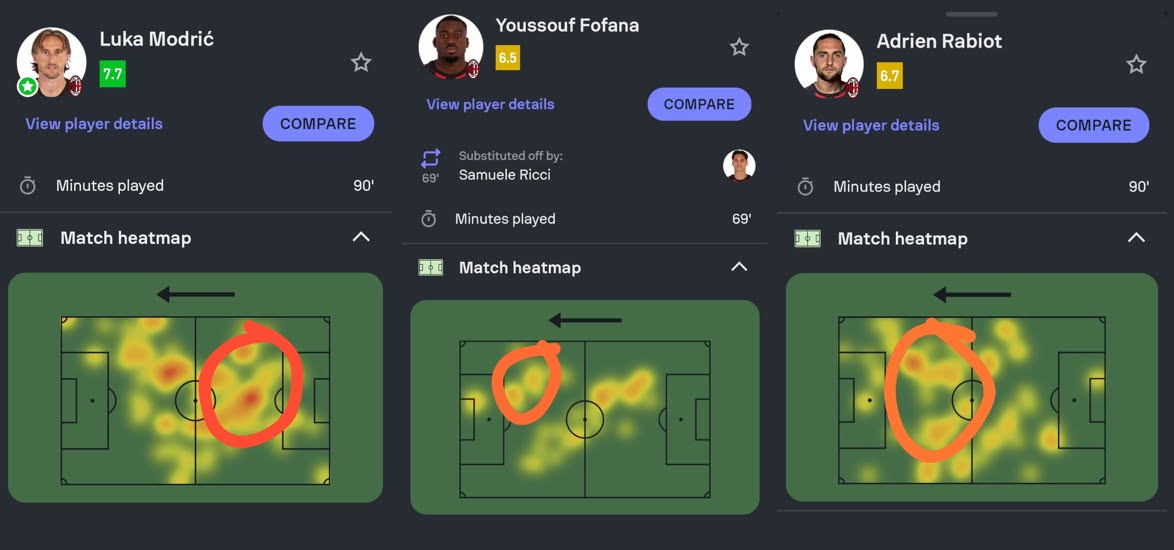
Allegri changed the formation to a 3-1-5-1 where Modric sat back pulling the strings, and both Rabiot and Youssouf Fofana played further forward as box-to-box midfielders.
The heat maps of Modric, Fofana and Rabiot demonstrate how the French duo of Fofana-Rabiot played father than the Croatian. This is not totally uncommon given Modric often drops deepest in build-up, but its rare that both of the other two push up.
The goal
When playing against an organised block of five defenders and sometimes four other players behind the ball, moments of intuition are needed to cause confusion.
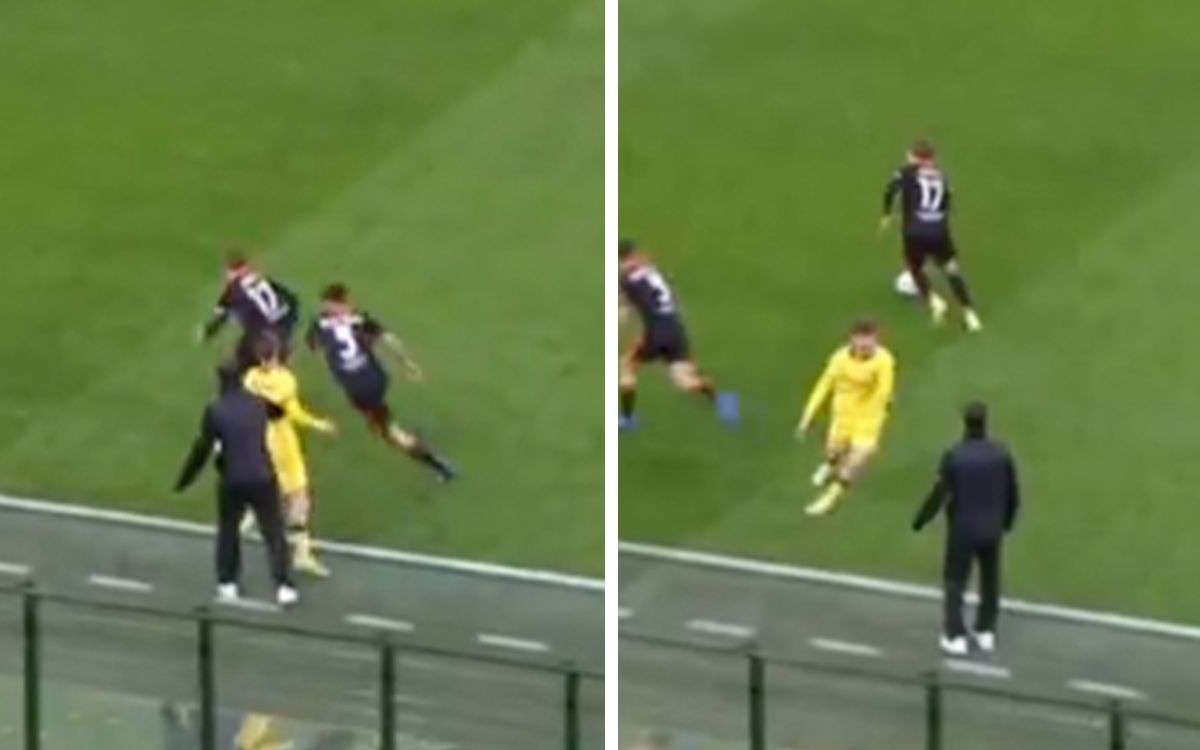
Alexis Saelemaekers is often the one that provides this, and though sometimes his tricks and flicks don’t come off, sometimes they are what leads to danger. With three men pressing him, his ball infield took them out of the game.
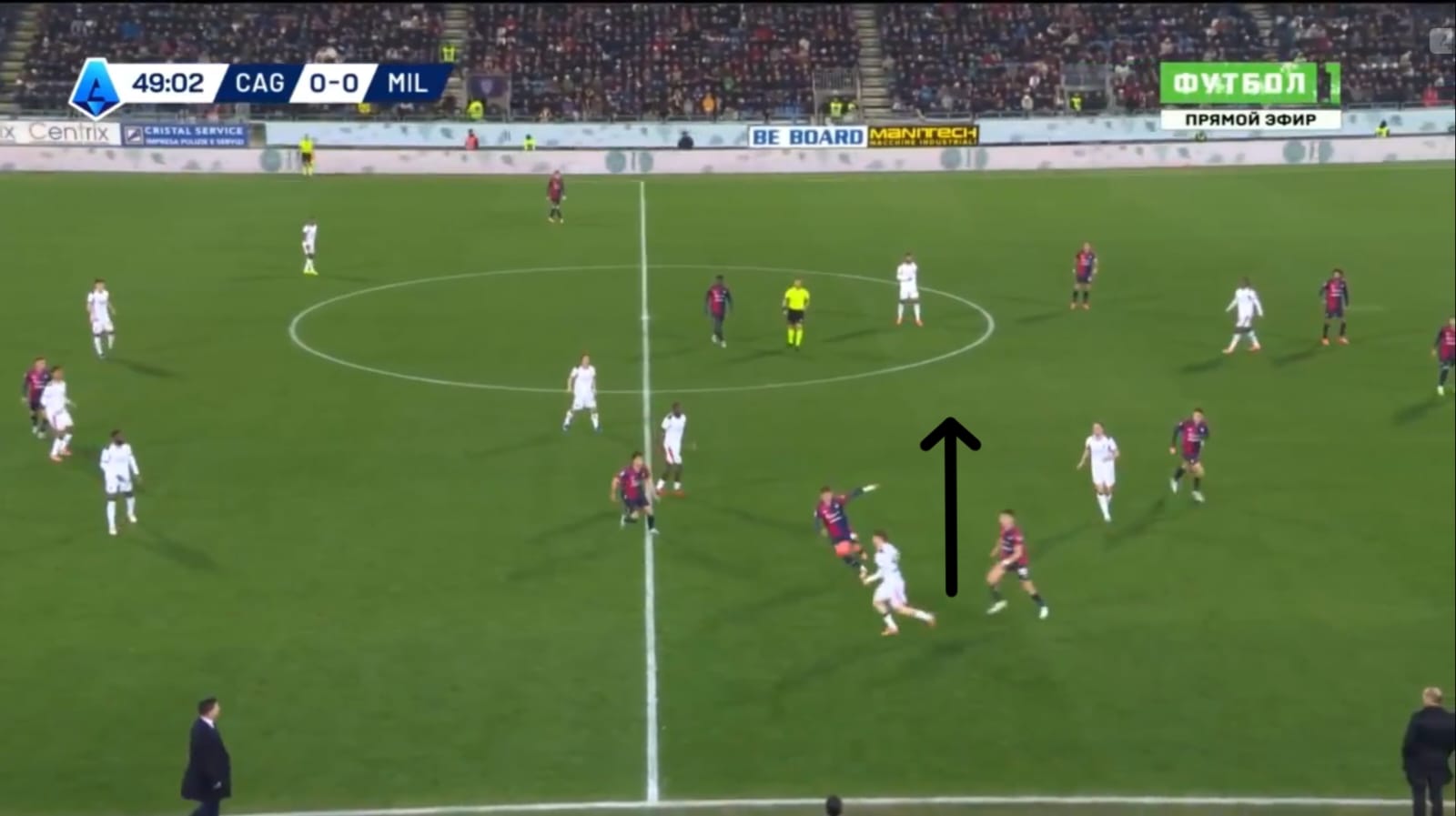
From there, Fofana plays an excellent through ball to find the run of Rabiot, who was clearly given the license at half-time to try and get into more dangerous areas. The cut-back found Leao, and the winning moment came.
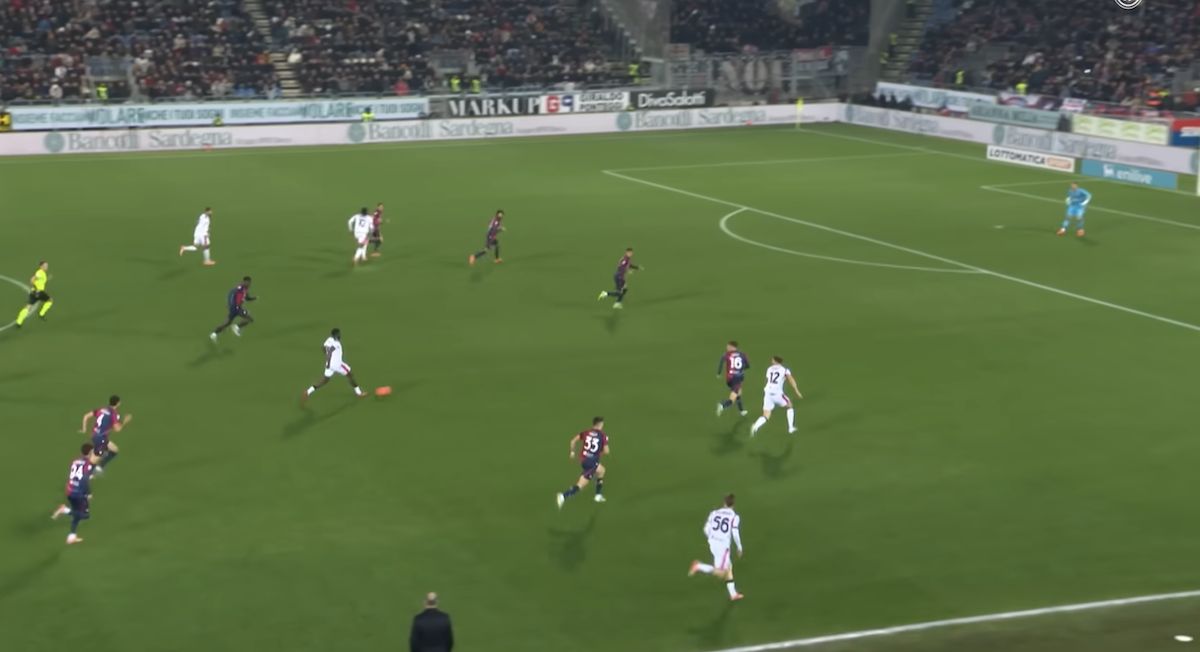
What is interesting about the above – and what the video below shows – is Leao’s movement. While for the winner against Lazio he made a dart towards goal like a natural striker, in this case it is more of a second striker move, dropping off behind the penalty spot to receive, touch, set and score.
The data
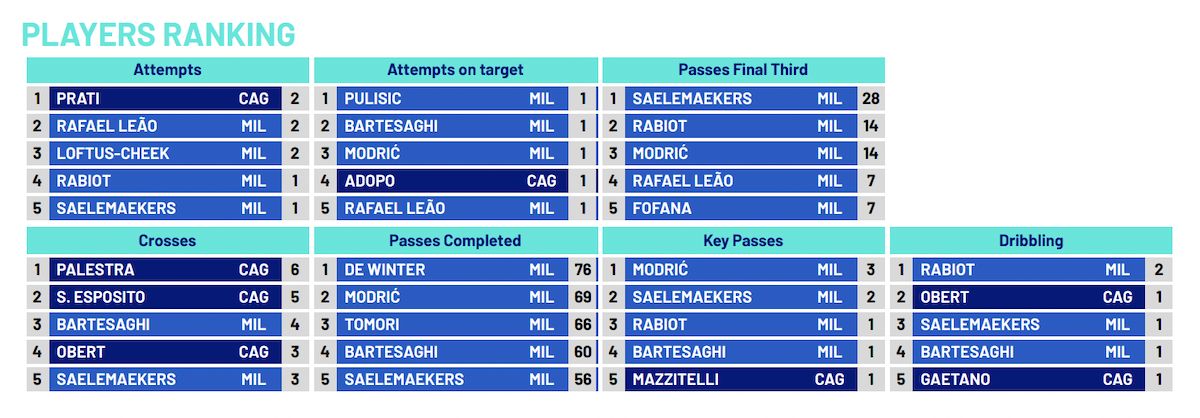
We mentioned previously about how Saelemaekers has been such a central figure for Allegri (even though in a literal sense he often hugs the touchline), and the fact that he had double the amount of passes into the final third compared to any other player speaks volumes.
Behind him are Rabiot and Modric with 14 each, double the next man Leao. The Belgian, the Frenchman and the Croatian are almost exclusively the players that push the ball forward into attacking areas.
Looking at the passes completed makes interesting reading, too. Having played more in the middle of the three centre-backs recently, De Winter appears to be growing in confidence and has a second straight positive start.
Being the ‘Libero’ – to coin a classic calcio phrase, referring to being the ball-playing centre-back – means that he is getting on the ball more. While a lot of his passes will not be line-breaking, each one completed builds confidence, which can only be a positive.
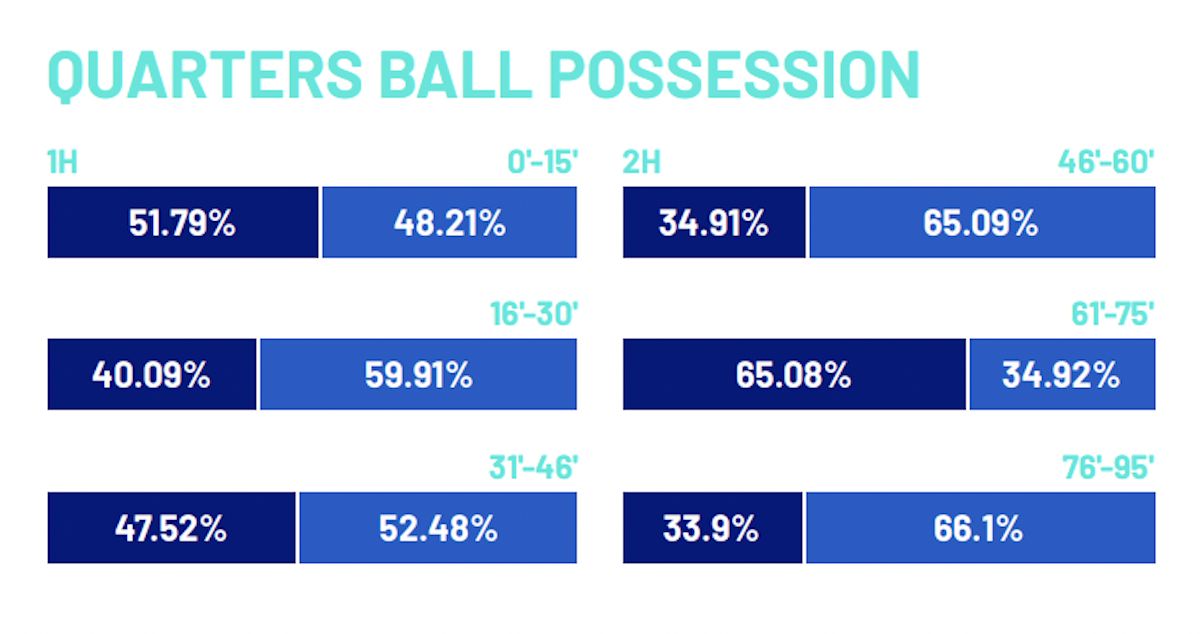
The possession numbers demonstrate how the game moved in waves in terms of who was on top. Cagliari started much better, Milan steadied then grew into it before the break and dominated until the hour mark.
Then, the Sardinians came back with a spell of pressure searching for an instant equaliser, but in the final 15 minutes they seemed to have expired their battery and it was quite a comfortable job to see it out.


 English (US) ·