
 3 months ago
112
3 months ago
112
AC Milan put the lid on 2025 in the best possible fashion, beating Hellas Verona at San Siro in convincing fashion to end the year.
It took until added time at the end of the first half for Milan to break the deadlock but it was Christian Pulisic who rather predictably did so. Then Christopher Nkunku finally got off the mark in Serie A with a penalty, completing his brace four minutes later in an eventual 3-0 victory.
The three points put the Rossoneri back top of the table but it would be temporary as Inter beat Atalanta. Nevertheless, they go into 2026 in the Scudetto mix, which is a far cry from the end of 2025 when they changed head coaches due to being eighth in the table.
It was also important to put to bed (for the time being) the notion of consistent struggles against teams in the bottom portion of the table, and the clean sheet was a welcome bonus too. Rohit Rajeev has the tactical analysis from the game.
Set-ups and Verona’s kick-off
Massimiliano Allegri chose to make two changes to the starting line-up from the team that lost to Napoli in the Supercoppa Italiana before Christmas, with Luka Modric and Davide Bartesaghi both coming back into the side.
Verona kicked off in a very odd fashion, choosing to boot it straight out of play. But it wasn’t random: it was a clever ploy to force Milan into a throw-in and then press horizontally, just like Sassuolo did in their opening goal last week.
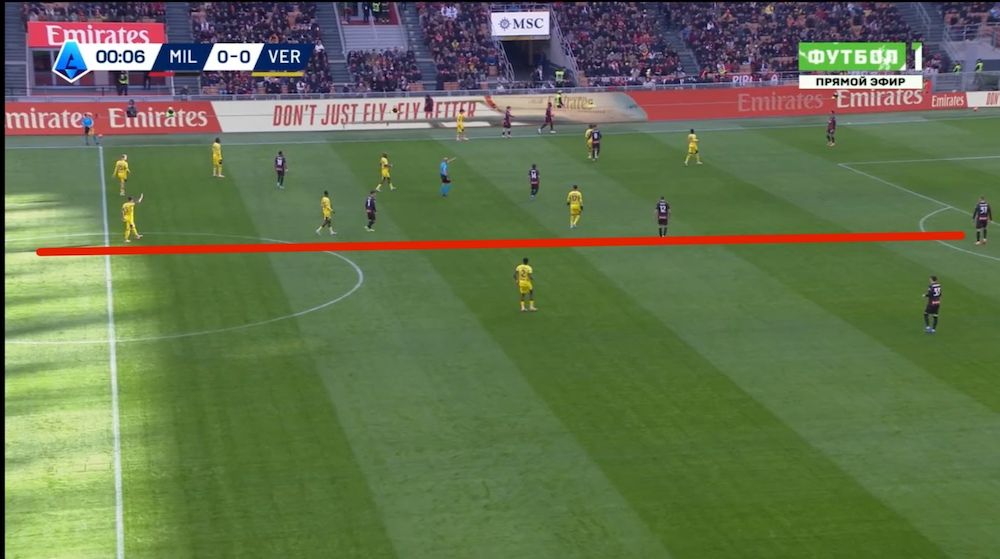
With Verona opting for a deeper defensive line, Milan were forced to assert control. Allegri responded by pressing with five players (two forwards + three midfielders), keeping the three centre-backs and two wing-backs behind.
Verona read this well and baited the press, creating separation between Milan’s pressing unit and the deeper defensive block, opening spaces to play through.
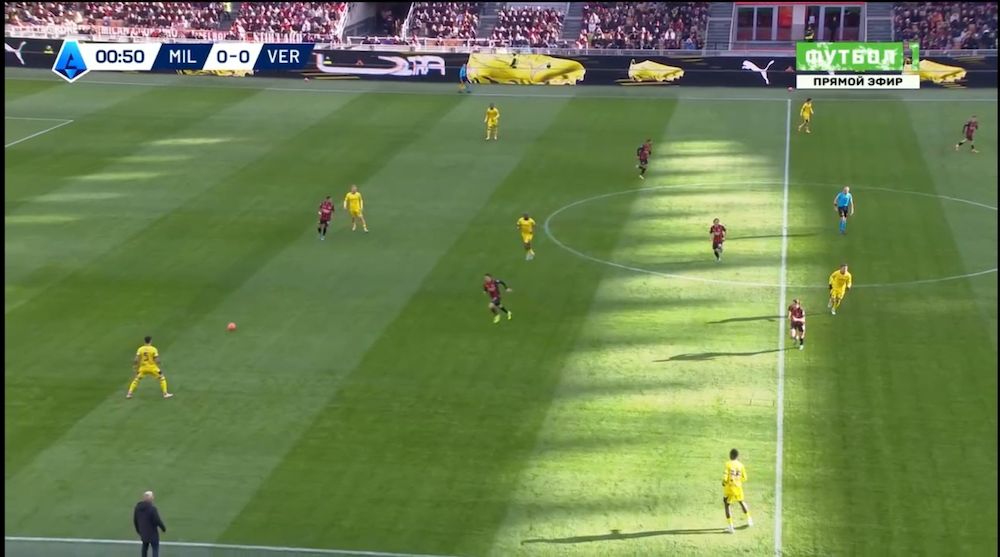
Rabiot’s role
Allegri pushed Rabiot higher to join Pulisic and Nkunku in attack. The idea was clear: bypass Verona’s mid-block by going longer.
Milan averaged 61 long balls per game before this match, but against Verona that number jumped to 66, a direct consequence of Rabiot’s advanced positioning and Allegri’s more vertical approach.
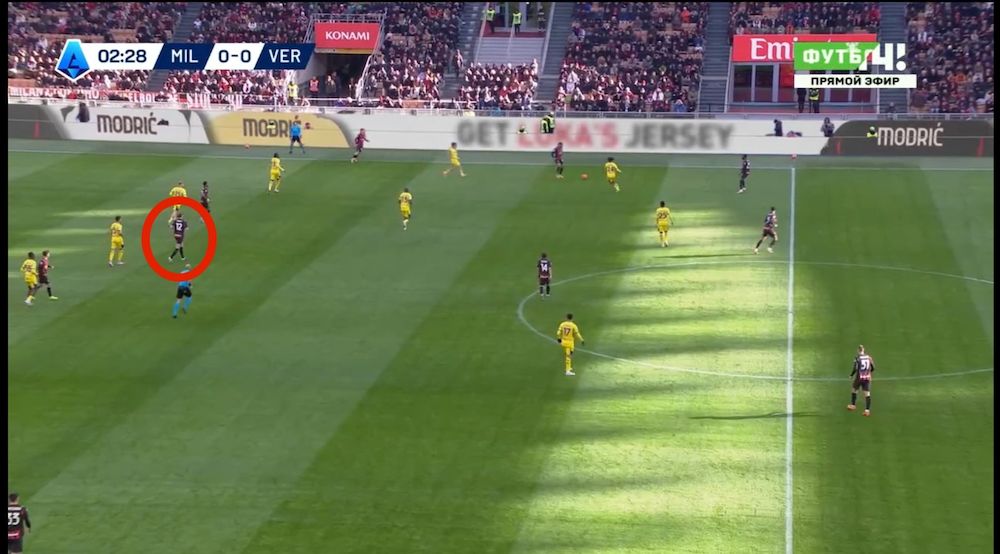
Rabiot, Loftus-Cheek and Modric would often interchange position or make off-ball runs to drag markers. This was done to create space in the center for Pulisic or Nkunku to run into.
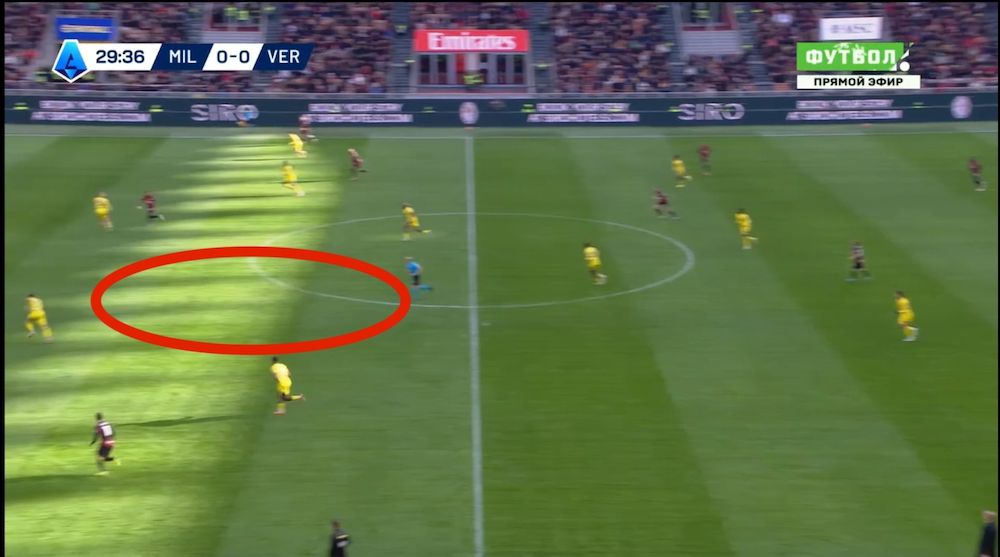
Set-piece unlocks things
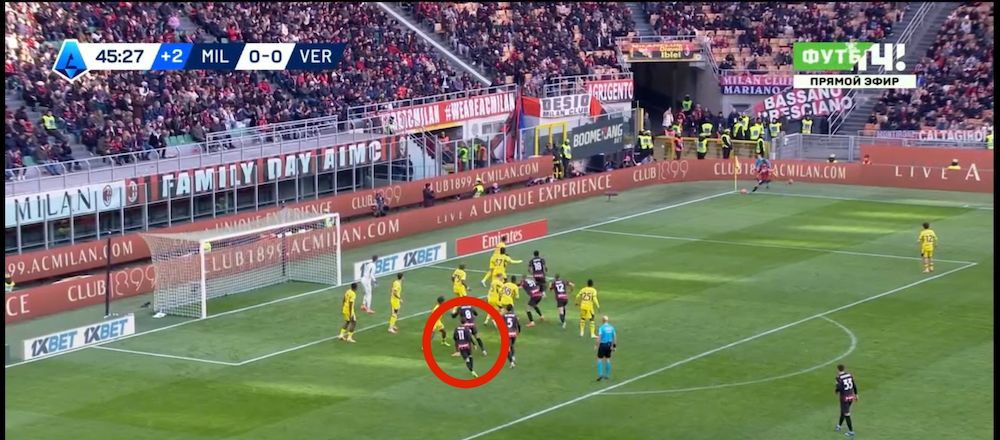
In a game that was bereft of creativity and incidents, Milan needed the help of set pieces. Verona used a zonal marking system. While Modric delivered the ball into the front post Milan overload the front post.
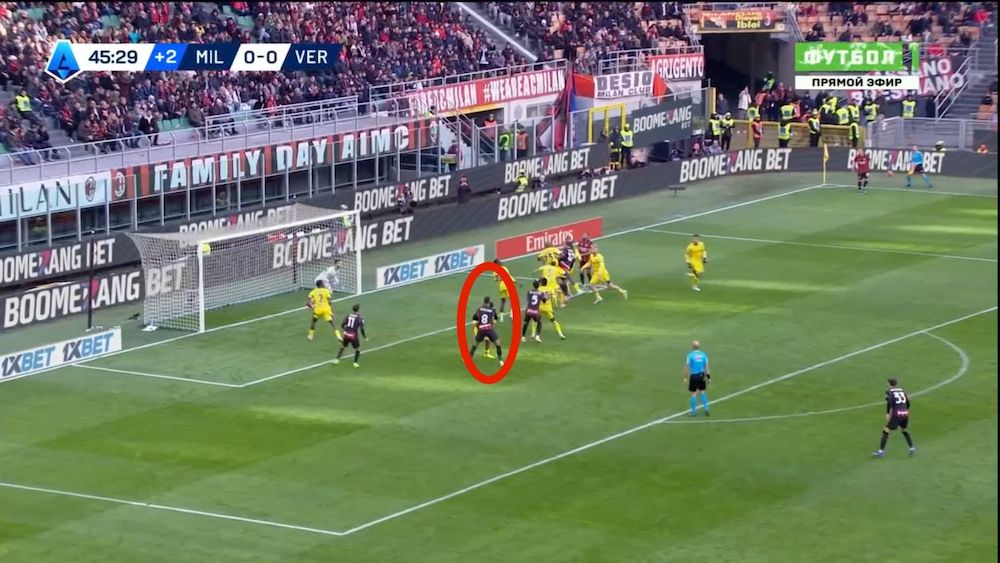
While the delivery was coming in, Pulisic quietly changed his running angle and speed and got into the space created by the Milan players who all ran to the front post and patiently waited for the flick-on.
Rabiot flicked the ball on and Loftus-Cheek quietly used his body to block his marker and Pulisic tapped the ball in for 1-0.
Stepping on the gas
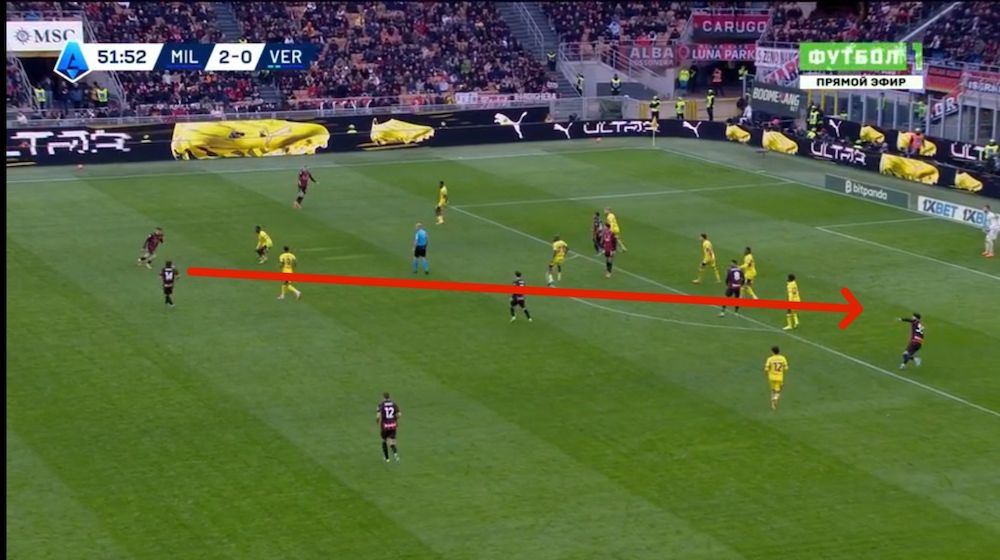
Milan started aggressively in the second half and won a throw in. Saelemaekers spotted Rabiot’s run into space and with Verona players marking zonally, nobody dealt with Rabiot and his flick-on went to Nkunku who was fouled.
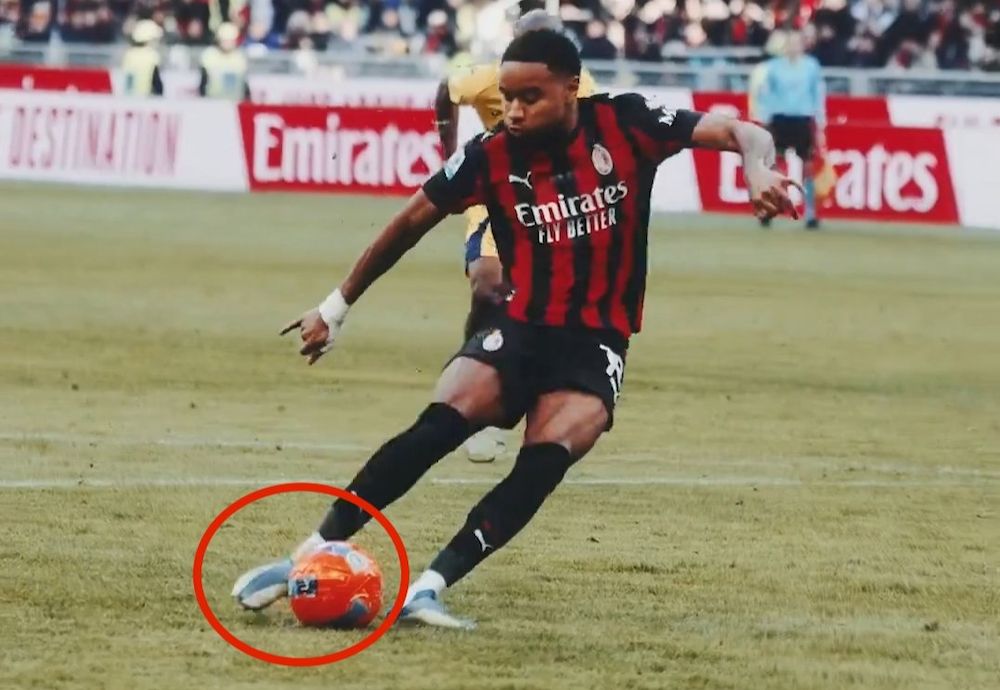
While taking the penalty, Nkunku’s shooting technique stood out. He opted for an instep drive (laces finish). It’s a textbook choice for penalties because it generates maximum ball speed, leaving goalkeepers minimal reaction time and forcing them to commit early to a side.
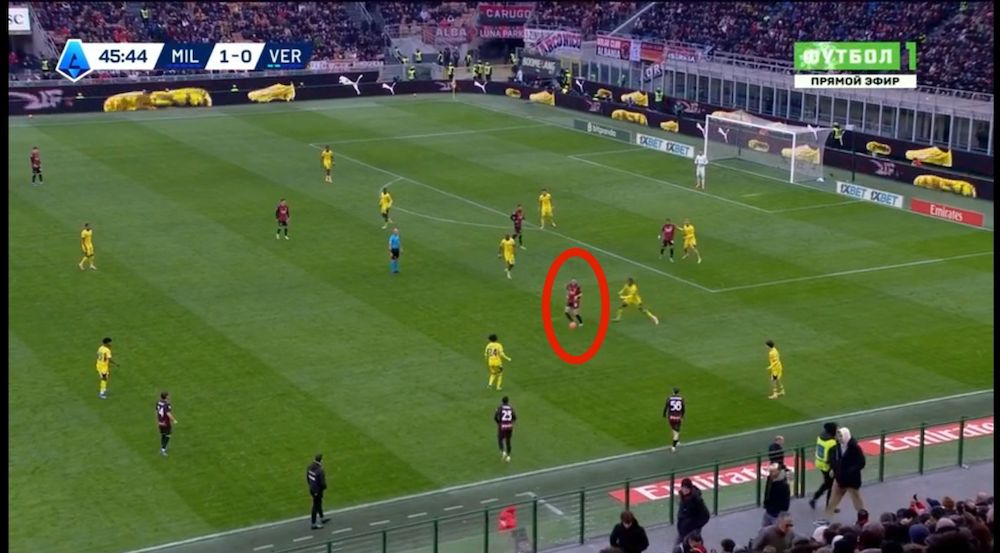
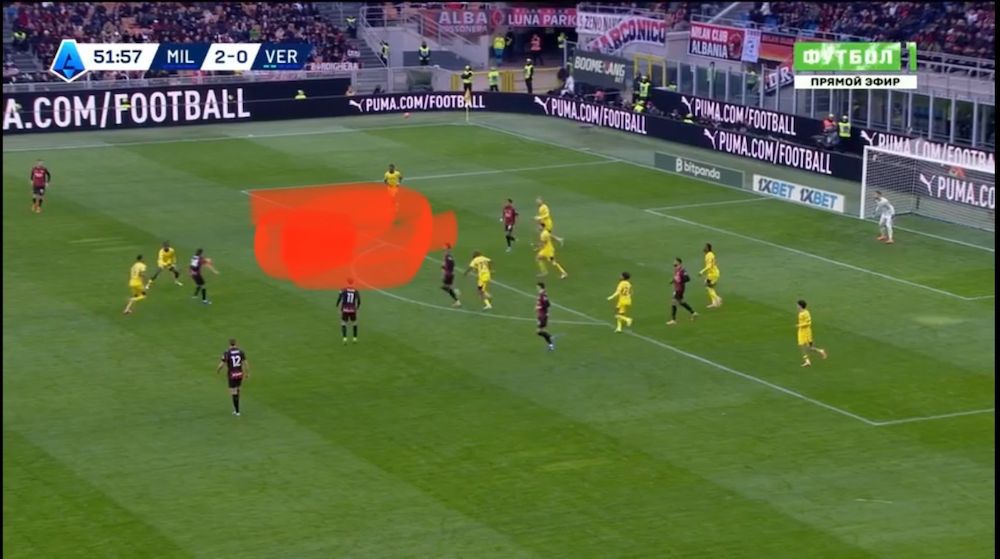
The third goal didn’t take long to come. Saelemaekers cross into the box meant Verona’s defensive line went deeper, and while the ball was clearly the players outside the box didn’t close down fast giving Modric space to shoot.
Signs from subs
It was interesting to see how Allegri deployed Jashari as a mezzala yesterday, with Ricci preferred in the No.6 role. By effectively using six midfielders and just one forward, Milan created a +1 in midfield, clearly visible with Rabiot left unmarked and free to receive.
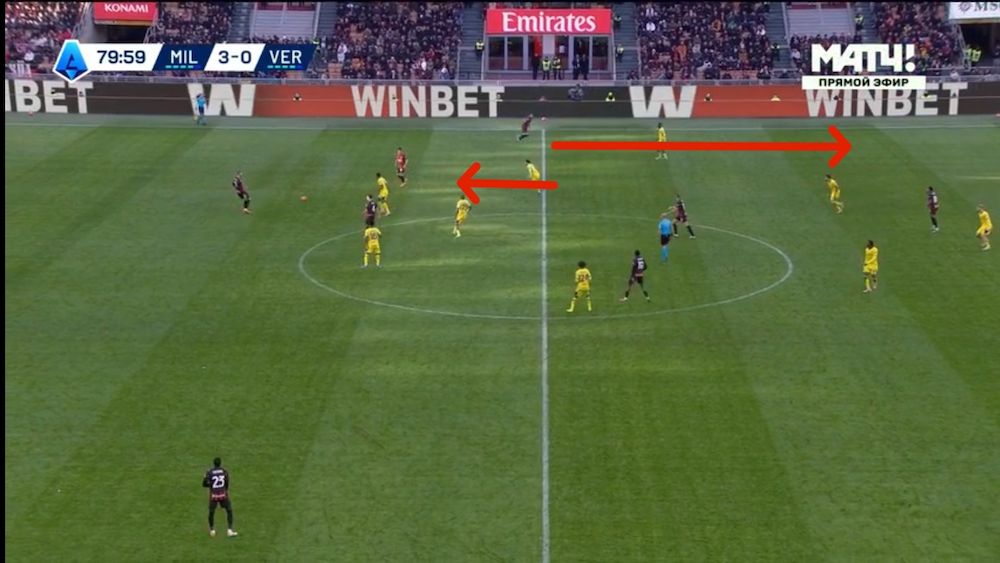
Jashari and Bartesaghi playing as the mezzala and the wing-backs respectively often used counter-movements and third-man movements to create chances.
Here Jashari ran towards his own goal while Bartesaghi runs towards the final third. Jashari would play a lobbed pass towards Bartesaghi but he lost his footing.
The data
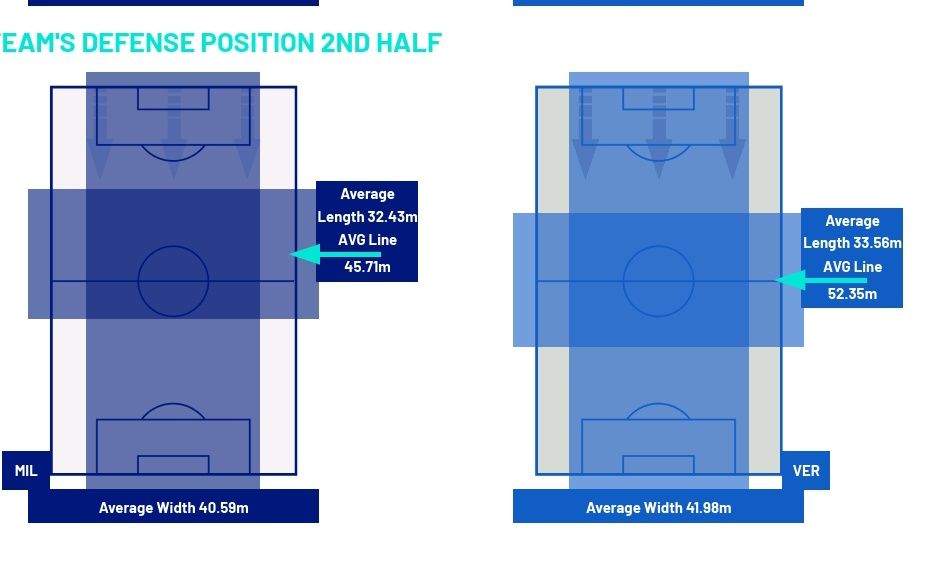
Allegri dropped the defensive line in the second half . The idea was clear: slow the tempo, reduce risk, and regain control of the game.
It was a very physical contest. Milan responded well, winning more duels than Verona, a crucial factor in grinding out results in games like these.
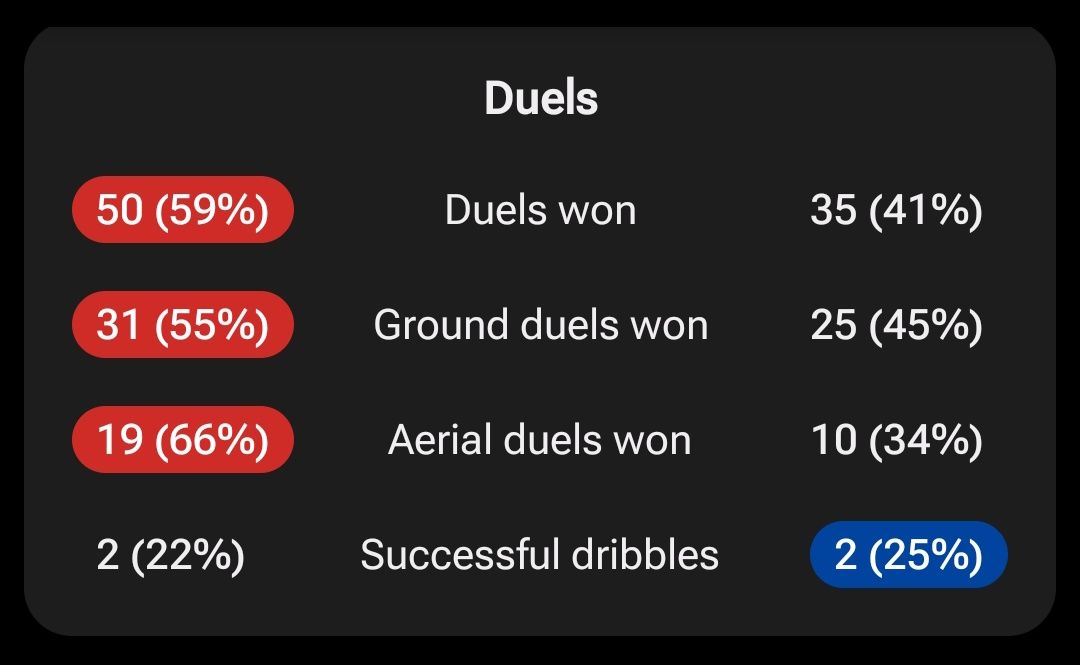
Milan completely shut Verona down. Only 0.04 xGOT conceded and just one shot on target all game speaks volumes about a defensive performance built on control, structure, and discipline.

The value obtained from the xGOT metric represents the probability of scoring a goal after the shot has been taken and is on target. This value is expressed on a scale from 0 to 1, where a higher xGOT value indicates a greater probability of scoring, while a lower xGOT value reflects a reduced likelihood.




 English (US) ·